Library
Browse and search books
3 novels found
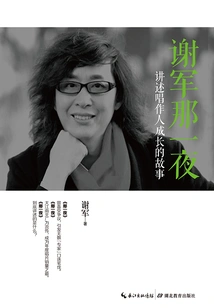
Xie Jun That Night
Literature谢军那一夜
Xie Jun
Through detailed descriptions of Xie Jun's popular songs such as "The Black Boat", "That Night", "Being Your Lover", "Heart Is Beating", "Another Night", "Mango Smell" and other popular songs, this book truly records the growth story of Xie Jun who finally became a singer-songwriter through unremitting efforts, and comprehensively reveals various little-known events in the song creation process, showing readers his unremitting pursuit and wonderful life!
Through detailed descriptions of Xie Jun's popular songs such as "The Black Boat", "That Night", "Being Your Lover", "Heart Is Beating", "Another Night", "Mango Smell" and other popular songs, this book truly records the growth story of Xie Jun who finally became a singer-songwriter through unremitting efforts, and comprehensively reveals various little-known events in the song creation process, showing readers his unremitting pursuit and wonderful life!
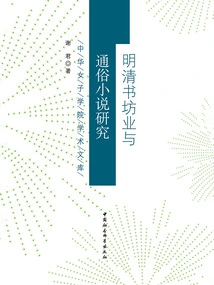
明清书坊业与通俗小说研究
Xie Jun
From the mid-Ming Dynasty to the mid-Qing Dynasty, it was the heyday of the bookstore industry and the prosperity of popular novels. The bookstore industry and popular novels prospered almost simultaneously in the mid-Ming Dynasty. The bookshop industry has an immeasurable influence on the development of popular novels. The prosperity of popular novels in the Ming and Qing Dynasties was inseparable from the support of the bookstore industry. The canal cities in the south of the Yangtze River became the areas with the most developed commodity economy in the Ming and Qing Dynasties due to the important status of the Grand Canal and the convenience of water transportation. Suzhou, Hangzhou, Yangzhou, Changzhou, Huzhou and other Jiangnan canal cities became new carving centers and popular novel publishing centers after the Wanli period of the Ming Dynasty, making great contributions to the development of popular novels in the Ming and Qing Dynasties. The bookstore industry in these cities played an important role in the creation, publication, dissemination and acceptance of popular novels in the Ming and Qing Dynasties. Driven by the bookshop industry, popular novels of the Ming and Qing dynasties eventually prospered in the canal cities south of the Yangtze River.
From the mid-Ming Dynasty to the mid-Qing Dynasty, it was the heyday of the bookstore industry and the prosperity of popular novels. The bookstore industry and popular novels prospered almost simultaneously in the mid-Ming Dynasty. The bookshop industry has an immeasurable influence on the development of popular novels. The prosperity of popular novels in the Ming and Qing Dynasties was inseparable from the support of the bookstore industry. The canal cities in the south of the Yangtze River became the areas with the most developed commodity economy in the Ming and Qing Dynasties due to the important status of the Grand Canal and the convenience of water transportation. Suzhou, Hangzhou, Yangzhou, Changzhou, Huzhou and other Jiangnan canal cities became new carving centers and popular novel publishing centers after the Wanli period of the Ming Dynasty, making great contributions to the development of popular novels in the Ming and Qing Dynasties. The bookstore industry in these cities played an important role in the creation, publication, dissemination and acceptance of popular novels in the Ming and Qing Dynasties. Driven by the bookshop industry, popular novels of the Ming and Qing dynasties eventually prospered in the canal cities south of the Yangtze River.

Golden Expendables
General Fiction黄金敢死队
Xie Jun
At ten o'clock in the morning on May 20th, Wu Guangyuan, the mayor of Jinghu City, who had hastily handled a few official duties, dismissed his secretary worriedly, and paced back and forth in the office alone. The office was very quiet, and his leather shoes made a soft sound on the waxed red paint floor. It was very monotonous and boring. When he walked to his desk, he hesitated for a moment, then picked up the phone, called the city police station, and asked Director Qian Deshan to come to his home for a drink at noon. As the mayor and police chief of Jinghu City under Japanese rule, Wu Guangyuan and Qian Deshan are undoubtedly powerful figures. They have worked together for the Japanese in their respective positions, and they have been working together in a tacit understanding for almost eight years.
At ten o'clock in the morning on May 20th, Wu Guangyuan, the mayor of Jinghu City, who had hastily handled a few official duties, dismissed his secretary worriedly, and paced back and forth in the office alone. The office was very quiet, and his leather shoes made a soft sound on the waxed red paint floor. It was very monotonous and boring. When he walked to his desk, he hesitated for a moment, then picked up the phone, called the city police station, and asked Director Qian Deshan to come to his home for a drink at noon. As the mayor and police chief of Jinghu City under Japanese rule, Wu Guangyuan and Qian Deshan are undoubtedly powerful figures. They have worked together for the Japanese in their respective positions, and they have been working together in a tacit understanding for almost eight years.