Library
Browse and search books
3 novels found
Distribution Center
General Fiction集散地
Xiang Jing
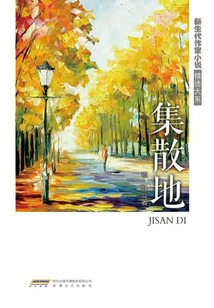
A distribution center is a short-lived image, where people settle down and then leave. This collection of novels uses location as a clue, from villages to small towns, counties, small cities, cities, and metropolises. Most of the protagonists in the novel are the author's peers. In addition to the spatial transformation, there is another clue of growth. Their childhood, youth, youth, and adulthood, traverse the land of "China" from the perspective of the post-80s generation, and at the same time internally complete a person's memory and growth.
A distribution center is a short-lived image, where people settle down and then leave. This collection of novels uses location as a clue, from villages to small towns, counties, small cities, cities, and metropolises. Most of the protagonists in the novel are the author's peers. In addition to the spatial transformation, there is another clue of growth. Their childhood, youth, youth, and adulthood, traverse the land of "China" from the perspective of the post-80s generation, and at the same time internally complete a person's memory and growth.
Criticism Series: Begin Where You End
Literature述而批评丛书:在结束的地方开始
Xiang Jing
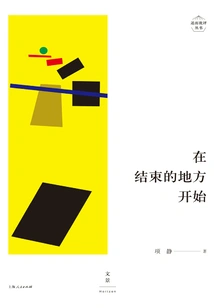
Literature going to the edge does not mean the end, but an opportunity to get closer to its own essence. A literary critic with great potential in Shanghai, writing a new wave of criticism. A literary critic with great potential in Shanghai, writing a new wave of criticism. A collective appearance of Shanghai's young critics. From Wang Anyi and Ge Fei to Lu Nei and Zhang Jiajia, from non-fiction writing, local literature to the new media writing boom, the 21 articles are the author's private reading notes on contemporary literary works, as well as her response and reflection on the current widespread literary phenomenon. "Start Where You Ended" is a collection of Xiang Jing's critical essays on contemporary literary works and literary phenomena. It is also her third critical essay collection. Most of the 21 articles included in the book were completed and published between 2014 and 2016, which focus on the results of her thinking on literature in recent years. The content in the book can be mainly divided into two categories: one is the writer's theory in the form of prose essays, and the other is macro-level comments that tend to focus on history and local writing. Most of the articles use the works of a specific writer as an entry point, such as Lu Nei, Ge Fei, Zhang Jiajia, Wang Anyi, Lin Bai, Yu Yishuang, etc., And then start lateral thinking on related topics; there are also collective discussions on a certain group of writers starting from macro issues, such as the post-80s writer group, non-fiction writers, new media writing, etc.
Literature going to the edge does not mean the end, but an opportunity to get closer to its own essence. A literary critic with great potential in Shanghai, writing a new wave of criticism. A literary critic with great potential in Shanghai, writing a new wave of criticism. A collective appearance of Shanghai's young critics. From Wang Anyi and Ge Fei to Lu Nei and Zhang Jiajia, from non-fiction writing, local literature to the new media writing boom, the 21 articles are the author's private reading notes on contemporary literary works, as well as her response and reflection on the current widespread literary phenomenon. "Start Where You Ended" is a collection of Xiang Jing's critical essays on contemporary literary works and literary phenomena. It is also her third critical essay collection. Most of the 21 articles included in the book were completed and published between 2014 and 2016, which focus on the results of her thinking on literature in recent years. The content in the book can be mainly divided into two categories: one is the writer's theory in the form of prose essays, and the other is macro-level comments that tend to focus on history and local writing. Most of the articles use the works of a specific writer as an entry point, such as Lu Nei, Ge Fei, Zhang Jiajia, Wang Anyi, Lin Bai, Yu Yishuang, etc., And then start lateral thinking on related topics; there are also collective discussions on a certain group of writers starting from macro issues, such as the post-80s writer group, non-fiction writers, new media writing, etc.
在结束的地方开始(谷臻小简·AI导读版)
Xiang Jing
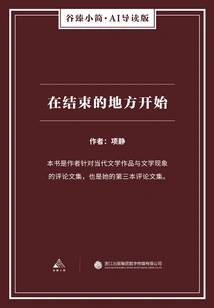
This book is a collection of the author's reviews of contemporary literary works and literary phenomena. It is also her third collection of reviews. Most of the 21 articles included in the book were completed and published between 2014 and 2016, focusing on the results of her thinking on literature in recent years. The content in the book can be mainly divided into two categories: one is the writer's theory in the form of prose essays, and the other is macro-level comments that tend to focus on history and local writing. Most of the articles use the works of a specific writer as an entry point, such as Lu Nei, Ge Fei, Zhang Jiajia, Wang Anyi, Lin Bai, Yu Yishuang, etc., And then start lateral thinking on related topics; there are also collective discussions on a certain group of writers starting from macro issues, such as the post-80s writer group, non-fiction writers, new media writing, etc.
This book is a collection of the author's reviews of contemporary literary works and literary phenomena. It is also her third collection of reviews. Most of the 21 articles included in the book were completed and published between 2014 and 2016, focusing on the results of her thinking on literature in recent years. The content in the book can be mainly divided into two categories: one is the writer's theory in the form of prose essays, and the other is macro-level comments that tend to focus on history and local writing. Most of the articles use the works of a specific writer as an entry point, such as Lu Nei, Ge Fei, Zhang Jiajia, Wang Anyi, Lin Bai, Yu Yishuang, etc., And then start lateral thinking on related topics; there are also collective discussions on a certain group of writers starting from macro issues, such as the post-80s writer group, non-fiction writers, new media writing, etc.