Library
Browse and search books
7 novels found
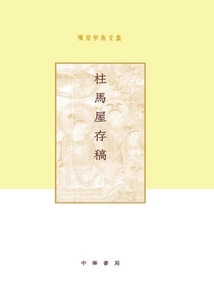
项楚学术文集:柱马屋存稿
Xiang Chu
This book contains eighteen essays, mainly discussing various issues related to Hanshan's poems, Su Shi's poems, "Wu Deng Hui Yuan", etc. The catalog is as follows: "<General Editor of Dunhuang Songs> Examples of Supplementary Examples of Buddhist Songs", "Wang Fanzhi's Poems" "Others' Works", "Master Lingzhang Li Shaoyun", "New School of Dunhuang Bianwen", "New School of "Lushan Yuan Gong Dialect"", "Notes on the Reading of Hanshan Poems", "The Wanderer's Elegy - An Interpretation of Hanshan's "Brothers from the Five Counties" Poetry" ", "An Examination of Lost Poems Found in Hanshan", "On Lu Tong's Poetry", "The Knight-errant Poet Liu Cha", "Reading "Review of Su Poems"", "On Dongpo Keqiu Begonia Poems", "Industry Slang in Su Shi's Poems", "Notes on Literary Mind and Diaolong" "The Aesthetic Tendency", "Notes on Reading "Guan Zhui Bian"", "Examination of "Laozi's Transformation of Hu Jing·Xuan Ge"", "Three hundred examples of collation and doubts of "Wudeng Huiyuan"", "One hundred examples of collation and doubts of "Wudeng Huiyuan"".
This book contains eighteen essays, mainly discussing various issues related to Hanshan's poems, Su Shi's poems, "Wu Deng Hui Yuan", etc. The catalog is as follows: "<General Editor of Dunhuang Songs> Examples of Supplementary Examples of Buddhist Songs", "Wang Fanzhi's Poems" "Others' Works", "Master Lingzhang Li Shaoyun", "New School of Dunhuang Bianwen", "New School of "Lushan Yuan Gong Dialect"", "Notes on the Reading of Hanshan Poems", "The Wanderer's Elegy - An Interpretation of Hanshan's "Brothers from the Five Counties" Poetry" ", "An Examination of Lost Poems Found in Hanshan", "On Lu Tong's Poetry", "The Knight-errant Poet Liu Cha", "Reading "Review of Su Poems"", "On Dongpo Keqiu Begonia Poems", "Industry Slang in Su Shi's Poems", "Notes on Literary Mind and Diaolong" "The Aesthetic Tendency", "Notes on Reading "Guan Zhui Bian"", "Examination of "Laozi's Transformation of Hu Jing·Xuan Ge"", "Three hundred examples of collation and doubts of "Wudeng Huiyuan"", "One hundred examples of collation and doubts of "Wudeng Huiyuan"".
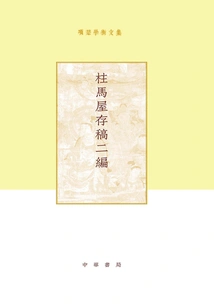
项楚学术文集:柱马屋存稿二编
Xiang Chu
This book follows "The Preserved Manuscripts of Zhumawu" and collects several essays written by the author since 2003. "Zhumawu" is not the elegant name of the house, but is taken from Hanshan's poem: "A tree born with a hundred feet is cut into long logs. It's a pity that the pillar materials are thrown in the deep valley. Over the years, the heart is strong, and the skin is gradually peeling off. Those who know the future, it is just like a Zhumawu." This shows the author's feelings of claiming that he cannot be used as pillars.
This book follows "The Preserved Manuscripts of Zhumawu" and collects several essays written by the author since 2003. "Zhumawu" is not the elegant name of the house, but is taken from Hanshan's poem: "A tree born with a hundred feet is cut into long logs. It's a pity that the pillar materials are thrown in the deep valley. Over the years, the heart is strong, and the skin is gradually peeling off. Those who know the future, it is just like a Zhumawu." This shows the author's feelings of claiming that he cannot be used as pillars.
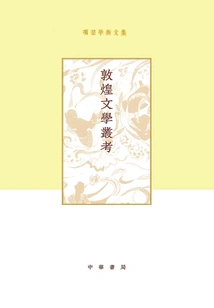
项楚学术文集:敦煌文学丛考
Xiang Chu
This book selects twenty-four papers written by the author in recent years. The main contents are textual collation, colloquial interpretation and data research of Dunhuang popular literary works. It solves a number of difficult problems related to textual collation in the interpretation of Dunhuang scrolls. He is good at using Buddhist scriptures to examine vulgar words. He has made many achievements in the collation of Wang Fanzhi's poems, which has basically restored the appearance of the original poems.
This book selects twenty-four papers written by the author in recent years. The main contents are textual collation, colloquial interpretation and data research of Dunhuang popular literary works. It solves a number of difficult problems related to textual collation in the interpretation of Dunhuang scrolls. He is good at using Buddhist scriptures to examine vulgar words. He has made many achievements in the collation of Wang Fanzhi's poems, which has basically restored the appearance of the original poems.
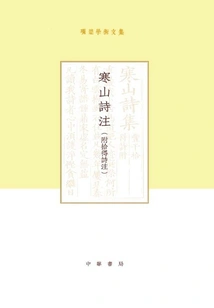
Academic Collection of Xiang Chu: Notes on Hanshan Poems (with Supplementary Notes on Poems)
Literature项楚学术文集:寒山诗注(附拾得诗注)
Xiang Chu
"Hanshan Poems Annotations" is Mr. Xiang Chu's another masterpiece on the collation and interpretation of Tang Dynasty vernacular popular poetry after "Wang Fanzhi Poems Annotations". "Hanshan Poems Annotations" is based on the Song Dynasty version of the four series of publications, and is collated from the Imperial Palace Provincial Edition, the Zhengzhong Edition, the Korean Edition and the Siku Edition and other rare books handed down from generation to generation. It can be called the most complete and final edition of Hanshan Poems, with the characteristics of detailed and rich annotations.
"Hanshan Poems Annotations" is Mr. Xiang Chu's another masterpiece on the collation and interpretation of Tang Dynasty vernacular popular poetry after "Wang Fanzhi Poems Annotations". "Hanshan Poems Annotations" is based on the Song Dynasty version of the four series of publications, and is collated from the Imperial Palace Provincial Edition, the Zhengzhong Edition, the Korean Edition and the Siku Edition and other rare books handed down from generation to generation. It can be called the most complete and final edition of Hanshan Poems, with the characteristics of detailed and rich annotations.
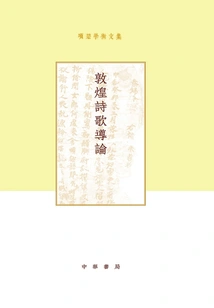
项楚学术文集:敦煌诗歌导论
Xiang Chu
"Introduction to Dunhuang Poetry" is based on the document proofreading and textual research of Dunhuang poetry, and comprehensively and systematically reviews the overall picture of Dunhuang poetry. It divides the Tang and Five Dynasty poems preserved in Dunhuang posthumous documents into five categories: literati poetry, Taoist poetry, folk poetry, local poetry, and Wang Fanzhi poetry, and introduces them according to the nature of the poetry, writing time, author or research situation.
"Introduction to Dunhuang Poetry" is based on the document proofreading and textual research of Dunhuang poetry, and comprehensively and systematically reviews the overall picture of Dunhuang poetry. It divides the Tang and Five Dynasty poems preserved in Dunhuang posthumous documents into five categories: literati poetry, Taoist poetry, folk poetry, local poetry, and Wang Fanzhi poetry, and introduces them according to the nature of the poetry, writing time, author or research situation.
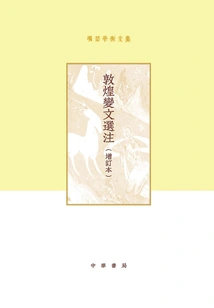
Academic Collection of Xiang Chu: Selected Annotations of Dunhuang Bianwen (updated Edition)
Literature项楚学术文集:敦煌变文选注(增订本)
Xiang Chu
"Selected Notes on Dunhuang Bianwen (Updated Edition) (Part 1 and 2)" selects twenty-seven articles on Dunhuang Bianwen, including famous articles with outstanding ideas and art, such as Guo Zaiyi's review of "Wu Zixu Bianwen", "Meng Jiangnu Bianwen", "Wang Zhaojun Bianwen", "Hell Bianwen", "Sou Shen Ji", etc. In Dunhuang Bianwen. At the same time, various works of different genres and themes are also taken into consideration.
"Selected Notes on Dunhuang Bianwen (Updated Edition) (Part 1 and 2)" selects twenty-seven articles on Dunhuang Bianwen, including famous articles with outstanding ideas and art, such as Guo Zaiyi's review of "Wu Zixu Bianwen", "Meng Jiangnu Bianwen", "Wang Zhaojun Bianwen", "Hell Bianwen", "Sou Shen Ji", etc. In Dunhuang Bianwen. At the same time, various works of different genres and themes are also taken into consideration.
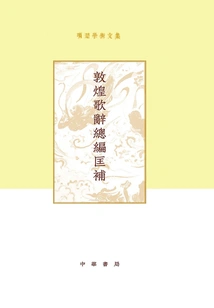
项楚学术文集:敦煌歌辞总编匡补
Xiang Chu
This book is a supplement to Ren Bandang's "General Editor of Dunhuang Songs". The "General Editor of Dunhuang Songs" contains more than 1,300 poems, but there are still deficiencies in text editing and content interpretation. In view of this, this book provides supplementary opinions on such poems as "Gong Yuan Chun", "Siyue People", "Yu Gezi", "Huanxisha", "Bodhisattvaman", "Wang Jiangnan", "Emperor's Sense", etc.
This book is a supplement to Ren Bandang's "General Editor of Dunhuang Songs". The "General Editor of Dunhuang Songs" contains more than 1,300 poems, but there are still deficiencies in text editing and content interpretation. In view of this, this book provides supplementary opinions on such poems as "Gong Yuan Chun", "Siyue People", "Yu Gezi", "Huanxisha", "Bodhisattvaman", "Wang Jiangnan", "Emperor's Sense", etc.