Library
Browse and search books
9 novels found
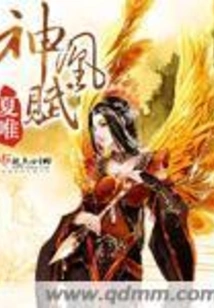
Divine Phoenix Fu
Xianxia Fantasy神凰赋
Xia Wei
What is the meaning of reincarnation... The background is the grand world of Xianxia, an era when all races are rising together. A little lotus flower fairy with no background joined the sect with a super powerful background. The fellow sect brother was either the prince of the God Clan or the heir to the God of War. Not only did she sigh that she also had a background. And after another natural-born goddess became a disciple, she actually flirted with the master who never showed up and had long since retired? Good guy!
What is the meaning of reincarnation... The background is the grand world of Xianxia, an era when all races are rising together. A little lotus flower fairy with no background joined the sect with a super powerful background. The fellow sect brother was either the prince of the God Clan or the heir to the God of War. Not only did she sigh that she also had a background. And after another natural-born goddess became a disciple, she actually flirted with the master who never showed up and had long since retired? Good guy!
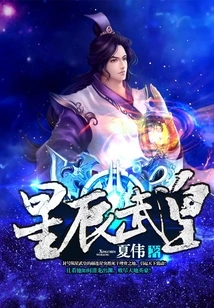
Star Martial Emperor
Xuanhuan星辰武皇
Xia Wei
He Lianxing, who was nicknamed the 'Meteor Star' Martial Emperor, suddenly died in the burial ground, causing shock in the world! On that day, the head of the Li family in Lianyung City in the Ziyun Mountains of the Twelve Prefectures of the Southern Territory gave birth to a son, named Li Feiyang! Fifteen years later, Li Feiyang, who had mediocre qualifications and talents, was beaten in the academy. He awakened his soul from his previous life and soared into the sky! Let's see how he emerges from the abyss and defeats all the heroes in the world! Cultivation realm [physical training, warrior, martial artist, military general, martial spirit, martial king, martial ancestor, martial master, martial emperor, martial emperor... Martial god]
He Lianxing, who was nicknamed the 'Meteor Star' Martial Emperor, suddenly died in the burial ground, causing shock in the world! On that day, the head of the Li family in Lianyung City in the Ziyun Mountains of the Twelve Prefectures of the Southern Territory gave birth to a son, named Li Feiyang! Fifteen years later, Li Feiyang, who had mediocre qualifications and talents, was beaten in the academy. He awakened his soul from his previous life and soared into the sky! Let's see how he emerges from the abyss and defeats all the heroes in the world! Cultivation realm [physical training, warrior, martial artist, military general, martial spirit, martial king, martial ancestor, martial master, martial emperor, martial emperor... Martial god]
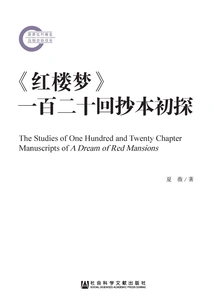
《红楼梦》一百二十回抄本初探
Xia Wei
This is a groundbreaking work on red studies. This book believes that there is a neglected version system in the version system of "Dream of Red Mansions": the 120-chapter manuscript system, and makes a systematic and detailed study and introduction. Because this system is closely related to the issue of authorship of the last forty chapters of "Dream of Red Mansions", the author, based on the many achievements of previous scholars, has made a comprehensive and in-depth refutation of the main arguments and arguments of the representatives of the new Redology, Hu Shi and Yu Pingbo, who proposed, adhered to and solidified the "Gao E continuation theory", as well as the later Tan Yi School, and fundamentally solved the problem of "Gao E's continuation theory". This may become a foundational new development for the further development of red science.
This is a groundbreaking work on red studies. This book believes that there is a neglected version system in the version system of "Dream of Red Mansions": the 120-chapter manuscript system, and makes a systematic and detailed study and introduction. Because this system is closely related to the issue of authorship of the last forty chapters of "Dream of Red Mansions", the author, based on the many achievements of previous scholars, has made a comprehensive and in-depth refutation of the main arguments and arguments of the representatives of the new Redology, Hu Shi and Yu Pingbo, who proposed, adhered to and solidified the "Gao E continuation theory", as well as the later Tan Yi School, and fundamentally solved the problem of "Gao E's continuation theory". This may become a foundational new development for the further development of red science.
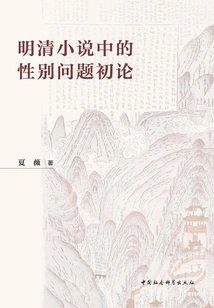
明清小说中的性别问题初论
Xia Wei
This book starts from issues such as gender wars and the formation and development of gender protracted wars in primitive societies. Taking various ancient novels as examples, this book explores the impact of the androcentric gender system in ancient Chinese society on the gender outlook of novel authors from the perspective of novel creation, and its specific manifestation in the creation process. The book discusses how, under the dual view of women (including the two contradictory concepts of a woman's insubordination and a virtuous wife), conflicted and fearful men teach women recklessly, how they create alternative hierarchical classifications of women in the confusion of moral standards, and The novel represents the existential status of both sexes in ancient society; it explores how the author treats real or unreal materials, how they are selected by the novel author, where they are used, and what kind of creative intentions, ideology and gender concepts the author expresses.
This book starts from issues such as gender wars and the formation and development of gender protracted wars in primitive societies. Taking various ancient novels as examples, this book explores the impact of the androcentric gender system in ancient Chinese society on the gender outlook of novel authors from the perspective of novel creation, and its specific manifestation in the creation process. The book discusses how, under the dual view of women (including the two contradictory concepts of a woman's insubordination and a virtuous wife), conflicted and fearful men teach women recklessly, how they create alternative hierarchical classifications of women in the confusion of moral standards, and The novel represents the existential status of both sexes in ancient society; it explores how the author treats real or unreal materials, how they are selected by the novel author, where they are used, and what kind of creative intentions, ideology and gender concepts the author expresses.
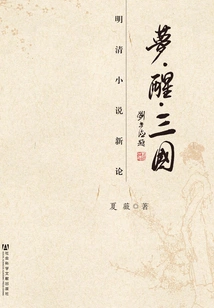
梦·醒·三国:明清小说新论
Xia Wei
This book is written by Xia Wei from the Institute of Literature, Chinese Academy of Social Sciences. The author attempts to discuss "Dream of Red Mansions", "The Story of Awakening Marriage" and "The Romance of the Three Kingdoms" together. The whole book is divided into eleven chapters. Among them, the discussion of "Dream of Red Mansions" is relatively large, and it mainly discusses the issue of whether the last forty chapters of "Dream of Red Mansions" are continuations.
This book is written by Xia Wei from the Institute of Literature, Chinese Academy of Social Sciences. The author attempts to discuss "Dream of Red Mansions", "The Story of Awakening Marriage" and "The Romance of the Three Kingdoms" together. The whole book is divided into eleven chapters. Among them, the discussion of "Dream of Red Mansions" is relatively large, and it mainly discusses the issue of whether the last forty chapters of "Dream of Red Mansions" are continuations.
Doucha
General Fiction斗茶
Xia Wei
The tea shop in Xiping Ancient Town becomes as lively as the Chinese New Year when spring tea comes on the market. Early that morning, Wei Yin's apprentice Luo Wenxuan picked up two loads of new tea samples and went to the tea shop in the town to sell them. When almost ten kilograms of tea were sold, he packed up the pole and walked into the "Yuxuan Tower" carrying the ten kilograms of tea. As soon as he entered the door, he saw the boss, Jin Datou, swinging a cattail leaf fan and half lying on a bamboo chair, making a pot of tea and drinking it himself. He walked over and said, "Boss Jin, how are you always? Wenxuan has brought you tea." When Jin Datou saw that it was Luo Wenxuan, he smiled hurriedly. He greeted me: "Nephew Wenxuan, you old man Wei from Weixi Township hasn't sent me good tea for a long time! Look, now my Yuxuan Tower is run under the banner of Wei Yin's daughter from your hometown, but it's Chenjiazhuang's tea."
The tea shop in Xiping Ancient Town becomes as lively as the Chinese New Year when spring tea comes on the market. Early that morning, Wei Yin's apprentice Luo Wenxuan picked up two loads of new tea samples and went to the tea shop in the town to sell them. When almost ten kilograms of tea were sold, he packed up the pole and walked into the "Yuxuan Tower" carrying the ten kilograms of tea. As soon as he entered the door, he saw the boss, Jin Datou, swinging a cattail leaf fan and half lying on a bamboo chair, making a pot of tea and drinking it himself. He walked over and said, "Boss Jin, how are you always? Wenxuan has brought you tea." When Jin Datou saw that it was Luo Wenxuan, he smiled hurriedly. He greeted me: "Nephew Wenxuan, you old man Wei from Weixi Township hasn't sent me good tea for a long time! Look, now my Yuxuan Tower is run under the banner of Wei Yin's daughter from your hometown, but it's Chenjiazhuang's tea."
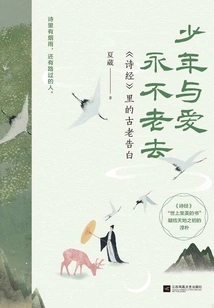
少年与爱永不老去:《诗经》里的古老告白
Xia Wei
The Book of Songs is known as "the most beautiful book in the world", embodying the simplicity of the beginning of heaven and earth. It has been circulated for more than two thousand years, injected into the depths of our souls, and is as fresh as yesterday. This book extracts 40 classic works from the Book of Songs, divided into five volumes: "Beauty is like a flower", "A gentleman is like a jade", "Good times are like a dream", "Fireworks are like a family" and "Life in the Floating World". The author tastes it with an elegant and spiritual pen, explains the ageless sentiments of the Book of Songs, and interprets the love, hate, resentment, ups and downs of the people in the five thousand years of Chinese history. Let the people who once wrote and sang these ancient songs live again, and be able to show the thickness of life and the thinness of time. After all the vicissitudes of life, what has settled down are human affairs and human relationships. When reading the Book of Songs and looking at these beautiful characters, a thousand years seems like a blink of an eye. The rich daily life and full thoughts of the sages were inadvertently thrown into the vast river of history by these poems. It happened to be picked up by you and me thousands of years later, and it turned into a thousand years in an instant. Today, we still feel the same way.
The Book of Songs is known as "the most beautiful book in the world", embodying the simplicity of the beginning of heaven and earth. It has been circulated for more than two thousand years, injected into the depths of our souls, and is as fresh as yesterday. This book extracts 40 classic works from the Book of Songs, divided into five volumes: "Beauty is like a flower", "A gentleman is like a jade", "Good times are like a dream", "Fireworks are like a family" and "Life in the Floating World". The author tastes it with an elegant and spiritual pen, explains the ageless sentiments of the Book of Songs, and interprets the love, hate, resentment, ups and downs of the people in the five thousand years of Chinese history. Let the people who once wrote and sang these ancient songs live again, and be able to show the thickness of life and the thinness of time. After all the vicissitudes of life, what has settled down are human affairs and human relationships. When reading the Book of Songs and looking at these beautiful characters, a thousand years seems like a blink of an eye. The rich daily life and full thoughts of the sages were inadvertently thrown into the vast river of history by these poems. It happened to be picked up by you and me thousands of years later, and it turned into a thousand years in an instant. Today, we still feel the same way.
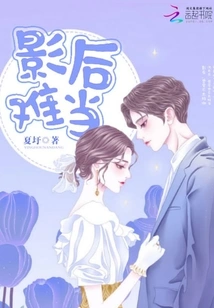
It's Hard to Be a Movie Queen
Modern Romance影后难当
Xia Wei
Whether an 18th-tier actress can make a comeback depends entirely on President Shen's mood this time. It's hard to get along in the entertainment industry, but President Shen's thoughts are even harder to understand!
Whether an 18th-tier actress can make a comeback depends entirely on President Shen's mood this time. It's hard to get along in the entertainment industry, but President Shen's thoughts are even harder to understand!
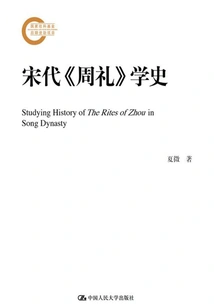
宋代《周礼》学史
Xia Wei
As the first chronological history of the study of "Zhou Rites", this book conducts a comprehensive and in-depth study of the study of "Zhou Rites" in the Song Dynasty from the perspective of the history of Confucian classics, including case studies, special studies and comprehensive studies. It is proposed that the research on "Zhou Rites" before Qingli formed the Sinological research method of "Zhou Rites" and followed it for a long time, which resulted in a rigid and rigid research atmosphere on "Zhou Rites"; the research on "Zhou Rites" after Qingli began to break through the "Zhou Rites" Sinological research methods; after the Xining Reform, more scholars Paying attention to "Zhou Rites", he made breakthroughs in the Sinological research methods of "Zhou Rites" in many aspects, and initially formed the "Zhou Rites" Song studies research methods. In the late Southern Song Dynasty, with continuous improvement of experience, the "Zhou Rites" Song studies research methods were finally established, and profoundly influenced the study of "Zhou Rites" in the Yuan, Ming and Qing Dynasties. This book expresses its own opinions on several major issues in the study of "Zhou Rites" in the Song Dynasty, and provides a comprehensive reference for deepening the study of the academic and ideological history of "Zhou Rites" in the Song Dynasty.
As the first chronological history of the study of "Zhou Rites", this book conducts a comprehensive and in-depth study of the study of "Zhou Rites" in the Song Dynasty from the perspective of the history of Confucian classics, including case studies, special studies and comprehensive studies. It is proposed that the research on "Zhou Rites" before Qingli formed the Sinological research method of "Zhou Rites" and followed it for a long time, which resulted in a rigid and rigid research atmosphere on "Zhou Rites"; the research on "Zhou Rites" after Qingli began to break through the "Zhou Rites" Sinological research methods; after the Xining Reform, more scholars Paying attention to "Zhou Rites", he made breakthroughs in the Sinological research methods of "Zhou Rites" in many aspects, and initially formed the "Zhou Rites" Song studies research methods. In the late Southern Song Dynasty, with continuous improvement of experience, the "Zhou Rites" Song studies research methods were finally established, and profoundly influenced the study of "Zhou Rites" in the Yuan, Ming and Qing Dynasties. This book expresses its own opinions on several major issues in the study of "Zhou Rites" in the Song Dynasty, and provides a comprehensive reference for deepening the study of the academic and ideological history of "Zhou Rites" in the Song Dynasty.