Library
Browse and search books
3 novels found
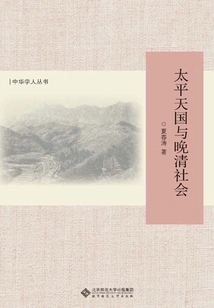
太平天国与晚清社会
Xia Chuntao
The study of the history of the Taiping Rebellion has achieved fruitful results, but now every step forward requires great efforts. This book attempts to examine the Taiping Rebellion in the context of the entire modern Chinese society from the perspective of multi-party interactions. It not only traces the political, military, and economic conditions of the Taiping Heavenly Kingdom period from a social perspective; it also focuses on the social dynamics at that time and the ideological characteristics of Hong Xiuquan and others, covering issues that are confusing and controversial in the history of the Taiping Heavenly Kingdom; it also examines the countermeasures of the Qing court as its opponent, the ups and downs of officialdom and people's livelihood conditions, and its impact on late Qing society. New writing on old topics, well-founded remarks, and new ideas will undoubtedly vigorously promote the study of the history of the late Qing Dynasty and the Taiping Rebellion.
The study of the history of the Taiping Rebellion has achieved fruitful results, but now every step forward requires great efforts. This book attempts to examine the Taiping Rebellion in the context of the entire modern Chinese society from the perspective of multi-party interactions. It not only traces the political, military, and economic conditions of the Taiping Heavenly Kingdom period from a social perspective; it also focuses on the social dynamics at that time and the ideological characteristics of Hong Xiuquan and others, covering issues that are confusing and controversial in the history of the Taiping Heavenly Kingdom; it also examines the countermeasures of the Qing court as its opponent, the ups and downs of officialdom and people's livelihood conditions, and its impact on late Qing society. New writing on old topics, well-founded remarks, and new ideas will undoubtedly vigorously promote the study of the history of the late Qing Dynasty and the Taiping Rebellion.
Touch History
History触摸历史
Xia Chuntao
This book is a collection of academic essays by Mr. Xia Chuntao, a famous expert on the history of the Taiping Rebellion and a researcher at the Institute of Historical Theory of the Chinese Academy of History. This book has certain academic value and market value.
This book is a collection of academic essays by Mr. Xia Chuntao, a famous expert on the history of the Taiping Rebellion and a researcher at the Institute of Historical Theory of the Chinese Academy of History. This book has certain academic value and market value.
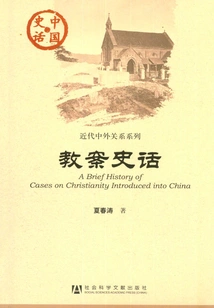
Lesson Plan History
History教案史话
Xia Chuntao
Due to the large differences in cultural traditions and historical backgrounds between the East and the West, Christianity has been rejected by Chinese people since it was introduced to China in the Tang Dynasty due to its conflict with Chinese political and religious etiquette. This is an unavoidable phenomenon in the process of exchanges and collisions between Chinese and Western cultures. However, after the Opium War, the spread of Christianity in China no longer fell within the scope of normal cultural exchanges. Instead, it relied on unequal treaties and the protection of foreign guns and artillery to force its way in. From the beginning, it was closely linked to the colonial expansion activities of the great powers in China. The large number of conclusive historical facts recorded in this booklet reveal to people exactly how Western missionaries closely cooperated with the "gunboat policy" of their own governments and followed suit, thus pushing China step by step into the abyss of semi-colonialism.
Due to the large differences in cultural traditions and historical backgrounds between the East and the West, Christianity has been rejected by Chinese people since it was introduced to China in the Tang Dynasty due to its conflict with Chinese political and religious etiquette. This is an unavoidable phenomenon in the process of exchanges and collisions between Chinese and Western cultures. However, after the Opium War, the spread of Christianity in China no longer fell within the scope of normal cultural exchanges. Instead, it relied on unequal treaties and the protection of foreign guns and artillery to force its way in. From the beginning, it was closely linked to the colonial expansion activities of the great powers in China. The large number of conclusive historical facts recorded in this booklet reveal to people exactly how Western missionaries closely cooperated with the "gunboat policy" of their own governments and followed suit, thus pushing China step by step into the abyss of semi-colonialism.