Library
Browse and search books
1 novel found
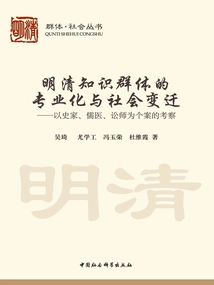
明清知识群体的专业化与社会变迁:以史家、儒医、讼师为个案的考察
Wu Qi You Xuegong Feng Yurong Du Weixia
This book is based on the Ming and Qing Dynasties, focusing on historians, Confucian doctors, and lawyers, and studies the specialization and social changes of intellectual groups in modern times. The Ming and Qing Dynasties were a major social transition period in China from tradition to modernity. Social changes were dramatic and complex, and were the key points in the turning point and the "Great Divergence" in the fate of Chinese and Western history. Many important phenomena, events, and issues that emerged during this period have distinct characteristics of the times and have widespread and far-reaching influence. To examine social changes in this transitional period, knowledge groups are one of the most effective academic perspectives. As an important part of social groups, knowledge groups are not only a constituent element of social structure, but also the main driving force for social operations and social changes. The specialization of knowledge groups gradually focuses on and devotes itself to certain aspects or aspects, showing a trend of professional development. This trend of specialization is closely related to the socialization and professionalization of knowledge groups, and is also linked to issues such as the socialization process of knowledge, changes in regional society, and movements of social classes. The specialization of modern knowledge groups is different from the modern disciplinary knowledge system, public service characteristics and other connotations of professional groups in the modern sense, but it is an important link and process in the transformation of knowledge groups from tradition to modernity.
This book is based on the Ming and Qing Dynasties, focusing on historians, Confucian doctors, and lawyers, and studies the specialization and social changes of intellectual groups in modern times. The Ming and Qing Dynasties were a major social transition period in China from tradition to modernity. Social changes were dramatic and complex, and were the key points in the turning point and the "Great Divergence" in the fate of Chinese and Western history. Many important phenomena, events, and issues that emerged during this period have distinct characteristics of the times and have widespread and far-reaching influence. To examine social changes in this transitional period, knowledge groups are one of the most effective academic perspectives. As an important part of social groups, knowledge groups are not only a constituent element of social structure, but also the main driving force for social operations and social changes. The specialization of knowledge groups gradually focuses on and devotes itself to certain aspects or aspects, showing a trend of professional development. This trend of specialization is closely related to the socialization and professionalization of knowledge groups, and is also linked to issues such as the socialization process of knowledge, changes in regional society, and movements of social classes. The specialization of modern knowledge groups is different from the modern disciplinary knowledge system, public service characteristics and other connotations of professional groups in the modern sense, but it is an important link and process in the transformation of knowledge groups from tradition to modernity.