Library
Browse and search books
3 novels found
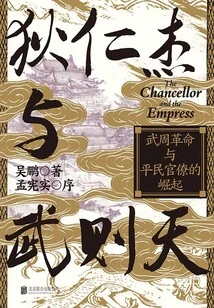
狄仁杰与武则天:武周革命与平民官僚的崛起
Wu Peng
Wu Zetian and Di Renjie were the most legendary pair of monarchs and ministers in the Tang Dynasty and even in ancient China. Their names have transcended history and become symbols of power and wisdom. There have always been different opinions about the relationship between the two - Di Renjie was Wu Zetian's most trusted prime minister, and was also regarded as the mastermind behind her abdication and Li Tang's restoration. The spread of this legend actually reflects the dramatic changes of an era. As the only female emperor in Chinese history, Wu Zetian promoted reforms with extraordinary political courage against the background of numerous abuses in the early Tang Dynasty. She broke the monopoly of the high-ranking aristocrats on political power and social class, and opened a new situation in the rise of civilian bureaucracy. It was in this wave of the times that Di Renjie, who was born in a poor family of a common people, stood out and became a famous prime minister with his outstanding intelligence and foresight. Di Renjie's career is not only the result of personal struggle, but also the epitome of the transformation of social structure. The relationship between him and Wu Zetian is not only political cooperation and checks and balances, but also a true portrayal of the replacement of social classes. The system and class revolution promoted by the two men profoundly changed the trend of ancient Chinese politics and opened a new chapter in history leading to the "Kaiyuan Age".
Wu Zetian and Di Renjie were the most legendary pair of monarchs and ministers in the Tang Dynasty and even in ancient China. Their names have transcended history and become symbols of power and wisdom. There have always been different opinions about the relationship between the two - Di Renjie was Wu Zetian's most trusted prime minister, and was also regarded as the mastermind behind her abdication and Li Tang's restoration. The spread of this legend actually reflects the dramatic changes of an era. As the only female emperor in Chinese history, Wu Zetian promoted reforms with extraordinary political courage against the background of numerous abuses in the early Tang Dynasty. She broke the monopoly of the high-ranking aristocrats on political power and social class, and opened a new situation in the rise of civilian bureaucracy. It was in this wave of the times that Di Renjie, who was born in a poor family of a common people, stood out and became a famous prime minister with his outstanding intelligence and foresight. Di Renjie's career is not only the result of personal struggle, but also the epitome of the transformation of social structure. The relationship between him and Wu Zetian is not only political cooperation and checks and balances, but also a true portrayal of the replacement of social classes. The system and class revolution promoted by the two men profoundly changed the trend of ancient Chinese politics and opened a new chapter in history leading to the "Kaiyuan Age".
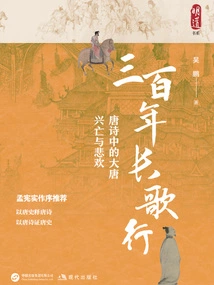
三百年长歌行:唐诗中的大唐兴亡与悲欢
Wu Peng
The Tang Dynasty was the heyday of poetry development. Tang poetry profoundly reflects the core spirit of the Tang Dynasty and has become an important mirror image of historical evolution, reflecting the trajectory of social change. Almost all major historical events in the Tang Dynasty were clearly recorded in official historical documents, and were vividly and artistically presented in poetic texts, which served as "mutual evidence between poetry and history." This book uses 530 Tang poems with wide social recognition as narrative clues. Through in-depth analysis of poetic texts and restoration and reconstruction of historical context, this book systematically sorts out the historical development of the Tang Dynasty in the past 300 years. The book uses poetry to testify to history, showing in sequence the majestic founding of the Tang Dynasty, the glory of Zhenguan rule, the exploration of Emperor Gaozong and Wuzhou, Zhongzong Ruizong's efforts to bring chaos, the heyday of the Kaiyuan era, the changes in the Anshi Rebellion, the chaos of feudal rule, the unfulfilled ambitions of the reform of the two kings and eight Sima, the reappearance of the Yuanhe Zhongxing, the inability to recover from the Ganlu Incident, The ups and downs of the poets in the Niu-Li Party Struggle, the reflection of the ZTE in Huichang, the afterglow of the Dazhong Reign, and the final impact of the Huangchao Uprising are all familiar Tang historical events and the fate of characters.
The Tang Dynasty was the heyday of poetry development. Tang poetry profoundly reflects the core spirit of the Tang Dynasty and has become an important mirror image of historical evolution, reflecting the trajectory of social change. Almost all major historical events in the Tang Dynasty were clearly recorded in official historical documents, and were vividly and artistically presented in poetic texts, which served as "mutual evidence between poetry and history." This book uses 530 Tang poems with wide social recognition as narrative clues. Through in-depth analysis of poetic texts and restoration and reconstruction of historical context, this book systematically sorts out the historical development of the Tang Dynasty in the past 300 years. The book uses poetry to testify to history, showing in sequence the majestic founding of the Tang Dynasty, the glory of Zhenguan rule, the exploration of Emperor Gaozong and Wuzhou, Zhongzong Ruizong's efforts to bring chaos, the heyday of the Kaiyuan era, the changes in the Anshi Rebellion, the chaos of feudal rule, the unfulfilled ambitions of the reform of the two kings and eight Sima, the reappearance of the Yuanhe Zhongxing, the inability to recover from the Ganlu Incident, The ups and downs of the poets in the Niu-Li Party Struggle, the reflection of the ZTE in Huichang, the afterglow of the Dazhong Reign, and the final impact of the Huangchao Uprising are all familiar Tang historical events and the fate of characters.
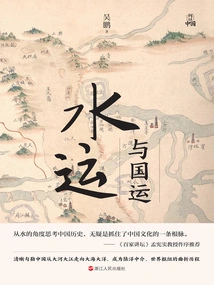
水运与国运
Wu Peng
Why China? The land of China is crisscrossed by water networks. Water is the source of life. Water conservancy is the lifeblood of agriculture and the root of culture. The guiding role of water in China's historical development is just like the flow of water, twists and turns, and meandering firmly. It can be said that the Chinese nation originated and was formed here. Wu Peng, a doctorate in history from Renmin University of China and an emerging writer, leads readers upstream from a unique and novel perspective to explore the secrets of the rise and fall of dynasties and the direction of Chinese history, providing a new perspective for us to deeply understand Chinese civilization. The characteristics of this book are the perfect blend of scholarship and interest, rich and solid historical materials, easy-to-understand language, and the integration of realistic concerns and historical thinking. Are the records of water conservancy and water wars we see today completely consistent with the facts? How does the Chinese nation integrate continental civilization and maritime civilization? What is the position of the history of Chinese civilization in the history of world civilization? The author asks questions layer by layer, showing readers the history of Chinese civilization under the influence of water transportation with clear logic and simple explanations.
Why China? The land of China is crisscrossed by water networks. Water is the source of life. Water conservancy is the lifeblood of agriculture and the root of culture. The guiding role of water in China's historical development is just like the flow of water, twists and turns, and meandering firmly. It can be said that the Chinese nation originated and was formed here. Wu Peng, a doctorate in history from Renmin University of China and an emerging writer, leads readers upstream from a unique and novel perspective to explore the secrets of the rise and fall of dynasties and the direction of Chinese history, providing a new perspective for us to deeply understand Chinese civilization. The characteristics of this book are the perfect blend of scholarship and interest, rich and solid historical materials, easy-to-understand language, and the integration of realistic concerns and historical thinking. Are the records of water conservancy and water wars we see today completely consistent with the facts? How does the Chinese nation integrate continental civilization and maritime civilization? What is the position of the history of Chinese civilization in the history of world civilization? The author asks questions layer by layer, showing readers the history of Chinese civilization under the influence of water transportation with clear logic and simple explanations.