Library
Browse and search books
2 novels found
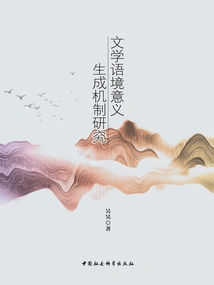
文学语境意义生成机制研究
Wu Hao
This book aims to explore the multiple meanings of literary contexts and the meaning-generating mechanisms of various literary contexts. First, it focuses on the generalization of "context" in the field of humanities and social sciences, and explores the changes in research methods and thinking paradigms behind it; secondly, on the basis of redefining the concept of "context", it examines the new connotations and diversified types of "literary context", and integrates literary language from the textual level. The context is divided into four types: "intra-textual context", "inter-textual context", "inter-semiotic context" and "social and cultural context"; finally, it explores the unique multiple meaning function of literary context that is different from non-literary context, and deeply studies the different meaning mechanisms of various context types to generate literary multiple meanings. The book tries its best to show the full picture of literary context, focusing on exploring its functions and mechanisms for generating complex meanings. It also discusses the evolution of context and its functions and values in the fields of artistic nature and literary criticism practice.
This book aims to explore the multiple meanings of literary contexts and the meaning-generating mechanisms of various literary contexts. First, it focuses on the generalization of "context" in the field of humanities and social sciences, and explores the changes in research methods and thinking paradigms behind it; secondly, on the basis of redefining the concept of "context", it examines the new connotations and diversified types of "literary context", and integrates literary language from the textual level. The context is divided into four types: "intra-textual context", "inter-textual context", "inter-semiotic context" and "social and cultural context"; finally, it explores the unique multiple meaning function of literary context that is different from non-literary context, and deeply studies the different meaning mechanisms of various context types to generate literary multiple meanings. The book tries its best to show the full picture of literary context, focusing on exploring its functions and mechanisms for generating complex meanings. It also discusses the evolution of context and its functions and values in the fields of artistic nature and literary criticism practice.
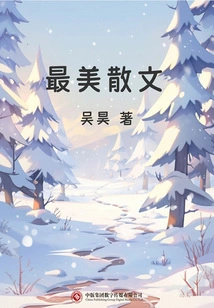
The Most Beautiful Prose
Literature最美散文
Wu Hao
The works are a collection of essays, including: the first volume "Hometown Feelings" (Everyone has feelings about their hometown, because the hometown has nurtured people and left many deep memories for people), the second volume "Lucheng Writing" (Baotou is the author's second hometown, and the author has been denying that he is a Baotou native for many years, but in many cases In the long time and space, especially when the author leaves Baotou and is in another place and another group of people, the body and mind seem to have to think of themselves as Baotou people), the third volume "Human Talk under the Lamp" ("Two people talking under the lamp, beside a pot of flowers. Although the words are silent, the wonderful understanding is the same." This ancient poem from the Ming Dynasty is most suitable to describe this volume).
The works are a collection of essays, including: the first volume "Hometown Feelings" (Everyone has feelings about their hometown, because the hometown has nurtured people and left many deep memories for people), the second volume "Lucheng Writing" (Baotou is the author's second hometown, and the author has been denying that he is a Baotou native for many years, but in many cases In the long time and space, especially when the author leaves Baotou and is in another place and another group of people, the body and mind seem to have to think of themselves as Baotou people), the third volume "Human Talk under the Lamp" ("Two people talking under the lamp, beside a pot of flowers. Although the words are silent, the wonderful understanding is the same." This ancient poem from the Ming Dynasty is most suitable to describe this volume).