Library
Browse and search books
6 novels found
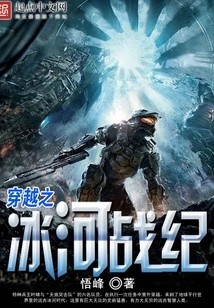
Time Travel: Ice Wars
History穿越之冰河战纪
Wu Feng
Special Forces King Ye Xiao and six members of the "Sirius Commando" accidentally traveled through time during a mission and came to the ancient Ice Age in a parallel world, where there were huge prehistoric beasts and ancient intelligent humans with infinite strength. Survival and death are the main themes of this world. Ye Xiao just wants to lead his comrades to live in seclusion in the mountains and forests of this world, live a leisurely and beautiful pastoral life, and be free from the world. However, the reality is often not satisfactory. In order to survive, Ye Xiao led them to continue to become stronger, fight beasts, fight ancient humans, create tribes, build cities, and establish kingdoms... Let's see how they use their wisdom to create the immortal "Sirius" legend again in this different world! PS: This book has no system, is not fantasy, and does not cultivate immortality! This is a prehistoric farming article, farming article, farming article!
Special Forces King Ye Xiao and six members of the "Sirius Commando" accidentally traveled through time during a mission and came to the ancient Ice Age in a parallel world, where there were huge prehistoric beasts and ancient intelligent humans with infinite strength. Survival and death are the main themes of this world. Ye Xiao just wants to lead his comrades to live in seclusion in the mountains and forests of this world, live a leisurely and beautiful pastoral life, and be free from the world. However, the reality is often not satisfactory. In order to survive, Ye Xiao led them to continue to become stronger, fight beasts, fight ancient humans, create tribes, build cities, and establish kingdoms... Let's see how they use their wisdom to create the immortal "Sirius" legend again in this different world! PS: This book has no system, is not fantasy, and does not cultivate immortality! This is a prehistoric farming article, farming article, farming article!
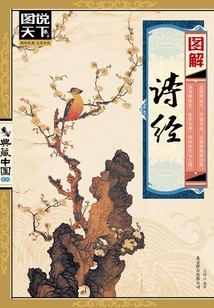
图解诗经(图说天下.典藏中国系列)
Wu Feng
The book "Illustrations of the World·Collection of China: An Illustration of the Book of Songs" is one of the books "Illustrations of the World·Collection of China: An Illustration of the Book of Songs". The book is based on Zhu Xi's Commentary on the Book of Songs, and selects, annotates, translates, and interprets the Book of Songs while maintaining the original structure of elegant poems. The book is interspersed with nearly 200 pictures of the Book of Songs and landscape and figure paintings drawn by painters from past dynasties, which improves the readability and artistry of the book. The main content of the book is a panoramic reproduction of the original appearance of the Book of Songs, which reflects the literary value, artistic value and ideological value of the Book of Songs.
The book "Illustrations of the World·Collection of China: An Illustration of the Book of Songs" is one of the books "Illustrations of the World·Collection of China: An Illustration of the Book of Songs". The book is based on Zhu Xi's Commentary on the Book of Songs, and selects, annotates, translates, and interprets the Book of Songs while maintaining the original structure of elegant poems. The book is interspersed with nearly 200 pictures of the Book of Songs and landscape and figure paintings drawn by painters from past dynasties, which improves the readability and artistry of the book. The main content of the book is a panoramic reproduction of the original appearance of the Book of Songs, which reflects the literary value, artistic value and ideological value of the Book of Songs.
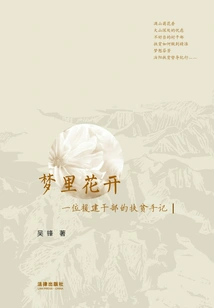
梦里花开:一位援建干部的扶贫手记
Wu Feng
Poverty alleviation is a task that our country has always pursued unremittingly, and has received consistent attention from national leaders. This book is a poverty alleviation diary of an aid cadre, including the fragrance of chrysanthemums in the mountains, searching for the source of happiness, how to retain the most beautiful nostalgia, worries deep in the mountains, what to rely on to cure poverty and stupidity, it is difficult to be a village cadre, the pain and joy of the first secretary in the village, industrial poverty alleviation is a "hard bone", "big brother" must really take the lead, and it is really important to break policy barriers, etc.
Poverty alleviation is a task that our country has always pursued unremittingly, and has received consistent attention from national leaders. This book is a poverty alleviation diary of an aid cadre, including the fragrance of chrysanthemums in the mountains, searching for the source of happiness, how to retain the most beautiful nostalgia, worries deep in the mountains, what to rely on to cure poverty and stupidity, it is difficult to be a village cadre, the pain and joy of the first secretary in the village, industrial poverty alleviation is a "hard bone", "big brother" must really take the lead, and it is really important to break policy barriers, etc.
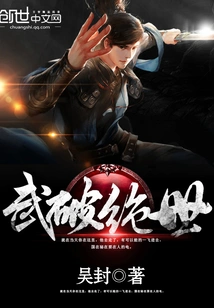
Wu Po Jueshi
Xuanhuan武破绝世
Wu Feng
The martial arts defeat the unparalleled, and fight against the heroes. With your feet on the ground, you will conquer the world!
The martial arts defeat the unparalleled, and fight against the heroes. With your feet on the ground, you will conquer the world!
用历史写成的青春
Wu Feng
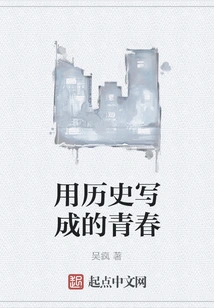
This book is basically divided into two parts. The first half is mainly adapted from high school campus life. It writes about a youthful and flamboyant campus life that is different from others. It rarely involves emotions, and passion and heroism are the mainstream consciousness. The second half is mainly about each protagonist in the book, with the help of two historical figures, each returning to different dynasties to complete their own tasks. Each of them will have different exciting stories in their own dynasty, including bloodshed, sacrifice, betrayal, etc. After everything is over and they return to reality, those once arrogant high school students re-reflect on life and realize what is real life and what is their own personality.
This book is basically divided into two parts. The first half is mainly adapted from high school campus life. It writes about a youthful and flamboyant campus life that is different from others. It rarely involves emotions, and passion and heroism are the mainstream consciousness. The second half is mainly about each protagonist in the book, with the help of two historical figures, each returning to different dynasties to complete their own tasks. Each of them will have different exciting stories in their own dynasty, including bloodshed, sacrifice, betrayal, etc. After everything is over and they return to reality, those once arrogant high school students re-reflect on life and realize what is real life and what is their own personality.
崇祯:从励精求治到民心日离
Wu Feng
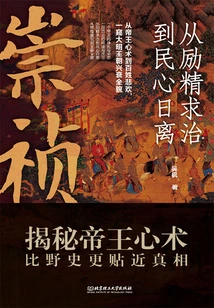
At the end of the Ming Dynasty, the Jurchens outside Shanhaiguan rose up, and the fire of civil unrest within the Shanhaiguan ignited throughout the hinterland of the Central Plains. Emperor Chongzhen, the last king of the Ming Dynasty, led his ministers to fight the fire everywhere like a fire captain. However, contrary to expectations, Emperor Chongzhen's hard work and vigilance failed to usher in the dawn of resurgence for the crumbling empire. Instead, the fire of national subjugation became more and more fierce, and the Ming Dynasty ended with the emperor's death. Emperor Chongzhen was diligent and self-denial throughout his life, and even until his death he felt that he should not be the "king of the country's subjugation." However, the people under his rule chanted "Chongzhen, Chongzhen, re-conquer every year" while devoting all their enthusiasm to the "rebellious ministers and traitors" who did not push for food. The Chongzhen Dynasty had no shortage of loyal and patriotic ministers who "went to the end of the civil service to advise and the military to fight", but in the eyes of Emperor Chongzhen, all officials were "killable both civil and military." Which one is the truth? The fog of history is blocking our eyes, just waiting for you to reach out and push it away.
At the end of the Ming Dynasty, the Jurchens outside Shanhaiguan rose up, and the fire of civil unrest within the Shanhaiguan ignited throughout the hinterland of the Central Plains. Emperor Chongzhen, the last king of the Ming Dynasty, led his ministers to fight the fire everywhere like a fire captain. However, contrary to expectations, Emperor Chongzhen's hard work and vigilance failed to usher in the dawn of resurgence for the crumbling empire. Instead, the fire of national subjugation became more and more fierce, and the Ming Dynasty ended with the emperor's death. Emperor Chongzhen was diligent and self-denial throughout his life, and even until his death he felt that he should not be the "king of the country's subjugation." However, the people under his rule chanted "Chongzhen, Chongzhen, re-conquer every year" while devoting all their enthusiasm to the "rebellious ministers and traitors" who did not push for food. The Chongzhen Dynasty had no shortage of loyal and patriotic ministers who "went to the end of the civil service to advise and the military to fight", but in the eyes of Emperor Chongzhen, all officials were "killable both civil and military." Which one is the truth? The fog of history is blocking our eyes, just waiting for you to reach out and push it away.