Library
Browse and search books
5 novels found
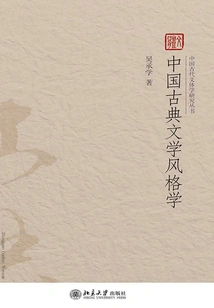
Chinese Classical Literary Style
Literature中国古典文学风格学
Wu Chengxue
Introduction to "Stylistics of Classical Chinese Literature": Stylistics is an extremely rich legacy of ancient Chinese literary criticism. "Chinese Classical Literary Stylistics" is the first comprehensive and in-depth summary and study of Chinese classical literary stylistics. It has traced its origins, theoretical systems, theoretical features and criticism methods, and made a retrospective investigation and pragmatic analysis of the theory of body nature, character and character, era style theory, literary style theory, language style theory and regional style theory. In the research, rigorous theoretical analysis is carried out based on detailed historical materials, and historical deduction and logical induction are combined. This is a monograph with high academic value.
Introduction to "Stylistics of Classical Chinese Literature": Stylistics is an extremely rich legacy of ancient Chinese literary criticism. "Chinese Classical Literary Stylistics" is the first comprehensive and in-depth summary and study of Chinese classical literary stylistics. It has traced its origins, theoretical systems, theoretical features and criticism methods, and made a retrospective investigation and pragmatic analysis of the theory of body nature, character and character, era style theory, literary style theory, language style theory and regional style theory. In the research, rigorous theoretical analysis is carried out based on detailed historical materials, and historical deduction and logical induction are combined. This is a monograph with high academic value.
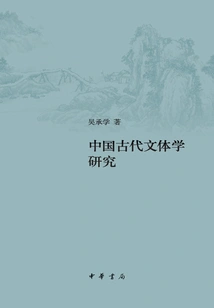
中国古代文体学研究(增订本)
Wu Chengxue
Ancient Chinese stylistics is a comprehensive discipline that studies the genre, system, style, language characteristics, organizational structure and other phenomena of ancient literature. It is an important aspect of literary theory. Regardless of whether people in ancient times or today, they all pay attention to "appropriateness" in writing and acting. It can be said that stylistics is a knowledge that has penetrated into the genes of Chinese culture and is one of the essences of traditional culture. The return to traditional stylistics research, which has gradually declined since modern times, also indicates the return of the Chinese characteristics and Chinese-style discourse system in the field of ancient literature. "Research on Ancient Chinese Stylistics" strives to return to the context of Chinese stylistics to discover the history of Chinese literature itself. Starting from the subject outline, stylistic historical materials, stylistic classification, research methods, literary style, as well as important ancient Chinese stylistic concepts, theories and treatises, it systematically discusses the basic issues in the study of traditional Chinese stylistics. It is fully cited, well-argued, and well-structured, and solves many difficulties and key issues. In terms of research methods, it is proposed that on the basis of inheriting the classical research paradigm, "Learn from Western learning, assist it with technology, test it with systems, and prove it with objects" to establish Chinese stylistics with modern significance and academic height, and practice it in this book. This book contains both the theoretical construction of stylistics and the diversified investigation of the history of stylistics. It macroscopically reproduces the development trajectory of ancient Chinese stylistics and is a representative achievement in the field of stylistics research. This book won the "Fifth Simian Original Award". First published in 2011, this revised and reprinted version has more than one-third of the content added, deleted, and revised, reflecting the author's newer and deeper thinking.
Ancient Chinese stylistics is a comprehensive discipline that studies the genre, system, style, language characteristics, organizational structure and other phenomena of ancient literature. It is an important aspect of literary theory. Regardless of whether people in ancient times or today, they all pay attention to "appropriateness" in writing and acting. It can be said that stylistics is a knowledge that has penetrated into the genes of Chinese culture and is one of the essences of traditional culture. The return to traditional stylistics research, which has gradually declined since modern times, also indicates the return of the Chinese characteristics and Chinese-style discourse system in the field of ancient literature. "Research on Ancient Chinese Stylistics" strives to return to the context of Chinese stylistics to discover the history of Chinese literature itself. Starting from the subject outline, stylistic historical materials, stylistic classification, research methods, literary style, as well as important ancient Chinese stylistic concepts, theories and treatises, it systematically discusses the basic issues in the study of traditional Chinese stylistics. It is fully cited, well-argued, and well-structured, and solves many difficulties and key issues. In terms of research methods, it is proposed that on the basis of inheriting the classical research paradigm, "Learn from Western learning, assist it with technology, test it with systems, and prove it with objects" to establish Chinese stylistics with modern significance and academic height, and practice it in this book. This book contains both the theoretical construction of stylistics and the diversified investigation of the history of stylistics. It macroscopically reproduces the development trajectory of ancient Chinese stylistics and is a representative achievement in the field of stylistics research. This book won the "Fifth Simian Original Award". First published in 2011, this revised and reprinted version has more than one-third of the content added, deleted, and revised, reflecting the author's newer and deeper thinking.
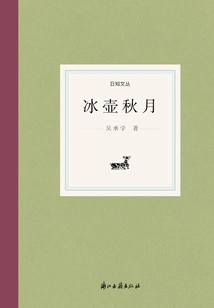
Curling Autumn Moon (rizhiwencong)
Literature冰壶秋月(日知文丛)
Wu Chengxue
This book is one of the series of Japanese essays. It is a collection of essays by Professor Wu Chengxue of the Chinese Department of Sun Yat-sen University. Its content covers Chinese classical literature, cultural exchanges between China and the West, historical discussions about China and foreign countries, notes on reading history, research on ancient Chinese literary styles, etc. The collected articles are divided into three parts: "Memories" are the author's reminiscences of his academic career and memories of his predecessors and friends; "Notes" are the literary and historical notes and academic essays written by the author in his spare time; and "Preface and Postscript" are the prefaces and postscripts written by the author for the academic works of his teachers, friends and students. Wu Chengxue is engaged in the study of ancient Chinese literature and has published a variety of academic works. This book is a collection of his essays other than his "Gaotou Lectures".
This book is one of the series of Japanese essays. It is a collection of essays by Professor Wu Chengxue of the Chinese Department of Sun Yat-sen University. Its content covers Chinese classical literature, cultural exchanges between China and the West, historical discussions about China and foreign countries, notes on reading history, research on ancient Chinese literary styles, etc. The collected articles are divided into three parts: "Memories" are the author's reminiscences of his academic career and memories of his predecessors and friends; "Notes" are the literary and historical notes and academic essays written by the author in his spare time; and "Preface and Postscript" are the prefaces and postscripts written by the author for the academic works of his teachers, friends and students. Wu Chengxue is engaged in the study of ancient Chinese literature and has published a variety of academic works. This book is a collection of his essays other than his "Gaotou Lectures".
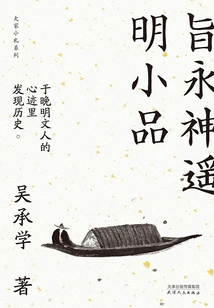
旨永神遥明小品(大家小札系列)
Wu Chengxue
"Zhi Yong Shen Yao Ming Xiao Xiao" is a note and essay written by the famous scholar Wu Chengxue when he studied the essays of the late Ming Dynasty. The essays are a true and vivid portrayal of the mentality of the literati in the late Ming Dynasty. They are ethereal, leisurely and admirable. They are a wonderful supplement to the traditional main body of ancient literature. The book focuses on the main writers who wrote essays in the late Ming Dynasty, and realistically summarizes the overall characteristics of this style in terms of ideological appeal and artistic form. It not only reveals its beauty, that is, the essay establishes a new genre in addition to the traditional ancient prose of "writing to carry the Tao", using a leisurely and contented style to appreciate life in the form of ramblings and whispers; it also reveals its shortcomings, that is, it cannot compare with traditional ancient prose in terms of ideological connotation and historical depth. The text in the book is dense, plain and rhythmic, allowing readers to truly and comprehensively understand the late Ming Dynasty sketches.
"Zhi Yong Shen Yao Ming Xiao Xiao" is a note and essay written by the famous scholar Wu Chengxue when he studied the essays of the late Ming Dynasty. The essays are a true and vivid portrayal of the mentality of the literati in the late Ming Dynasty. They are ethereal, leisurely and admirable. They are a wonderful supplement to the traditional main body of ancient literature. The book focuses on the main writers who wrote essays in the late Ming Dynasty, and realistically summarizes the overall characteristics of this style in terms of ideological appeal and artistic form. It not only reveals its beauty, that is, the essay establishes a new genre in addition to the traditional ancient prose of "writing to carry the Tao", using a leisurely and contented style to appreciate life in the form of ramblings and whispers; it also reveals its shortcomings, that is, it cannot compare with traditional ancient prose in terms of ideological connotation and historical depth. The text in the book is dense, plain and rhythmic, allowing readers to truly and comprehensively understand the late Ming Dynasty sketches.
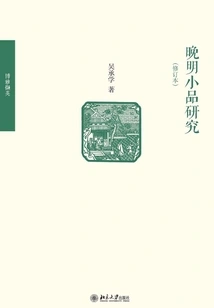
晚明小品研究(修订本)
Wu Chengxue
Late Ming sketches have a unique status in the history of Chinese literature. This book deeply explores the literary tradition, cultural soil, writers, schools, cultural character, and stylistic creation of late Ming sketches, outlines their development clues, ideological appeal, and artistic form characteristics, as well as their important role in the transformation of ancient prose and modern prose and its historical status. It points out the strengths and shortcomings of late Ming sketches realistically, and objectively judges the value of late Ming sketches. At the same time, we will examine the historical impact of late Ming sketches from the reception of them in different historical periods in China and overseas. The author combines historical investigation and theoretical analysis, gradually rising from case analysis to overall theoretical summary. The author attaches great importance to artistic feelings, and his writing often contains poetic sentiment, which is deeply inspired by the eternal and distant meaning of ancient sketches. This book is a representative work in the field of late Ming Dynasty sketch studies, and has reference value for studying the history of ancient Chinese literature and the history of modern literature.
Late Ming sketches have a unique status in the history of Chinese literature. This book deeply explores the literary tradition, cultural soil, writers, schools, cultural character, and stylistic creation of late Ming sketches, outlines their development clues, ideological appeal, and artistic form characteristics, as well as their important role in the transformation of ancient prose and modern prose and its historical status. It points out the strengths and shortcomings of late Ming sketches realistically, and objectively judges the value of late Ming sketches. At the same time, we will examine the historical impact of late Ming sketches from the reception of them in different historical periods in China and overseas. The author combines historical investigation and theoretical analysis, gradually rising from case analysis to overall theoretical summary. The author attaches great importance to artistic feelings, and his writing often contains poetic sentiment, which is deeply inspired by the eternal and distant meaning of ancient sketches. This book is a representative work in the field of late Ming Dynasty sketch studies, and has reference value for studying the history of ancient Chinese literature and the history of modern literature.