Library
Browse and search books
1 novel found
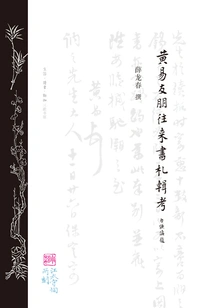
黄易友朋往来书札辑考
Written By Xue Longchun
Huang Yi is a key figure in Qing Dynasty epigraphy and art history. For most of that time, he served in the Jining Canal Office and served as a staff member to the river governor. In August 1786, when passing through Jiaxiang, Shandong, he discovered the famous Wu Temple and rebuilt it on the spot. This was a landmark event in Qianjia epigraphy. Huang Yi's collection of epigraphy and stone rubbings was the largest at that time. He contributed a large number of fine rubbings and old rubbings to the academic world. "Xiao Penglai Pavilion Epigraphy and Stone Inscriptions" can be regarded as an epitome. As one of the "Four Masters of Xiling", his official calligraphy, seal cutting and paintings were also famous at that time. Friends often regretted not getting his calligraphy, paintings and seals. This book compiles more than 660 letters and correspondence between Huang Yi and friends from the collections of public museums and libraries, Qing Dynasty epigraphic works, various publications, auction catalogs at home and abroad, and private collections. Those who corresponded with Huang Yi include academic elites from the Qiang-Jia period such as Wang Chang, Qian Daxin, Weng Fanggang, Qian Yu, Yan Changming, Sun Xingyan, Hong Liangji, Wu Yi, Guifu, Ruan Yuan and Qu Zhongrong. Literary elites such as Yuan Mei, Yao Nai, Tao Liang, Liang Tongshu, Luo Pin, Dong Xun, Deng Shiru, Yi Bingshou, Xi Gang, Qian Yong, as well as local officials, staff and civilian scholars scattered throughout the country. By examining the time, place, characters, and events involved in the letters, those vanished historical scenes and characters' mentality become clear and vivid, and the connections between the large number of letters also make the fragmented information more organized. These are of great significance to our understanding of the social environment of the Qianjia period, the operation of the epigraphy community, the advancement of epigraphy scholarship, and artistic entertainment activities.
Huang Yi is a key figure in Qing Dynasty epigraphy and art history. For most of that time, he served in the Jining Canal Office and served as a staff member to the river governor. In August 1786, when passing through Jiaxiang, Shandong, he discovered the famous Wu Temple and rebuilt it on the spot. This was a landmark event in Qianjia epigraphy. Huang Yi's collection of epigraphy and stone rubbings was the largest at that time. He contributed a large number of fine rubbings and old rubbings to the academic world. "Xiao Penglai Pavilion Epigraphy and Stone Inscriptions" can be regarded as an epitome. As one of the "Four Masters of Xiling", his official calligraphy, seal cutting and paintings were also famous at that time. Friends often regretted not getting his calligraphy, paintings and seals. This book compiles more than 660 letters and correspondence between Huang Yi and friends from the collections of public museums and libraries, Qing Dynasty epigraphic works, various publications, auction catalogs at home and abroad, and private collections. Those who corresponded with Huang Yi include academic elites from the Qiang-Jia period such as Wang Chang, Qian Daxin, Weng Fanggang, Qian Yu, Yan Changming, Sun Xingyan, Hong Liangji, Wu Yi, Guifu, Ruan Yuan and Qu Zhongrong. Literary elites such as Yuan Mei, Yao Nai, Tao Liang, Liang Tongshu, Luo Pin, Dong Xun, Deng Shiru, Yi Bingshou, Xi Gang, Qian Yong, as well as local officials, staff and civilian scholars scattered throughout the country. By examining the time, place, characters, and events involved in the letters, those vanished historical scenes and characters' mentality become clear and vivid, and the connections between the large number of letters also make the fragmented information more organized. These are of great significance to our understanding of the social environment of the Qianjia period, the operation of the epigraphy community, the advancement of epigraphy scholarship, and artistic entertainment activities.