Library
Browse and search books
3 novels found
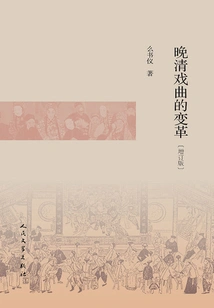
晚清戏曲的变革(增订版)
What Book Instrument
The book discusses the transformation of opera in the late Qing Dynasty from three aspects: court drama, folk drama and the "environment" of opera. The main content includes the transformation of the royal troupe and palace drama in the Qing Dynasty, and the impact of the Hui Troupe's arrival in Beijing on Beijing opera in the late Qing Dynasty. , The rise and fall of male dandies in the history of Ming and Qing dramas, late Qing opera and the "tangzi" in Nancheng, Beijing, late Qing Guan Gong opera performance and the actor's worship of Guan Yu, changes in the social status of actors in the late Qing Dynasty, late Qing opera viewing guides and opera advertisements, etc.
The book discusses the transformation of opera in the late Qing Dynasty from three aspects: court drama, folk drama and the "environment" of opera. The main content includes the transformation of the royal troupe and palace drama in the Qing Dynasty, and the impact of the Hui Troupe's arrival in Beijing on Beijing opera in the late Qing Dynasty. , The rise and fall of male dandies in the history of Ming and Qing dramas, late Qing opera and the "tangzi" in Nancheng, Beijing, late Qing Guan Gong opera performance and the actor's worship of Guan Yu, changes in the social status of actors in the late Qing Dynasty, late Qing opera viewing guides and opera advertisements, etc.
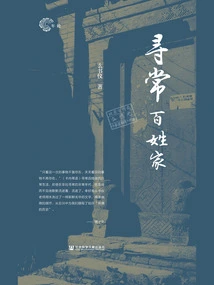
Ordinary People's Home
Literature寻常百姓家
What Book Instrument
This book describes the material and spiritual life of an ordinary family in the 20th century. Its starting point is the 36 audio tapes that Teacher Mo Shuyi accumulated little by little in the 1990s. The skeleton of this book grew out of these physical objects and the text based on the 36 audio tapes. It records the history of an ordinary family: the grandparents lived in the countryside of Fengrun County, Hebei, and ran a grocery store with diligence and frugality; the fathers took the whole family to migrate from the countryside to the city: first to Tangshan, then to Tianjin, and finally to Peiping; the children's generation studied and worked amidst the earth-shaking changes after 1949, realizing the transformation from a businessman family to an intellectual family.
This book describes the material and spiritual life of an ordinary family in the 20th century. Its starting point is the 36 audio tapes that Teacher Mo Shuyi accumulated little by little in the 1990s. The skeleton of this book grew out of these physical objects and the text based on the 36 audio tapes. It records the history of an ordinary family: the grandparents lived in the countryside of Fengrun County, Hebei, and ran a grocery store with diligence and frugality; the fathers took the whole family to migrate from the countryside to the city: first to Tangshan, then to Tianjin, and finally to Peiping; the children's generation studied and worked amidst the earth-shaking changes after 1949, realizing the transformation from a businessman family to an intellectual family.
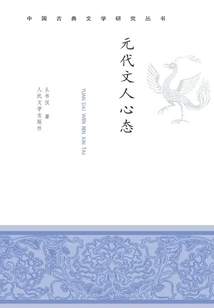
元代文人心态
What Book Instrument
This book is the author's famous work. Originally published by Culture and Art Press, it has not been reprinted for many years. The author of this book has always been good at studying social customs and cultural psychology. After the publication of his "Transformation of Opera in the Late Qing Dynasty", the society received a good response.
This book is the author's famous work. Originally published by Culture and Art Press, it has not been reprinted for many years. The author of this book has always been good at studying social customs and cultural psychology. After the publication of his "Transformation of Opera in the Late Qing Dynasty", the society received a good response.