Library
Browse and search books
5 novels found
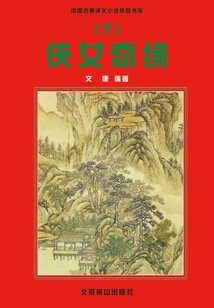
The Romance of the Heroine (part 2)
General Fiction侠女奇缘(下)
Wenkang
"The Romance of Heroes" is a collection of "The Legend of Heroes of Sons and Daughters" and "The Legend of Heroes of Sons and Daughters". "The Legend of Heroes of Sons and Daughters" is also known as "Golden Jade Fate", "The New Book of Japan", and "The Fifty-Three Ginsengs hidden in the True Dharma Eye". The author Wenkang, whose surname is Fei Mo and whose courtesy name is Tiexian, calls himself Yanbei Xianren and is a Manchu Xianghongbanner. The book was written during the Daoguang period of the Qing Dynasty. It originally had fifty-three chapters, but was later lost and lost. At the time of publication, only the first forty chapters remained. The author claims that this book is about "a public case in Kyoto" in the late Kangxi and early Yongzheng years. The novel describes a family with complete five moral ethics and abundant flowers to decorate the "peaceful and prosperous age" of the Qing Dynasty. The heroes and heroines in the novel are the heroes in the author's mind. The story tells that He Yufeng, a famous chivalrous girl in Kyoto, took refuge in the mountains and forests because her father was killed by the powerful Ji Xiantang. She changed her name to Thirteenth Sister, befriended heroes, traveled to the market, and waited for opportunities to take revenge. One day, she met the young master An Ji, who was running to save his father, and was in trouble. The thirteenth sister resolutely rescued An Ji from danger, and said that Zhang Jinfeng, a weak woman who was rescued during the contract, would marry An Ji. Later, An's father was rescued and Ji Xiantang was executed by the court. The thirteenth sister, He Yufeng, immediately married An Ji. Zhang Jinfeng and He Yufeng married An Ji together, and they lived in harmony and were sisters, so this book is also called "Golden Yuan". The book successfully portrays the heroic character and chivalrous qualities of Thirteenth Sister He Yufeng, who is both wise and brave, and hates evil as much as she hates evil. The story has ups and downs, thrilling twists and turns, and the language is lively, delicate and interesting. It is one of the more outstanding classical chivalrous novels.
"The Romance of Heroes" is a collection of "The Legend of Heroes of Sons and Daughters" and "The Legend of Heroes of Sons and Daughters". "The Legend of Heroes of Sons and Daughters" is also known as "Golden Jade Fate", "The New Book of Japan", and "The Fifty-Three Ginsengs hidden in the True Dharma Eye". The author Wenkang, whose surname is Fei Mo and whose courtesy name is Tiexian, calls himself Yanbei Xianren and is a Manchu Xianghongbanner. The book was written during the Daoguang period of the Qing Dynasty. It originally had fifty-three chapters, but was later lost and lost. At the time of publication, only the first forty chapters remained. The author claims that this book is about "a public case in Kyoto" in the late Kangxi and early Yongzheng years. The novel describes a family with complete five moral ethics and abundant flowers to decorate the "peaceful and prosperous age" of the Qing Dynasty. The heroes and heroines in the novel are the heroes in the author's mind. The story tells that He Yufeng, a famous chivalrous girl in Kyoto, took refuge in the mountains and forests because her father was killed by the powerful Ji Xiantang. She changed her name to Thirteenth Sister, befriended heroes, traveled to the market, and waited for opportunities to take revenge. One day, she met the young master An Ji, who was running to save his father, and was in trouble. The thirteenth sister resolutely rescued An Ji from danger, and said that Zhang Jinfeng, a weak woman who was rescued during the contract, would marry An Ji. Later, An's father was rescued and Ji Xiantang was executed by the court. The thirteenth sister, He Yufeng, immediately married An Ji. Zhang Jinfeng and He Yufeng married An Ji together, and they lived in harmony and were sisters, so this book is also called "Golden Yuan". The book successfully portrays the heroic character and chivalrous qualities of Thirteenth Sister He Yufeng, who is both wise and brave, and hates evil as much as she hates evil. The story has ups and downs, thrilling twists and turns, and the language is lively, delicate and interesting. It is one of the more outstanding classical chivalrous novels.
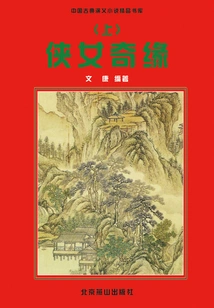
The Romance of the Heroine (part 1)
General Fiction侠女奇缘(上)
Wenkang
"The Romance of Heroes" is a collection of "The Legend of Heroes of Sons and Daughters" and "The Legend of Heroes of Sons and Daughters". "The Legend of Heroes of Sons and Daughters" is also known as "Golden Jade Fate", "The New Book of Japan", and "The Fifty-Three Ginsengs hidden in the True Dharma Eye". The author Wenkang, whose surname is Fei Mo and whose courtesy name is Tiexian, calls himself Yanbei Xianren and is a Manchu Xianghongbanner. The book was written during the Daoguang period of the Qing Dynasty. It originally had fifty-three chapters, but was later lost and lost. At the time of publication, only the first forty chapters remained. The author claims that this book is about "a public case in Kyoto" in the late Kangxi and early Yongzheng years. The novel describes a family with complete five moral ethics and abundant flowers to decorate the "peaceful and prosperous age" of the Qing Dynasty. The heroes and heroines in the novel are the heroes in the author's mind. The story tells that He Yufeng, a famous chivalrous girl in Kyoto, took refuge in the mountains and forests because her father was killed by the powerful Ji Xiantang. She changed her name to Thirteenth Sister, befriended heroes, traveled to the market, and waited for opportunities to take revenge. One day, she met the young master An Ji, who was running to save his father, and was in trouble. The thirteenth sister resolutely rescued An Ji from danger, and said that Zhang Jinfeng, a weak woman who was rescued during the contract, would marry An Ji. Later, An's father was rescued and Ji Xiantang was executed by the court. The thirteenth sister, He Yufeng, immediately married An Ji. Zhang Jinfeng and He Yufeng married An Ji together, and they lived in harmony and were sisters, so this book is also called "Golden Yuan". The book successfully portrays the heroic character and chivalrous qualities of Thirteenth Sister He Yufeng, who is both wise and brave, and hates evil as much as she hates evil. The story has ups and downs, thrilling twists and turns, and the language is lively, delicate and interesting. It is one of the more outstanding classical chivalrous novels.
"The Romance of Heroes" is a collection of "The Legend of Heroes of Sons and Daughters" and "The Legend of Heroes of Sons and Daughters". "The Legend of Heroes of Sons and Daughters" is also known as "Golden Jade Fate", "The New Book of Japan", and "The Fifty-Three Ginsengs hidden in the True Dharma Eye". The author Wenkang, whose surname is Fei Mo and whose courtesy name is Tiexian, calls himself Yanbei Xianren and is a Manchu Xianghongbanner. The book was written during the Daoguang period of the Qing Dynasty. It originally had fifty-three chapters, but was later lost and lost. At the time of publication, only the first forty chapters remained. The author claims that this book is about "a public case in Kyoto" in the late Kangxi and early Yongzheng years. The novel describes a family with complete five moral ethics and abundant flowers to decorate the "peaceful and prosperous age" of the Qing Dynasty. The heroes and heroines in the novel are the heroes in the author's mind. The story tells that He Yufeng, a famous chivalrous girl in Kyoto, took refuge in the mountains and forests because her father was killed by the powerful Ji Xiantang. She changed her name to Thirteenth Sister, befriended heroes, traveled to the market, and waited for opportunities to take revenge. One day, she met the young master An Ji, who was running to save his father, and was in trouble. The thirteenth sister resolutely rescued An Ji from danger, and said that Zhang Jinfeng, a weak woman who was rescued during the contract, would marry An Ji. Later, An's father was rescued and Ji Xiantang was executed by the court. The thirteenth sister, He Yufeng, immediately married An Ji. Zhang Jinfeng and He Yufeng married An Ji together, and they lived in harmony and were sisters, so this book is also called "Golden Yuan". The book successfully portrays the heroic character and chivalrous qualities of Thirteenth Sister He Yufeng, who is both wise and brave, and hates evil as much as she hates evil. The story has ups and downs, thrilling twists and turns, and the language is lively, delicate and interesting. It is one of the more outstanding classical chivalrous novels.
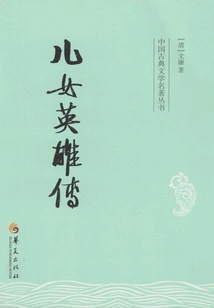
Heroes of Sons and Daughters
General Fiction儿女英雄传
Wenkang
"Chinese Classical Literature Masterpiece Series: Heroes of Sons and Daughters" truly portrays the image of An Xuehai, a perfect man in his mind: he is capable, loyal, incorruptible and self-restrained, and there is something endearing about his character; loyalty, filial piety and justice are the criterion in every word and deed, and he is like a model of a moral defender of feudal ethics. The book also successfully created the character of the chivalrous thirteenth sister He Yufeng. The Thirteenth Sister rescues the poor and helps those in danger, hates evil as much as the enemy, puts wealth above justice, and is both wise and brave. She is a typical image of a chivalrous woman in ancient Chinese novels. If compared with the typical characters in other famous novels, she is not inferior. Unfortunately, this kind of hero who helps the world by his own efforts is inherently utopian, so in the second half of the novel, she is described as becoming a well-behaved lady under the influence of An Xuehai, which reflects the author's limitations. The author lived during the Jiaqing and Tongzhi years of the Qing Dynasty. At that time, the Qing government became increasingly corrupt and was in a situation of internal and external difficulties. The invasion of imperialist powers inspired the Taiping Rebellion, and national and class contradictions became increasingly acute. The author witnessed the decline of the political commissar and the deterioration of the world. Coupled with the decline of his own family, he could not help but feel dissatisfied and disappointed with real life. However, as a feudal scholar-official, he could neither see a way out of the social crisis nor a personal way out. He could only find his own "hero" in fantasy, trying to help the troubled times and bring peace to the people through outdated traditional feudal ethics. The author's ideological tendency is contrary to the trend of the times, but the realistic dilemma reflected in it is real.
"Chinese Classical Literature Masterpiece Series: Heroes of Sons and Daughters" truly portrays the image of An Xuehai, a perfect man in his mind: he is capable, loyal, incorruptible and self-restrained, and there is something endearing about his character; loyalty, filial piety and justice are the criterion in every word and deed, and he is like a model of a moral defender of feudal ethics. The book also successfully created the character of the chivalrous thirteenth sister He Yufeng. The Thirteenth Sister rescues the poor and helps those in danger, hates evil as much as the enemy, puts wealth above justice, and is both wise and brave. She is a typical image of a chivalrous woman in ancient Chinese novels. If compared with the typical characters in other famous novels, she is not inferior. Unfortunately, this kind of hero who helps the world by his own efforts is inherently utopian, so in the second half of the novel, she is described as becoming a well-behaved lady under the influence of An Xuehai, which reflects the author's limitations. The author lived during the Jiaqing and Tongzhi years of the Qing Dynasty. At that time, the Qing government became increasingly corrupt and was in a situation of internal and external difficulties. The invasion of imperialist powers inspired the Taiping Rebellion, and national and class contradictions became increasingly acute. The author witnessed the decline of the political commissar and the deterioration of the world. Coupled with the decline of his own family, he could not help but feel dissatisfied and disappointed with real life. However, as a feudal scholar-official, he could neither see a way out of the social crisis nor a personal way out. He could only find his own "hero" in fantasy, trying to help the troubled times and bring peace to the people through outdated traditional feudal ethics. The author's ideological tendency is contrary to the trend of the times, but the realistic dilemma reflected in it is real.
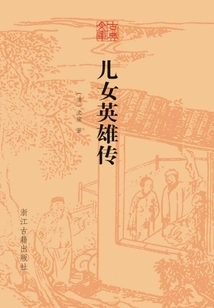
儿女英雄传(古典文库)
Wenkang
"The Legend of Heroes of Sons and Daughters" was originally called "Golden Jade Fate" and was written by Wen Kang in the Qing Dynasty. Later, people made up for the shortcomings and renamed "The Legend of Heroes of Sons and Daughters". It describes the story of the Qing Dynasty deputy general He Qi who was framed by Ji Xiantang and died in prison. His daughter He Yufeng changed her name to Thirteenth Sister and traveled around the world, determined to avenge her father. An Xuehai, the magistrate of Huaiyin County, was convicted, and his son An Ji raised a thousand taels of silver to go to the rescue. An Ji and Zhang Jinfeng, a civilian girl, were in danger at Nengren Temple. Fortunately, Yufeng rescued them in time and escaped from danger. Afterwards, Yufeng acted as a matchmaker and betrothed Zhang Jinfeng to An Ji. She donated money and borrowed bows to fight off the bandits, so that An Ji and his party arrived in Huaiyin safely. Later, Ji Xiantang was killed by the imperial court. Seeing that his revenge had been avenged, Yufeng planned to become a monk, but was dissuaded and married An Ji. Golden Phoenix and Yufeng get along as close as sisters. This is the reason why it was originally named "Golden Jade Fate".
"The Legend of Heroes of Sons and Daughters" was originally called "Golden Jade Fate" and was written by Wen Kang in the Qing Dynasty. Later, people made up for the shortcomings and renamed "The Legend of Heroes of Sons and Daughters". It describes the story of the Qing Dynasty deputy general He Qi who was framed by Ji Xiantang and died in prison. His daughter He Yufeng changed her name to Thirteenth Sister and traveled around the world, determined to avenge her father. An Xuehai, the magistrate of Huaiyin County, was convicted, and his son An Ji raised a thousand taels of silver to go to the rescue. An Ji and Zhang Jinfeng, a civilian girl, were in danger at Nengren Temple. Fortunately, Yufeng rescued them in time and escaped from danger. Afterwards, Yufeng acted as a matchmaker and betrothed Zhang Jinfeng to An Ji. She donated money and borrowed bows to fight off the bandits, so that An Ji and his party arrived in Huaiyin safely. Later, Ji Xiantang was killed by the imperial court. Seeing that his revenge had been avenged, Yufeng planned to become a monk, but was dissuaded and married An Ji. Golden Phoenix and Yufeng get along as close as sisters. This is the reason why it was originally named "Golden Jade Fate".
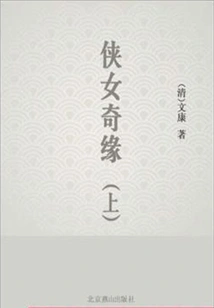
The Romance of the Heroine (part 1)
General Fiction侠女奇缘(上)
Wenkang
The reason why chivalrous koan novels have been popular in our country for a long time and are welcomed by people from all walks of life is mainly because the famous officials and officials portrayed in chivalrous koan novels mostly appear as upright and honest people. They are upright, not afraid of powerful people, and considerate of the people. Many people have been deified by the author and become "supermen"; the image of knights and righteous men is close to the people. They rob the rich and give to the poor, eradicate corrupt officials, and become the embodiment of justice. They are the saviors in the eyes of the people and the hope for social stability and peace. As the most popular form of literature with Chinese cultural characteristics, chivalrous koan novels themselves are the remnants of traditional culture. The characteristics of chivalrous koan novels, in which chivalrous men and upright officials eradicate evil and hoe rapes, are deeply imprinted on the people's expectation of political clarity and super-powerful justice, and reflect the aspirations of the people from a specific perspective. Of course, there are inevitably certain historical limitations, which need to be correctly understood by readers during the reading process.
The reason why chivalrous koan novels have been popular in our country for a long time and are welcomed by people from all walks of life is mainly because the famous officials and officials portrayed in chivalrous koan novels mostly appear as upright and honest people. They are upright, not afraid of powerful people, and considerate of the people. Many people have been deified by the author and become "supermen"; the image of knights and righteous men is close to the people. They rob the rich and give to the poor, eradicate corrupt officials, and become the embodiment of justice. They are the saviors in the eyes of the people and the hope for social stability and peace. As the most popular form of literature with Chinese cultural characteristics, chivalrous koan novels themselves are the remnants of traditional culture. The characteristics of chivalrous koan novels, in which chivalrous men and upright officials eradicate evil and hoe rapes, are deeply imprinted on the people's expectation of political clarity and super-powerful justice, and reflect the aspirations of the people from a specific perspective. Of course, there are inevitably certain historical limitations, which need to be correctly understood by readers during the reading process.