Library
Browse and search books
4 novels found
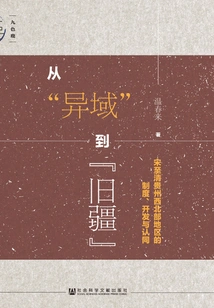
从“异域”到“旧疆”:宋至清贵州西北部地区的制度、开发与认同(九色鹿系列)
Wen Chunlai
China has maintained a unified system for a long time, which is a unique phenomenon in the history of human civilization and one of the fundamental issues in the study of Chinese history. This book examines the historical process of the two major Yi monarchs, Shuixi and Wusa, gradually integrating into the unified dynastic order from the Song Dynasty to the middle of the Qing Dynasty, and then extracts the analytical model of "foreign territory" - "jisu" - "Xinjiang" - "old territory" from China's own historical experience and discourse, to understand the development process of dynasty China in the south, and to discover the subjectivity of the non-Han people, so as to reveal the complex historical aspects obscured by the grand narrative of "dynasty-centered view".
China has maintained a unified system for a long time, which is a unique phenomenon in the history of human civilization and one of the fundamental issues in the study of Chinese history. This book examines the historical process of the two major Yi monarchs, Shuixi and Wusa, gradually integrating into the unified dynastic order from the Song Dynasty to the middle of the Qing Dynasty, and then extracts the analytical model of "foreign territory" - "jisu" - "Xinjiang" - "old territory" from China's own historical experience and discourse, to understand the development process of dynasty China in the south, and to discover the subjectivity of the non-Han people, so as to reveal the complex historical aspects obscured by the grand narrative of "dynasty-centered view".
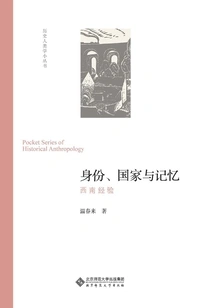
身份、国家与记忆:西南经验
Wen Chunlai
More than 2,000 years ago, Sima Qian discovered that there were large and small local governments such as Yelang and Dian in the southwestern region, and there were also many people without kings and leaders. In his past works, the author took northwest Guizhou as an example to explore the historical process of people with their own local political traditions gradually integrating into China's unified dynasty. This book explores the impact of this process on the modern southwest region from the perspective of identity and memory, thereby theoretically explaining the reality and rationality of China's multi-ethnic country, and revealing the academic problems of some extreme views of Western scholars.
More than 2,000 years ago, Sima Qian discovered that there were large and small local governments such as Yelang and Dian in the southwestern region, and there were also many people without kings and leaders. In his past works, the author took northwest Guizhou as an example to explore the historical process of people with their own local political traditions gradually integrating into China's unified dynasty. This book explores the impact of this process on the modern southwest region from the perspective of identity and memory, thereby theoretically explaining the reality and rationality of China's multi-ethnic country, and revealing the academic problems of some extreme views of Western scholars.
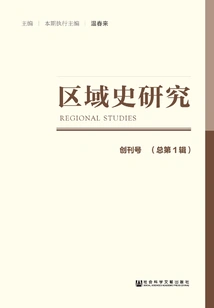
区域史研究(创刊号\u002F总第1辑)
Wen Chunlai
"Regional History Research" is an academic journal jointly founded by a group of scholars with common academic interests from nine universities including Sun Yat-sen University. Since Skenya broke the paradigm of dynastic and national historical narratives and proposed the theory of explaining China's historical structure from a regional context, the study of regional history has become one of the important research directions for scholars trying to deepen their understanding of national history and even global history. The core question is how people's interactions in history form "areas" that are meaningful from a certain perspective. This journal hopes to provide researchers with a new platform to showcase the current trends, thinking and latest achievements in regional history research.
"Regional History Research" is an academic journal jointly founded by a group of scholars with common academic interests from nine universities including Sun Yat-sen University. Since Skenya broke the paradigm of dynastic and national historical narratives and proposed the theory of explaining China's historical structure from a regional context, the study of regional history has become one of the important research directions for scholars trying to deepen their understanding of national history and even global history. The core question is how people's interactions in history form "areas" that are meaningful from a certain perspective. This journal hopes to provide researchers with a new platform to showcase the current trends, thinking and latest achievements in regional history research.
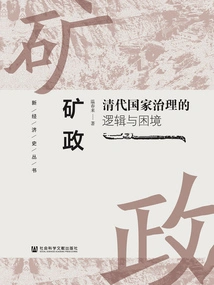
矿政:清代国家治理的逻辑与困境
Wen Chunlai
The maintenance of a country depends on the extraction of resources. The methods of resource extraction correspond to different national governance models. Traditional China had a vast territory with various regional differences. Constrained by the backward transportation, rudimentary technical means and information capabilities at that time, how did the rulers draw resources across the country? This book starts with a number of variables that affect the country's resource extraction model, such as importance, scarcity, transaction costs, social effects, the country's bargaining power and multi-subjectivity. Combined with the characteristics of mining costs increasing over time, it discusses the Qing Dynasty's mineral resource extraction situation through rich and detailed historical materials. While revealing the Qing Dynasty's mining policy model and its inherent flaws, it also discusses several important principles and aspects of national governance at that time. Based on the above empirical facts, this book further connects the Ming and Qing dynasties' acquisition patterns of important materials such as salt, silk, porcelain, and horses. Combined with the general background of national transformation from the 15th to the 18th century, this book reveals the logic and dilemma of national governance in the Qing Dynasty by elucidating concepts such as "central comprehensive decision-making mechanism," "suspicious decision-making," "administrative information creation," and "case-based principles."
The maintenance of a country depends on the extraction of resources. The methods of resource extraction correspond to different national governance models. Traditional China had a vast territory with various regional differences. Constrained by the backward transportation, rudimentary technical means and information capabilities at that time, how did the rulers draw resources across the country? This book starts with a number of variables that affect the country's resource extraction model, such as importance, scarcity, transaction costs, social effects, the country's bargaining power and multi-subjectivity. Combined with the characteristics of mining costs increasing over time, it discusses the Qing Dynasty's mineral resource extraction situation through rich and detailed historical materials. While revealing the Qing Dynasty's mining policy model and its inherent flaws, it also discusses several important principles and aspects of national governance at that time. Based on the above empirical facts, this book further connects the Ming and Qing dynasties' acquisition patterns of important materials such as salt, silk, porcelain, and horses. Combined with the general background of national transformation from the 15th to the 18th century, this book reveals the logic and dilemma of national governance in the Qing Dynasty by elucidating concepts such as "central comprehensive decision-making mechanism," "suspicious decision-making," "administrative information creation," and "case-based principles."