Library
Browse and search books
5 novels found
一读就上瘾的中国史(套装共2册)
Wen Boling
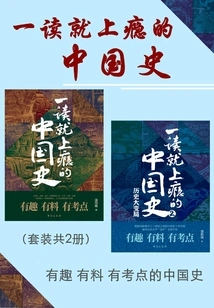
"The History of China That Will Be Addicted upon Reading" (a set of 2 volumes) includes "The History of China That Will Be Addicted upon Reading" and "The History of China That Will Be Addicted upon Reading 2". Beauty, beloved concubine, prodigal woman and scapegoat, which one is the real Concubine Yang? Which one is the real Chang'an, the irreplaceable center of the empire, the border military town, the hell on earth where famine reigns, and people exchange children for food? Some people live in an ignoble existence, while some regard death as home; some see darkness, some see light; some protect honor, and some lose their moral integrity. In Wen Boling's writings, history is no longer a notebook arranged according to time, but a process of evolution of the times that runs through time and clearly understands the context. If you read history using his method, you will discover the hand behind history and thoroughly understand the past, present and future of history. Never rest on your laurels, never be afraid of difficulties and avoid the world. The stories that heroes tell throughout their lives actually only have three words: go out.
"The History of China That Will Be Addicted upon Reading" (a set of 2 volumes) includes "The History of China That Will Be Addicted upon Reading" and "The History of China That Will Be Addicted upon Reading 2". Beauty, beloved concubine, prodigal woman and scapegoat, which one is the real Concubine Yang? Which one is the real Chang'an, the irreplaceable center of the empire, the border military town, the hell on earth where famine reigns, and people exchange children for food? Some people live in an ignoble existence, while some regard death as home; some see darkness, some see light; some protect honor, and some lose their moral integrity. In Wen Boling's writings, history is no longer a notebook arranged according to time, but a process of evolution of the times that runs through time and clearly understands the context. If you read history using his method, you will discover the hand behind history and thoroughly understand the past, present and future of history. Never rest on your laurels, never be afraid of difficulties and avoid the world. The stories that heroes tell throughout their lives actually only have three words: go out.
一读就上瘾的中国史2
Wen Boling
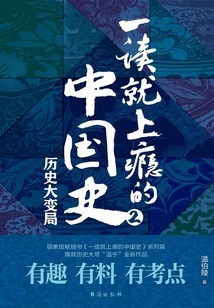
This is an era of great change, and the country and individuals are facing unprecedented changes. Some people live in an ignoble existence, while some regard death as home; some see darkness, some see light; some protect honor, and some lose their moral integrity. "History of China 2, which is addictive upon first reading," summarizes the great changes in history: Zhang Qian sent an envoy to the Western Regions, Li Shimin unified the world and became the Khan of Heaven, Zheng He made seven voyages to Nanyang, and Zheng Chenggong recovered Taiwan... Never rest on your laurels, and never shy away from the world. The stories told by heroes throughout their lives only have three words: go out.
This is an era of great change, and the country and individuals are facing unprecedented changes. Some people live in an ignoble existence, while some regard death as home; some see darkness, some see light; some protect honor, and some lose their moral integrity. "History of China 2, which is addictive upon first reading," summarizes the great changes in history: Zhang Qian sent an envoy to the Western Regions, Li Shimin unified the world and became the Khan of Heaven, Zheng He made seven voyages to Nanyang, and Zheng Chenggong recovered Taiwan... Never rest on your laurels, and never shy away from the world. The stories told by heroes throughout their lives only have three words: go out.
The World of Fireworks in Tang Poetry
Literature唐诗里的烟火人间
Wen Boling
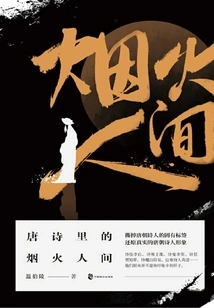
WeChat Zhihu, the master of history, Wen Boling, shatters the stereotypes of Tang Dynasty poets, takes you to fully understand the Tang Dynasty poets, and tells the stories hidden behind Tang poetry. Many people believe that the thoughts and emotions expressed in poetry represent the author himself, but in fact this understanding is not accurate. For example, Li Bai, the "Poetry Immortal" in our impression of being bold and free-spirited, was actually burdened by fame; Du Fu, the "Poetry Saint", was a playboy when he was young, and later he gradually became more popular after repeated setbacks; Wang Wei, a modest gentleman known as the "Poetry Buddha", also wrote poems praising virtues to flatter the emperor; landscape pastoral poets Meng Haoran was actually keen on fame, but he kept running into obstacles because of his lack of emotional intelligence. Everyone said that Gao Shi was a poet. In fact, leading troops to fight, making achievements, and governing the place were Gao Shi's main occupation. Writing poems was just casual. Yuan Zhen, the seed, also abandoned many women he had fallen in love with for his own fame and fortune; Song Zhiwen, a talented man from a poor family, did whatever it took to climb up, and she would be a mother if she had breasts... Tang poetry is the Weibo of the people of the Tang Dynasty, which carries the ecstasy of the people of the Tang Dynasty that "the spring breeze is so exciting that the horseshoes are so bad that they can see all the flowers in Chang'an in one day". The leisure of "the bright moon shines among the pines, the clear spring and the stone", the compassion of "the flowers splash with tears when feeling the time, and the fear of the other birds", the pride of "why don't men bring Wu hooks and collect the fifty states in Guanshan"... Tang poetry is a tool for people in the Tang Dynasty to express their thoughts and emotions, and reading Tang poetry is a convenient way to understand the poets of the Tang Dynasty, and even the Tang Dynasty.
WeChat Zhihu, the master of history, Wen Boling, shatters the stereotypes of Tang Dynasty poets, takes you to fully understand the Tang Dynasty poets, and tells the stories hidden behind Tang poetry. Many people believe that the thoughts and emotions expressed in poetry represent the author himself, but in fact this understanding is not accurate. For example, Li Bai, the "Poetry Immortal" in our impression of being bold and free-spirited, was actually burdened by fame; Du Fu, the "Poetry Saint", was a playboy when he was young, and later he gradually became more popular after repeated setbacks; Wang Wei, a modest gentleman known as the "Poetry Buddha", also wrote poems praising virtues to flatter the emperor; landscape pastoral poets Meng Haoran was actually keen on fame, but he kept running into obstacles because of his lack of emotional intelligence. Everyone said that Gao Shi was a poet. In fact, leading troops to fight, making achievements, and governing the place were Gao Shi's main occupation. Writing poems was just casual. Yuan Zhen, the seed, also abandoned many women he had fallen in love with for his own fame and fortune; Song Zhiwen, a talented man from a poor family, did whatever it took to climb up, and she would be a mother if she had breasts... Tang poetry is the Weibo of the people of the Tang Dynasty, which carries the ecstasy of the people of the Tang Dynasty that "the spring breeze is so exciting that the horseshoes are so bad that they can see all the flowers in Chang'an in one day". The leisure of "the bright moon shines among the pines, the clear spring and the stone", the compassion of "the flowers splash with tears when feeling the time, and the fear of the other birds", the pride of "why don't men bring Wu hooks and collect the fifty states in Guanshan"... Tang poetry is a tool for people in the Tang Dynasty to express their thoughts and emotions, and reading Tang poetry is a convenient way to understand the poets of the Tang Dynasty, and even the Tang Dynasty.
一读就上瘾的中国史
Wen Boling
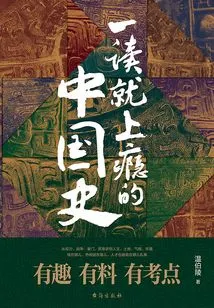
In Li Bai's eyes, a Yang Guifei is like "the clouds are like her clothes and the flowers are like her face, and the spring breeze is blowing on the threshold and the dew is rich"; in Du Mu's eyes, she is like "the concubine riding on the red dust is laughing, no one knows that it is the lychees coming"; and in Luo Yin's eyes, it is "the man under the spring should have said something, and this time I will not blame Yang Fei." Beauty, beloved concubine, prodigal woman and scapegoat, which one is the real Concubine Yang? Chang'an City, in the Han and Tang dynasties, was the irreplaceable center of the empire and "the crown jewel of all nations" in Wang Wei's writings; in the Song Dynasty, it became a border military town; and in the late Ming Dynasty, it became a hell on earth where famine abounded and people changed their sons to eat. Wen Boling's articles contain both detailed stories and a historical perspective. They are thrilling and addictive as soon as you read them. In Wen Boling's writings, history is no longer a notebook arranged according to time, but a process of evolution of the times that runs through time and clearly understands the context. If you read history using his method, you will discover the hand behind history and thoroughly understand the past, present and future of history.
In Li Bai's eyes, a Yang Guifei is like "the clouds are like her clothes and the flowers are like her face, and the spring breeze is blowing on the threshold and the dew is rich"; in Du Mu's eyes, she is like "the concubine riding on the red dust is laughing, no one knows that it is the lychees coming"; and in Luo Yin's eyes, it is "the man under the spring should have said something, and this time I will not blame Yang Fei." Beauty, beloved concubine, prodigal woman and scapegoat, which one is the real Concubine Yang? Chang'an City, in the Han and Tang dynasties, was the irreplaceable center of the empire and "the crown jewel of all nations" in Wang Wei's writings; in the Song Dynasty, it became a border military town; and in the late Ming Dynasty, it became a hell on earth where famine abounded and people changed their sons to eat. Wen Boling's articles contain both detailed stories and a historical perspective. They are thrilling and addictive as soon as you read them. In Wen Boling's writings, history is no longer a notebook arranged according to time, but a process of evolution of the times that runs through time and clearly understands the context. If you read history using his method, you will discover the hand behind history and thoroughly understand the past, present and future of history.
一看就懂的史记
Wen Boling
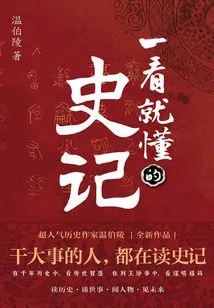
Xiang Yu was defeated at Wujiang, and everyone lamented it. Even the great poet Du Mu in later generations also wrote poems and lamented him. If Xiang Yu had crossed the Wujiang River, could he have defeated Liu Bang and rewritten history? As rich and powerful as the Qin State, it was able to dominate the world during the Warring States Period when there were many powerful countries, but it could not rest on the country it had built with its own hands. Why did it perish after its short life in the second generation? Shang Yang's reforms laid a solid foundation for the prosperity of Qin. It should have been a great achievement, but Shang Yang himself met a tragic end. Why on earth was this? Many people say that this is because China was a large agricultural country in ancient times, so China has been focusing on agriculture and suppressing business since ancient times. This is indeed true, but are there other reasons besides this? The author Wen Boling will explain the above issues for you one by one in this book. This time he will give you a thorough introduction to the historical classic "Historical Records". Under the author Wen Boling's pen, "Historical Records" is no longer the general interpretation that you usually see, "Liu Bang was able to accomplish things because he knew how to employ people" and "The Qin Dynasty fell because Qin II was mediocre and cruel." It is also not a "running account" compiled according to time. Instead, it uses thematic methods to connect time, historical materials, and clarify the context, helping you to see the cause and effect of the whole thing clearly, looking at history from multiple dimensions, and giving history different ways to open it. Coupled with the author's "historical joker" style of funny writing, you will gain knowledge while laughing and easily understand "Historical Records".
Xiang Yu was defeated at Wujiang, and everyone lamented it. Even the great poet Du Mu in later generations also wrote poems and lamented him. If Xiang Yu had crossed the Wujiang River, could he have defeated Liu Bang and rewritten history? As rich and powerful as the Qin State, it was able to dominate the world during the Warring States Period when there were many powerful countries, but it could not rest on the country it had built with its own hands. Why did it perish after its short life in the second generation? Shang Yang's reforms laid a solid foundation for the prosperity of Qin. It should have been a great achievement, but Shang Yang himself met a tragic end. Why on earth was this? Many people say that this is because China was a large agricultural country in ancient times, so China has been focusing on agriculture and suppressing business since ancient times. This is indeed true, but are there other reasons besides this? The author Wen Boling will explain the above issues for you one by one in this book. This time he will give you a thorough introduction to the historical classic "Historical Records". Under the author Wen Boling's pen, "Historical Records" is no longer the general interpretation that you usually see, "Liu Bang was able to accomplish things because he knew how to employ people" and "The Qin Dynasty fell because Qin II was mediocre and cruel." It is also not a "running account" compiled according to time. Instead, it uses thematic methods to connect time, historical materials, and clarify the context, helping you to see the cause and effect of the whole thing clearly, looking at history from multiple dimensions, and giving history different ways to open it. Coupled with the author's "historical joker" style of funny writing, you will gain knowledge while laughing and easily understand "Historical Records".