Library
Browse and search books
1 novel found
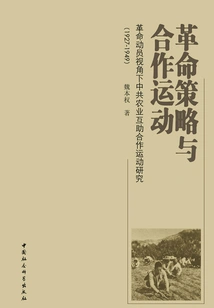
革命策略与合作运动:革命动员视角下中共农业互助合作运动研究(1927~1949)
Wei Benquan
This book uses the agricultural mutual aid and cooperation movement as the perspective to observe, think and interpret the mass economic movement in China's revolutionary base areas, and examines why the agricultural mutual aid and cooperation movement became a mass movement based on the production mobilization and revolutionary strategies of the Communist Party of China. Examining the occurrence and development, complex aspects, micro-mechanisms, operating mechanisms and interactive relationships between the party and the masses in the revolutionary base areas from this perspective will, on the one hand, help deepen the understanding of the agricultural mutual aid and cooperation movement from the perspective of mass movements. On the other hand, this can provide an empirical basis for a deep understanding of the Chinese revolution, how the Chinese Communist Party "won the masses" and "win the countryside", and an understanding of China's revolutionary modernity. It also has theoretical innovation value for continuing to deepen the study of the Chinese revolution, integrating the paradigm of revolutionary history, modernization paradigm and post-modern paradigm, and building a research paradigm of revolutionary social history.
This book uses the agricultural mutual aid and cooperation movement as the perspective to observe, think and interpret the mass economic movement in China's revolutionary base areas, and examines why the agricultural mutual aid and cooperation movement became a mass movement based on the production mobilization and revolutionary strategies of the Communist Party of China. Examining the occurrence and development, complex aspects, micro-mechanisms, operating mechanisms and interactive relationships between the party and the masses in the revolutionary base areas from this perspective will, on the one hand, help deepen the understanding of the agricultural mutual aid and cooperation movement from the perspective of mass movements. On the other hand, this can provide an empirical basis for a deep understanding of the Chinese revolution, how the Chinese Communist Party "won the masses" and "win the countryside", and an understanding of China's revolutionary modernity. It also has theoretical innovation value for continuing to deepen the study of the Chinese revolution, integrating the paradigm of revolutionary history, modernization paradigm and post-modern paradigm, and building a research paradigm of revolutionary social history.