Library
Browse and search books
4 novels found

哈尔滨地名与城史纪元研究
Wang Yulang
Place names are as important as living fossils. As a settlement area of different ethnic groups in ancient times, the place names in Northeast China are extremely complicated due to the history, culture and language of different ethnic groups. The author devoted himself to studying the meaning of Harbin's place names, put forward the viewpoint of "Swan Theory", and gradually figured out the general rules and methods for the study of the historical place name system in Northeast China. That is, the study of the place name system in Northeast China should comprehensively verify and study it from the four dimensions of word nature, etymology, context and phonetics. On the issue of Harbin city history era, the author combines the research of place names with the research of city history era, which has the effect of complementing each other.
Place names are as important as living fossils. As a settlement area of different ethnic groups in ancient times, the place names in Northeast China are extremely complicated due to the history, culture and language of different ethnic groups. The author devoted himself to studying the meaning of Harbin's place names, put forward the viewpoint of "Swan Theory", and gradually figured out the general rules and methods for the study of the historical place name system in Northeast China. That is, the study of the place name system in Northeast China should comprehensively verify and study it from the four dimensions of word nature, etymology, context and phonetics. On the issue of Harbin city history era, the author combines the research of place names with the research of city history era, which has the effect of complementing each other.
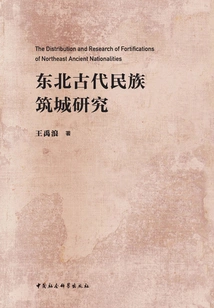
东北古代民族筑城研究
Wang Yulang
At present, the investigation and preliminary research on the city-building history of different ethnic groups in various historical periods from the Xiajiadian lower-class culture at the beginning of the ancient ethnic city-building history in Northeast China to the Manchu and Qing Dynasties have achieved fruitful results. Among them, local research on the ancient Han and Wei city clusters in the Sanjiang Plain, Goguryeo fortification, Bohai fortification, Liao and Jin Jurchen fortifications, the Qing Dynasty's "Three Capitals Outside the Pass", and archaeological surveys have already accumulated considerable academic accumulation. However, the research results that systematically sort out the history of ancient people's city-building in Northeast China are still very weak. The origin, occurrence, and development process of the ancient ethnic city-building history in Northeast China, as well as the cultural inheritance and connections between these ancient ethnic city-buildings, the distribution of city construction, the structure of city construction, the levels of city building, the nature of city building, and the historical and geographical research of the Northeast region involved in city building. In particular, in the history of ancient ethnic city-building in Northeast China, a series of issues ranging from royal cities to prefectural cities, from prefectural cities to royal capitals and national capitals, and ultimately to the imperial capitals, all need to be studied in depth.
At present, the investigation and preliminary research on the city-building history of different ethnic groups in various historical periods from the Xiajiadian lower-class culture at the beginning of the ancient ethnic city-building history in Northeast China to the Manchu and Qing Dynasties have achieved fruitful results. Among them, local research on the ancient Han and Wei city clusters in the Sanjiang Plain, Goguryeo fortification, Bohai fortification, Liao and Jin Jurchen fortifications, the Qing Dynasty's "Three Capitals Outside the Pass", and archaeological surveys have already accumulated considerable academic accumulation. However, the research results that systematically sort out the history of ancient people's city-building in Northeast China are still very weak. The origin, occurrence, and development process of the ancient ethnic city-building history in Northeast China, as well as the cultural inheritance and connections between these ancient ethnic city-buildings, the distribution of city construction, the structure of city construction, the levels of city building, the nature of city building, and the historical and geographical research of the Northeast region involved in city building. In particular, in the history of ancient ethnic city-building in Northeast China, a series of issues ranging from royal cities to prefectural cities, from prefectural cities to royal capitals and national capitals, and ultimately to the imperial capitals, all need to be studied in depth.

东亚视野下的东北史地研究
Wang Yulang
The study of the history and geography of Northeast China has the characteristics of trans-region and cross-border. To study the history and geography of Northeast China, one must engage in long-term field visits, analysis, sorting and research from the perspective of East Asia in order to explore its connotation and significance. The author of this book has been engaged in field archaeological surveys in the vast area of Northeast China for many years. On this basis, combined with historical documents and previous research results, he has made a relatively systematic textual research and research on the ancient ethnic titles, distribution of ancient cities, mountain and place names, rock paintings and inscriptions, Bohai Liao and Jin fortifications in Northeast China, etc., Which has distinct originality and reference value.
The study of the history and geography of Northeast China has the characteristics of trans-region and cross-border. To study the history and geography of Northeast China, one must engage in long-term field visits, analysis, sorting and research from the perspective of East Asia in order to explore its connotation and significance. The author of this book has been engaged in field archaeological surveys in the vast area of Northeast China for many years. On this basis, combined with historical documents and previous research results, he has made a relatively systematic textual research and research on the ancient ethnic titles, distribution of ancient cities, mountain and place names, rock paintings and inscriptions, Bohai Liao and Jin fortifications in Northeast China, etc., Which has distinct originality and reference value.

东北流域文明研究
Wang Yulang
This book is a special study on the civilization of the Northeast River Basin. It discusses the history and culture of the Heilongjiang River Basin and its components such as the Nenjiang River Basin, Mudanjiang River Basin, Ussuli River Basin, Liaohe River Basin, and the Xiaoling River Basin, Tumen River Basin and Yalu River Basin. It also introduces the geographical environment, ancient tribes, ancient cities, ancient countries and various cultural relics of each river basin. Through the introduction and discussion of various relics and relics, the author strives to present the evolution and development of the civilizations in the Northeast river basins, so that readers can have a deeper understanding of the various civilizations in the Northeast river basins.
This book is a special study on the civilization of the Northeast River Basin. It discusses the history and culture of the Heilongjiang River Basin and its components such as the Nenjiang River Basin, Mudanjiang River Basin, Ussuli River Basin, Liaohe River Basin, and the Xiaoling River Basin, Tumen River Basin and Yalu River Basin. It also introduces the geographical environment, ancient tribes, ancient cities, ancient countries and various cultural relics of each river basin. Through the introduction and discussion of various relics and relics, the author strives to present the evolution and development of the civilizations in the Northeast river basins, so that readers can have a deeper understanding of the various civilizations in the Northeast river basins.