Library
Browse and search books
1 novel found
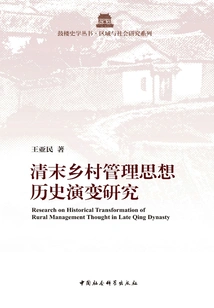
清末乡村管理思想历史演变研究
Wang Yamin
The historical evolution of rural management thought in the late Qing Dynasty is a very complex academic issue, and specialized and systematic research on this historical phenomenon in the academic community is still relatively weak. The author first sorted out the development context, basic content and characteristics of my country's traditional rural management thought, and then briefly introduced its summary and development in the mid-Qing Dynasty; then, the author analyzed the origin and motivation, debate and convergence, stage and connotation, characteristics and reasons of its historical evolution layer by layer, trying to move towards ideological development. The author then explores the practice of the idea of township autonomy in the late Qing Dynasty and the relationship between the state and the countryside after its historical evolution. Finally, the author attempts to reveal the mentality and rationale of its historical evolution, and tentatively proposes a theoretical hypothesis on the "three-layer governance mechanism" for the construction of villagers' autonomy today. In short, starting from the study of the history of management thought, combined with the study of rural social history and cultural history, this book intends to conduct a comprehensive investigation and comprehensive study on the "historical evolution of rural management thought in the late Qing Dynasty", and then seek the academic basis for socialist villager autonomy, reveal its deep historical enlightenment, and predict and grasp its future trend.
The historical evolution of rural management thought in the late Qing Dynasty is a very complex academic issue, and specialized and systematic research on this historical phenomenon in the academic community is still relatively weak. The author first sorted out the development context, basic content and characteristics of my country's traditional rural management thought, and then briefly introduced its summary and development in the mid-Qing Dynasty; then, the author analyzed the origin and motivation, debate and convergence, stage and connotation, characteristics and reasons of its historical evolution layer by layer, trying to move towards ideological development. The author then explores the practice of the idea of township autonomy in the late Qing Dynasty and the relationship between the state and the countryside after its historical evolution. Finally, the author attempts to reveal the mentality and rationale of its historical evolution, and tentatively proposes a theoretical hypothesis on the "three-layer governance mechanism" for the construction of villagers' autonomy today. In short, starting from the study of the history of management thought, combined with the study of rural social history and cultural history, this book intends to conduct a comprehensive investigation and comprehensive study on the "historical evolution of rural management thought in the late Qing Dynasty", and then seek the academic basis for socialist villager autonomy, reveal its deep historical enlightenment, and predict and grasp its future trend.