Library
Browse and search books
2 novels found
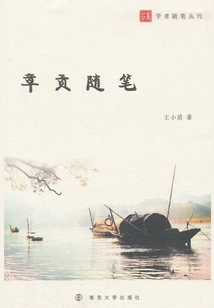
Zhang Gong's Essays
Literature章贡随笔
Wang Xiaodun
This book is a collection of essays by Professor Wang Xiaodun, a well-known scholar and expert in ancient literature and philology, including: walking prose, personal reminiscences, academic dialogues, book prefaces and postscripts, etc. With clear and vivid writing style, it records the author's academic thoughts, academic career and what he has seen and realized while traveling through the mountains and rivers. It is highly readable and inspiring.
This book is a collection of essays by Professor Wang Xiaodun, a well-known scholar and expert in ancient literature and philology, including: walking prose, personal reminiscences, academic dialogues, book prefaces and postscripts, etc. With clear and vivid writing style, it records the author's academic thoughts, academic career and what he has seen and realized while traveling through the mountains and rivers. It is highly readable and inspiring.
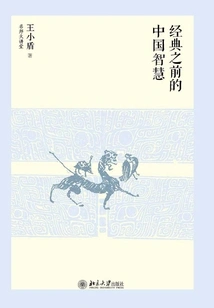
经典之前的中国智慧
Wang Xiaodun
Chinese wisdom has gone through two stages in its development process: first, the "pre-classical" stage before the formation of classical philosophy, and second, the "classical" stage after the Six Classics were used to teach. In the previous stage, people's public knowledge was mainly formed in ritual occasions and spread through spoken language and images, thus using special symbolic methods. Later generations did not observe deeply and often made simplistic understandings based on narrow experience. In order to find the truth, this book selects a section from each of three aspects: ancient mythology, ancient art, ancient rituals and science to analyze. On the one hand, it explains the true connotation of things such as the myth of the turtle dragging its title, the art of gluttony, and astronomical phenomena during the Yin and Zhou Dynasties. On the other hand, it also explains the symbolic characteristics of ancient wisdom, the symbolic thinking of ancient Chinese people, and the linguistic characteristics of ancient images. As a supplement and improvement, this book also discusses five more theoretically significant issues: (1) The prototype of concepts such as "Beginning", "Mother", "Name" and "Dao" in "Laozi"; (2) The transition from the pre-classical world to the classic world represented by Confucius; (3) The relationship between "witchcraft" and "history"; (4) The formation of the classics; (5) The understanding of the "Axis Breakthrough" and other doctrines.
Chinese wisdom has gone through two stages in its development process: first, the "pre-classical" stage before the formation of classical philosophy, and second, the "classical" stage after the Six Classics were used to teach. In the previous stage, people's public knowledge was mainly formed in ritual occasions and spread through spoken language and images, thus using special symbolic methods. Later generations did not observe deeply and often made simplistic understandings based on narrow experience. In order to find the truth, this book selects a section from each of three aspects: ancient mythology, ancient art, ancient rituals and science to analyze. On the one hand, it explains the true connotation of things such as the myth of the turtle dragging its title, the art of gluttony, and astronomical phenomena during the Yin and Zhou Dynasties. On the other hand, it also explains the symbolic characteristics of ancient wisdom, the symbolic thinking of ancient Chinese people, and the linguistic characteristics of ancient images. As a supplement and improvement, this book also discusses five more theoretically significant issues: (1) The prototype of concepts such as "Beginning", "Mother", "Name" and "Dao" in "Laozi"; (2) The transition from the pre-classical world to the classic world represented by Confucius; (3) The relationship between "witchcraft" and "history"; (4) The formation of the classics; (5) The understanding of the "Axis Breakthrough" and other doctrines.