Library
Browse and search books
3 novels found
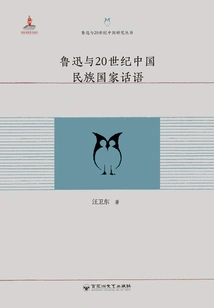
鲁迅与20世纪中国民族国家话语
Wang Weidong
Through the discussion of Lu Xun's national concepts and national concepts, this book generally elaborates on the relationship between Lu Xun's thoughts and literature and China's nation-state discourse in the 20th century. It reveals the differences in spiritual depth and expression between Lu Xun's national concepts and his national destiny anxiety and those of his contemporaries based on the uniqueness of individual survival experience. This article investigates and examines Lu Xun's critical views, ideas and methods in the context of post-colonialism in China in the late twentieth century, and further theoretically elaborates on the relationship between Lu Xun's nation-state discourse and the transformation of nation-state modernization in the twentieth century. It points out that in Lu Xun's case, nation-state discourse is not just a literary narrative that relies on Western concepts of Chinese nationality, but is an ideological achievement deeply rooted in the experience of the nation and individual living experience. It is this national and individual imagination of the nation that provides reference for the modernization of the Chinese nation-state in the twentieth century.
Through the discussion of Lu Xun's national concepts and national concepts, this book generally elaborates on the relationship between Lu Xun's thoughts and literature and China's nation-state discourse in the 20th century. It reveals the differences in spiritual depth and expression between Lu Xun's national concepts and his national destiny anxiety and those of his contemporaries based on the uniqueness of individual survival experience. This article investigates and examines Lu Xun's critical views, ideas and methods in the context of post-colonialism in China in the late twentieth century, and further theoretically elaborates on the relationship between Lu Xun's nation-state discourse and the transformation of nation-state modernization in the twentieth century. It points out that in Lu Xun's case, nation-state discourse is not just a literary narrative that relies on Western concepts of Chinese nationality, but is an ideological achievement deeply rooted in the experience of the nation and individual living experience. It is this national and individual imagination of the nation that provides reference for the modernization of the Chinese nation-state in the twentieth century.
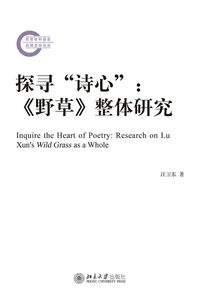
探寻“诗心”:《野草》整体研究
Wang Weidong
"Weeds" is a process of Lu Xun's life questioning when he fell into his second despair. It is an action through despair. It is accompanied by a thrilling process of struggle and transformation of emotions, thoughts and personality. This is an extremely deep emotional world composed of disgust, sadness, contradiction, ultimate paradox, despair, doubt, struggle, relief, joy, etc. "Weeds" is not a collection of single articles in the general sense, but a whole. In "Weeds", there is a self-contained spiritual world and artistic world. "Wild Grass" is at the final turning point in Lu Xun's life and literature. After "Wild Grass", Lu Xun finally completed the dual discovery of himself and the times, and devoted his later life to an essay-style existence that directly confronted reality.
"Weeds" is a process of Lu Xun's life questioning when he fell into his second despair. It is an action through despair. It is accompanied by a thrilling process of struggle and transformation of emotions, thoughts and personality. This is an extremely deep emotional world composed of disgust, sadness, contradiction, ultimate paradox, despair, doubt, struggle, relief, joy, etc. "Weeds" is not a collection of single articles in the general sense, but a whole. In "Weeds", there is a self-contained spiritual world and artistic world. "Wild Grass" is at the final turning point in Lu Xun's life and literature. After "Wild Grass", Lu Xun finally completed the dual discovery of himself and the times, and devoted his later life to an essay-style existence that directly confronted reality.
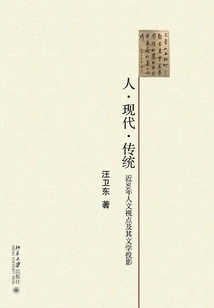
People·modern·tradition: Humanities Pilot and Its Literary Projection in the Past 30 Years
Literature人·现代·传统:近30年人文试点及其文学投影
Wang Weidong
This book is based on the author's grasp of the overall pattern of Chinese humanities research and the internal logic of the past 30 years, and resorts to the analysis of specific phenomena and individual cases. The content involves topics such as people, modernity, tradition, literature, Lu Xun, etc. It attempts to present the macro pattern and micro texture of the humanities landscape in the past 30 years through in-depth analysis of specific objects in an integrated context.
This book is based on the author's grasp of the overall pattern of Chinese humanities research and the internal logic of the past 30 years, and resorts to the analysis of specific phenomena and individual cases. The content involves topics such as people, modernity, tradition, literature, Lu Xun, etc. It attempts to present the macro pattern and micro texture of the humanities landscape in the past 30 years through in-depth analysis of specific objects in an integrated context.