Library
Browse and search books
3 novels found
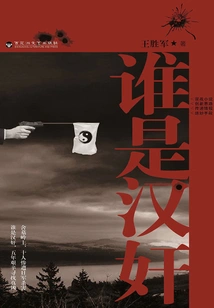
Who is the Traitor?
General Fiction谁是汉奸
Wang Shengjun
Before the outbreak of the Anti-Japanese War, Zhang Mingming, a citizen of Jiaonan County, Qingdao, and 10 fellow villagers went to Qingdao to plead for the people. They were betrayed by traitors and intercepted and killed by the Japanese on the way. Zhang Mingming escaped by chance. For many years, Zhang Mingming has been looking for the traitor who informed him. After several investigations, he finally found out the true identity of the traitor and avenged the villagers.
Before the outbreak of the Anti-Japanese War, Zhang Mingming, a citizen of Jiaonan County, Qingdao, and 10 fellow villagers went to Qingdao to plead for the people. They were betrayed by traitors and intercepted and killed by the Japanese on the way. Zhang Mingming escaped by chance. For many years, Zhang Mingming has been looking for the traitor who informed him. After several investigations, he finally found out the true identity of the traitor and avenged the villagers.
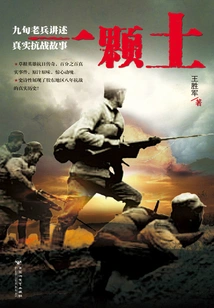
A Piece of Dirt
Literature一颗土
Wang Shengjun
Fu Erhu's family from a suburban county in Shandong traveled to Guandong to make a living. When they encountered the "September 18th Incident", the Fu family returned to Shandong. In 1937, the Japanese army fully invaded China. By chance, Fu Erhu joined the revolution. He successively served as an underground party member, a guerrilla, a member of the armed forces, and a soldier of the Independent Regiment of the Eighth Route Army. With his passion and loyalty to the people, he fought a special struggle against the Japanese and puppet troops. A documentary novel narrated by a 90-year-old Anti-Japanese War veteran, the plot is ups and downs and fascinating.
Fu Erhu's family from a suburban county in Shandong traveled to Guandong to make a living. When they encountered the "September 18th Incident", the Fu family returned to Shandong. In 1937, the Japanese army fully invaded China. By chance, Fu Erhu joined the revolution. He successively served as an underground party member, a guerrilla, a member of the armed forces, and a soldier of the Independent Regiment of the Eighth Route Army. With his passion and loyalty to the people, he fought a special struggle against the Japanese and puppet troops. A documentary novel narrated by a 90-year-old Anti-Japanese War veteran, the plot is ups and downs and fascinating.
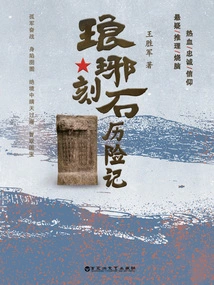
琅琊刻石历险记
Wang Shengjun
The Langya Stone Carvings located in Qingdao, Shandong Province were erected by Qin Shihuang when he visited Langyata in 219 BC. They are hailed as "the supreme masterpiece" by epigraphers. In February 1938, when the Japanese army invaded Qingdao and approached Langyatai, the Japanese Emperor Hirohito learned of the importance of the carved stones and quickly sent a special envoy to snatch the Langyata carved stones. At the same time, both the Chinese Communist Party and Germany learned the secret through secret channels and sent personnel to search for the treasure. The elites of the three countries staged wonderful spy war stories one after another. In the end, the outstanding agents of the 115th Division of the Eighth Route Army went through many twists and turns and recaptured all the carved stones from the Kuomintang and the Japanese army. In January 1959, the carved stone was transferred to the China History Museum (now the National Museum of China), where it was preserved in a vacuum and not displayed to the public. It is now a treasure of the National Museum.
The Langya Stone Carvings located in Qingdao, Shandong Province were erected by Qin Shihuang when he visited Langyata in 219 BC. They are hailed as "the supreme masterpiece" by epigraphers. In February 1938, when the Japanese army invaded Qingdao and approached Langyatai, the Japanese Emperor Hirohito learned of the importance of the carved stones and quickly sent a special envoy to snatch the Langyata carved stones. At the same time, both the Chinese Communist Party and Germany learned the secret through secret channels and sent personnel to search for the treasure. The elites of the three countries staged wonderful spy war stories one after another. In the end, the outstanding agents of the 115th Division of the Eighth Route Army went through many twists and turns and recaptured all the carved stones from the Kuomintang and the Japanese army. In January 1959, the carved stone was transferred to the China History Museum (now the National Museum of China), where it was preserved in a vacuum and not displayed to the public. It is now a treasure of the National Museum.