Library
Browse and search books
3 novels found
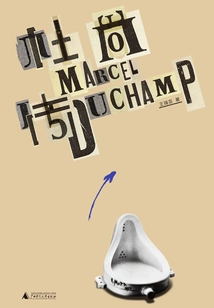
Biography of Duchamp (revised Edition)
Literature杜尚传(修订版)
Wang Ruiyun
This book is the first biography of Duchamp written in Chinese. It has 300,000 words and traces the artistic history and spiritual world of this legendary figure. It also depicts a picture of the changes in Western modern art in the 20th century. Duchamp single-handedly reversed the trend of contemporary art, but he always kept a secret and did not follow the rules. His attitude towards life, his artistic viewpoint, his detachment and selflessness allowed him to avoid all kinds of fetters and stand above art. By understanding Duchamp, we can clearly see the success or failure of modern and contemporary art; through Duchamp, we can clearly see the value of a person's life.
This book is the first biography of Duchamp written in Chinese. It has 300,000 words and traces the artistic history and spiritual world of this legendary figure. It also depicts a picture of the changes in Western modern art in the 20th century. Duchamp single-handedly reversed the trend of contemporary art, but he always kept a secret and did not follow the rules. His attitude towards life, his artistic viewpoint, his detachment and selflessness allowed him to avoid all kinds of fetters and stand above art. By understanding Duchamp, we can clearly see the success or failure of modern and contemporary art; through Duchamp, we can clearly see the value of a person's life.
Dr. Gordon
Literature戈登医生
Wang Ruiyun
Reading your two novels, I felt a long-lost sense of fulfillment. Enrichment is a common-sense concept, far from profound, and even a bit cliché. It is nothing more than a rhetoric that is meaningful and true to feelings, which some "new" writers and critics disdain. Acknowledging literary common sense is sometimes like dancing with shackles, and it is not as easy as flying wildly and imaginatively. Especially today when the hollowing out of literature is packaged with slogans that eliminate meaning and content and become fashionable, it is often easier to get applause and cheers by pretending to be sophisticated while avoiding reality. The media's competition for kitsch and writers' pursuit of fame and fortune have quietly eroded the poetic character of novels. There is no romance, no imagination, and no passion. More and more things called novels are actually just bar flirting guides and shopping mall textbooks, with nothing but desire.
Reading your two novels, I felt a long-lost sense of fulfillment. Enrichment is a common-sense concept, far from profound, and even a bit cliché. It is nothing more than a rhetoric that is meaningful and true to feelings, which some "new" writers and critics disdain. Acknowledging literary common sense is sometimes like dancing with shackles, and it is not as easy as flying wildly and imaginatively. Especially today when the hollowing out of literature is packaged with slogans that eliminate meaning and content and become fashionable, it is often easier to get applause and cheers by pretending to be sophisticated while avoiding reality. The media's competition for kitsch and writers' pursuit of fame and fortune have quietly eroded the poetic character of novels. There is no romance, no imagination, and no passion. More and more things called novels are actually just bar flirting guides and shopping mall textbooks, with nothing but desire.
Uncle
General Fiction姑父
Wang Ruiyun
In my second year of studying at Zhejiang University, not long after school started, I received a letter from my father. We chatted as usual, "Your mother started practicing swordsmanship. She stopped doing qigong. She said she was afraid of going crazy. I saw her going out with a sword every morning. I called her 'Amazonian Granddaughter Warrior.'" I laughed. At the end of the letter, my father mentioned, "Yesterday, my aunt wrote a letter. Your uncle died." There was another sentence at the end that talked about the cause of his uncle's death... I didn't even wait to read the last sentence, and immediately put the letter on my lap, breathing a huge sigh of relief for my aunt and her family. I only met my uncle three times. The first time was in 1973, when I was thirteen years old and in sixth grade. That day, I was dancing rubber bands with Yuelan Taoling, who was in the same hospital, in front of the row of bungalows where we lived, when I suddenly saw someone standing in front of my house waving to me.
In my second year of studying at Zhejiang University, not long after school started, I received a letter from my father. We chatted as usual, "Your mother started practicing swordsmanship. She stopped doing qigong. She said she was afraid of going crazy. I saw her going out with a sword every morning. I called her 'Amazonian Granddaughter Warrior.'" I laughed. At the end of the letter, my father mentioned, "Yesterday, my aunt wrote a letter. Your uncle died." There was another sentence at the end that talked about the cause of his uncle's death... I didn't even wait to read the last sentence, and immediately put the letter on my lap, breathing a huge sigh of relief for my aunt and her family. I only met my uncle three times. The first time was in 1973, when I was thirteen years old and in sixth grade. That day, I was dancing rubber bands with Yuelan Taoling, who was in the same hospital, in front of the row of bungalows where we lived, when I suddenly saw someone standing in front of my house waving to me.