Library
Browse and search books
2 novels found
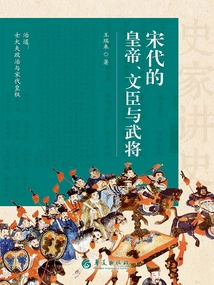
宋代的皇帝、文臣与武将(史家讲史)
Wang Ruilai
This book contains old and new works by Mr. Wang Ruilai, an expert on Song history. There are 12 articles in total, all focusing on one theme, namely, the politics of scholar-bureaucrats and imperial power, covering the two Song Dynasties. As the title of the book "Emperors, Civil Service Officials and Military Generals of the Song Dynasty" shows, the emperor wrote about Taizu and Taizong, the founders of the Song Dynasty, and also conducted a special investigation on the "Candle Shadow and Ax Sound" incident, which can be called an eternal mystery; the civil servants wrote about Zhong Yan, a model for scholar-bureaucrats, Zhao Yan, the "Iron-faced Censor", and "Taiping". Prime Minister Zhou Bida; military generals wrote about the Song Dynasty surrender general Wang Jizhong who promoted the "Chanyuan Alliance" behind the scenes and the famous anti-Jin general Yue Fei; the last article wrote about Huang Gongwang, a literati painter who entered the Yuan Dynasty from the Song Dynasty and was famous for his "Dwelling in the Fuchun Mountains". It can be said that this book discusses many major events in the history of the Song Dynasty.
This book contains old and new works by Mr. Wang Ruilai, an expert on Song history. There are 12 articles in total, all focusing on one theme, namely, the politics of scholar-bureaucrats and imperial power, covering the two Song Dynasties. As the title of the book "Emperors, Civil Service Officials and Military Generals of the Song Dynasty" shows, the emperor wrote about Taizu and Taizong, the founders of the Song Dynasty, and also conducted a special investigation on the "Candle Shadow and Ax Sound" incident, which can be called an eternal mystery; the civil servants wrote about Zhong Yan, a model for scholar-bureaucrats, Zhao Yan, the "Iron-faced Censor", and "Taiping". Prime Minister Zhou Bida; military generals wrote about the Song Dynasty surrender general Wang Jizhong who promoted the "Chanyuan Alliance" behind the scenes and the famous anti-Jin general Yue Fei; the last article wrote about Huang Gongwang, a literati painter who entered the Yuan Dynasty from the Song Dynasty and was famous for his "Dwelling in the Fuchun Mountains". It can be said that this book discusses many major events in the history of the Song Dynasty.
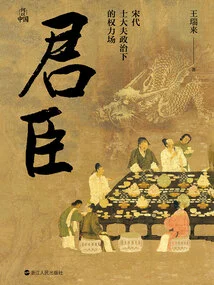
君臣:宋代士大夫政治下的权力场(何以中国丛书)
Wang Ruilai
This book is an investigation of the balance between macro and micro power in traditional Chinese society. Taking the Zhenzong Dynasty of the Northern Song Dynasty as a cross-section, it completes an overall observation of the issue of imperial power in Chinese history. The five prime ministers of the Zhenzong Dynasty described in the book almost cover the basic types of prime ministers in ancient China. The institutional foundation and power structure laid by the Zhenzong Dynasty profoundly affected the political trend of subsequent Chinese history. The spiritual genes formed by the politics of scholar-bureaucrats in the Song Dynasty still influence Chinese intellectuals today. The text of this book is popular and elegant, the argument is rigorous, the information is informative, and the descriptions are vivid. It discusses the relationship between monarch and ministers in detail, analyzes the battle of wits in the power arena brilliantly, and provides a comprehensive overview of the imperial power issues in Chinese history. With the improvement of the administrative system, the imperial power gradually moved toward symbolization. This trend was unprecedented. It was evaluated by Japanese scholars as subverting the "monarchy and dictatorship theory" popular in academic circles. It is a rare historical work that can be appreciated by both refined and popular people.
This book is an investigation of the balance between macro and micro power in traditional Chinese society. Taking the Zhenzong Dynasty of the Northern Song Dynasty as a cross-section, it completes an overall observation of the issue of imperial power in Chinese history. The five prime ministers of the Zhenzong Dynasty described in the book almost cover the basic types of prime ministers in ancient China. The institutional foundation and power structure laid by the Zhenzong Dynasty profoundly affected the political trend of subsequent Chinese history. The spiritual genes formed by the politics of scholar-bureaucrats in the Song Dynasty still influence Chinese intellectuals today. The text of this book is popular and elegant, the argument is rigorous, the information is informative, and the descriptions are vivid. It discusses the relationship between monarch and ministers in detail, analyzes the battle of wits in the power arena brilliantly, and provides a comprehensive overview of the imperial power issues in Chinese history. With the improvement of the administrative system, the imperial power gradually moved toward symbolization. This trend was unprecedented. It was evaluated by Japanese scholars as subverting the "monarchy and dictatorship theory" popular in academic circles. It is a rare historical work that can be appreciated by both refined and popular people.