Library
Browse and search books
3 novels found
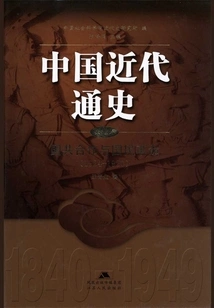
中国近代通史·第七卷:国共合作与国民革命(1924-1927)
Wang Qisheng
This volume discusses the historical period when the Chinese Kuomintang and the Chinese Communist Party cooperated and carried out the national revolution. During this period, the balance of power between the Kuomintang and the Communist Party and the historical roles they played made Chinese society during this period full of complex contradictions and struggles. This volume narrates the history of this period based on the reorganization of the Kuomintang, the cooperation between the Kuomintang and the Communist Party, the joint Northern Expedition, and the cooperation between the Kuomintang and the Communist Party to promote the national revolution. It objectively states the role that the cooperation between the Kuomintang and the Communist Party played in promoting the society at that time, as well as the contradictions and disputes between the Kuomintang and the Communist Party until the process of rupture. It provides an objective and accurate review of a series of major events during that period, absorbs a large number of the latest research results, and gives a detailed introduction to the background, process, results and historical impact of these important events.
This volume discusses the historical period when the Chinese Kuomintang and the Chinese Communist Party cooperated and carried out the national revolution. During this period, the balance of power between the Kuomintang and the Communist Party and the historical roles they played made Chinese society during this period full of complex contradictions and struggles. This volume narrates the history of this period based on the reorganization of the Kuomintang, the cooperation between the Kuomintang and the Communist Party, the joint Northern Expedition, and the cooperation between the Kuomintang and the Communist Party to promote the national revolution. It objectively states the role that the cooperation between the Kuomintang and the Communist Party played in promoting the society at that time, as well as the contradictions and disputes between the Kuomintang and the Communist Party until the process of rupture. It provides an objective and accurate review of a series of major events during that period, absorbs a large number of the latest research results, and gives a detailed introduction to the background, process, results and historical impact of these important events.
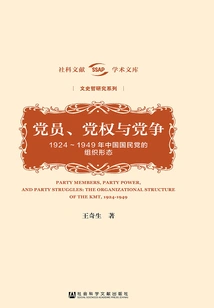
党员、党权与党争(社科文献学术文库·文史哲研究系列)
Wang Qisheng
This book examines the organizational form of the Kuomintang, explores its institutional structure and operating mechanism from within the Kuomintang, and conducts detailed discussions on the factional conflicts within the Kuomintang, the local operation of party affairs and party power, and the relationship between the party, the government, and the military. The core of the book is that the Kuomintang is a "weak authoritarian party" and the disorganized nature of its organization prevents it from realizing the one-party dictatorship of the Russian Communist Party, that is, it has the will to be authoritarian but not the power to authorize. The author points out that the Kuomintang has never been able to establish a party organizational system with tight permeability and strong cohesion, which is the main reason why it eventually lost power.
This book examines the organizational form of the Kuomintang, explores its institutional structure and operating mechanism from within the Kuomintang, and conducts detailed discussions on the factional conflicts within the Kuomintang, the local operation of party affairs and party power, and the relationship between the party, the government, and the military. The core of the book is that the Kuomintang is a "weak authoritarian party" and the disorganized nature of its organization prevents it from realizing the one-party dictatorship of the Russian Communist Party, that is, it has the will to be authoritarian but not the power to authorize. The author points out that the Kuomintang has never been able to establish a party organizational system with tight permeability and strong cohesion, which is the main reason why it eventually lost power.
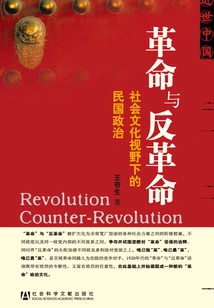
革命与反革命:社会文化视野下的民国政治(近世中国)
Wang Qisheng
In the decades after 1949, the writing of modern Chinese history by domestic historians was basically equivalent to the writing of the history of the Chinese revolution. This is largely due to the fact that revolution is indeed the main theme of modern Chinese history and an important code that dominates the development of the entire modern Chinese history. Today, when we have bid farewell to revolution, as historical researchers, we cannot simply give up, forget or deny those concepts that we have been obsessed with for a long time. We must ask, how were those revolutionary discourses and revolutionary political culture that have long been molded into our ideological values constructed? How did it evolve? This is where the thinking in this book begins.
In the decades after 1949, the writing of modern Chinese history by domestic historians was basically equivalent to the writing of the history of the Chinese revolution. This is largely due to the fact that revolution is indeed the main theme of modern Chinese history and an important code that dominates the development of the entire modern Chinese history. Today, when we have bid farewell to revolution, as historical researchers, we cannot simply give up, forget or deny those concepts that we have been obsessed with for a long time. We must ask, how were those revolutionary discourses and revolutionary political culture that have long been molded into our ideological values constructed? How did it evolve? This is where the thinking in this book begins.