Library
Browse and search books
2 novels found
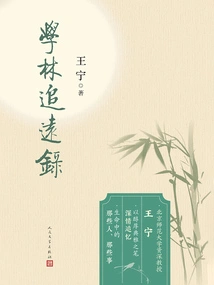
Xue Lin Zhui Yuan Lu
Literature学林追远录
Wang Ning
Mr. Wang Ning is a senior professor at Beijing Normal University and director of the Zhang Taiyan and Huang Kan Academic Research Center at Beijing Normal University. He is an important successor to Zhang Taiyan and Huang Kan academics in contemporary China. The books he wrote have won the 2018 "China Good Book" and the 14th Wenjin Book Award. "Xue Lin Zhui Yuan Lu" is Mr. Wang Ning's first collection of retrospective essays. The book recalls his interactions with a large number of teachers and friends, including Lu Zongda, Qi Gong, Zhong Jingwen, Zhou Youguang, Xiao Zhang, Liu Naihe, and Li Gefei, reflecting Mr. Wang's strong feelings for his family and country and his lofty realm of life. Mr. Wang has rich life experience and profound literary foundation. These reminiscence essays are both professional and emotional, both heavy and touching, full of transparency of life, and can inspire readers in many aspects.
Mr. Wang Ning is a senior professor at Beijing Normal University and director of the Zhang Taiyan and Huang Kan Academic Research Center at Beijing Normal University. He is an important successor to Zhang Taiyan and Huang Kan academics in contemporary China. The books he wrote have won the 2018 "China Good Book" and the 14th Wenjin Book Award. "Xue Lin Zhui Yuan Lu" is Mr. Wang Ning's first collection of retrospective essays. The book recalls his interactions with a large number of teachers and friends, including Lu Zongda, Qi Gong, Zhong Jingwen, Zhou Youguang, Xiao Zhang, Liu Naihe, and Li Gefei, reflecting Mr. Wang's strong feelings for his family and country and his lofty realm of life. Mr. Wang has rich life experience and profound literary foundation. These reminiscence essays are both professional and emotional, both heavy and touching, full of transparency of life, and can inspire readers in many aspects.
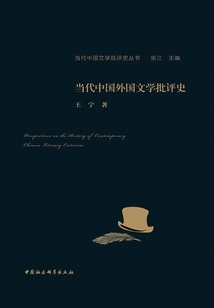
当代中国外国文学批评史
Wang Ning
This book is a monograph that comprehensively reviews and evaluates the development history of foreign literary criticism in China since the founding of the People's Republic of China. It is divided into seven parts according to the time period involved: a historical review of modern foreign literary criticism in China; the sinicization of Marxist literary theory; a discussion about the critics; the debate on modernist literature; the debate and criticism of postmodernism and foreign literary criticism since the 21st century. Different from previous histories of literary criticism, the author of this book has a broad international vision, trying to place China's foreign literary criticism in the context of world literature and its theoretical criticism, and consciously compare China's foreign literary criticism with international literary theory criticism, thereby highlighting the characteristics and internationality of China's foreign literary criticism. In addition, this book is problem-oriented and uses historical theory to systematically explore China's foreign literary criticism in the context of world literature and literary theory.
This book is a monograph that comprehensively reviews and evaluates the development history of foreign literary criticism in China since the founding of the People's Republic of China. It is divided into seven parts according to the time period involved: a historical review of modern foreign literary criticism in China; the sinicization of Marxist literary theory; a discussion about the critics; the debate on modernist literature; the debate and criticism of postmodernism and foreign literary criticism since the 21st century. Different from previous histories of literary criticism, the author of this book has a broad international vision, trying to place China's foreign literary criticism in the context of world literature and its theoretical criticism, and consciously compare China's foreign literary criticism with international literary theory criticism, thereby highlighting the characteristics and internationality of China's foreign literary criticism. In addition, this book is problem-oriented and uses historical theory to systematically explore China's foreign literary criticism in the context of world literature and literary theory.