Library
Browse and search books
18 novels found
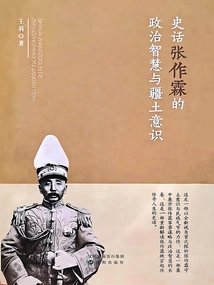
史话张作霖的政治智慧与疆土意识
Wang Li
Zhang Zuolin is a legendary figure in modern Chinese history. Although he was born in a green forest and became a warlord, due to his chivalrous nature and courageous spiritual qualities, he gave in every inch of the land and country under his jurisdiction. When the Japanese and Russian powers continued to invade the Northeast, he also had a clear sense of territorial integrity. This can be seen in his battles and negotiations with Japan and Russia, and can also be seen in his war submissions to the central government. The book "Historical Zhang Zuolin's Political Wisdom and Territorial Consciousness" explores these two aspects, intending to go from the historical level to the ideological and spiritual world of Zhang Zuolin, and show readers Zhang Zuolin's protection of this land as the overlord of one side, the Northeast King.
Zhang Zuolin is a legendary figure in modern Chinese history. Although he was born in a green forest and became a warlord, due to his chivalrous nature and courageous spiritual qualities, he gave in every inch of the land and country under his jurisdiction. When the Japanese and Russian powers continued to invade the Northeast, he also had a clear sense of territorial integrity. This can be seen in his battles and negotiations with Japan and Russia, and can also be seen in his war submissions to the central government. The book "Historical Zhang Zuolin's Political Wisdom and Territorial Consciousness" explores these two aspects, intending to go from the historical level to the ideological and spiritual world of Zhang Zuolin, and show readers Zhang Zuolin's protection of this land as the overlord of one side, the Northeast King.
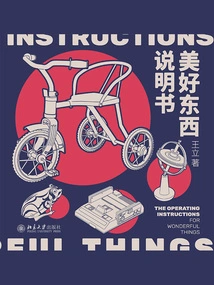
Instructions for Beautiful Things
Literature美好东西说明书
Wang Li
From scarcity to increasing abundance, the tide of the times is rolling forward. As witnesses, those born in the 1980s have countless precious fragments of the past hidden in their memories. "Instructions for Beautiful Things" is like a magical key, opening the door to the past. Author Wang Li uses unique old-fashioned black and white text instructions combined with exquisite illustrations to present more than 300 objects such as cookie boxes, enamel cups, and old-fashioned sewing machines.
From scarcity to increasing abundance, the tide of the times is rolling forward. As witnesses, those born in the 1980s have countless precious fragments of the past hidden in their memories. "Instructions for Beautiful Things" is like a magical key, opening the door to the past. Author Wang Li uses unique old-fashioned black and white text instructions combined with exquisite illustrations to present more than 300 objects such as cookie boxes, enamel cups, and old-fashioned sewing machines.
近代中国驻外领事商务报告研究
Wang Li
This book is based on the Chinese Embassy in China published in "Business News" (1903-1906), "Business Official News" (1906-1911), "Agricultural and Commercial Bulletin" (1914-1926), and "Ministry of Foreign Affairs Bulletin" (1928-1949) during the late Qing Dynasty and the Republic of China. Taking foreign consular business reports as the research object, this article explores the establishment and development process of modern Chinese consuls stationed abroad and the consular business reporting system, analyzes the form, content, quantity, advantages and disadvantages of consular business reports stationed abroad, and comprehensively grasps the evolution, composition and characteristics of consular business report materials stationed abroad. At the same time, based on this historical data, we conduct case analysis on the history of modern China's foreign trade and overseas Chinese businessmen, and interpret the interactive relationship between consular business reports and economic development.
This book is based on the Chinese Embassy in China published in "Business News" (1903-1906), "Business Official News" (1906-1911), "Agricultural and Commercial Bulletin" (1914-1926), and "Ministry of Foreign Affairs Bulletin" (1928-1949) during the late Qing Dynasty and the Republic of China. Taking foreign consular business reports as the research object, this article explores the establishment and development process of modern Chinese consuls stationed abroad and the consular business reporting system, analyzes the form, content, quantity, advantages and disadvantages of consular business reports stationed abroad, and comprehensively grasps the evolution, composition and characteristics of consular business report materials stationed abroad. At the same time, based on this historical data, we conduct case analysis on the history of modern China's foreign trade and overseas Chinese businessmen, and interpret the interactive relationship between consular business reports and economic development.
The Wind in April (respecting the Elderly and Supporting the Young Literature Publishing Project Book Series in the New Century)
General Fiction四月风动(新世纪敬老扶少文学出版工程书系)
Wang Li
In April, the grass grows and orioles fly, and rumors begin with April. A process of spreading lies, like spreading flowers by drumming, turns the situation into bizarre, absurd, scary and ridiculous. The novel "April Wind" tells a realistic story in a black humorous style. The title of the collection of novels is based on this chapter, which means that when the wind is about to come, it will rain before the window. The "Quiet Moat" and "The Landscape at the Back of the Cabin" all contain dark waves of emotions intertwined with life, and the fate and stories of the joys and sorrows of the characters. The novels with themes of youthful love and mid-life emotional crisis are full of ups and downs, heartbreak, emotional collisions and deviant subtleties, lingering sharpness, affectionate sadness and pain. There are also many articles such as "Dialogue" that analyze human nature and values. This collection also has a distinct mark of the times, and contains the most representative stream-of-consciousness expression technique when the literary and artistic trends were active in the mid-1980s. It is a literary masterpiece that is especially worthy of the listener's slow appreciation.
In April, the grass grows and orioles fly, and rumors begin with April. A process of spreading lies, like spreading flowers by drumming, turns the situation into bizarre, absurd, scary and ridiculous. The novel "April Wind" tells a realistic story in a black humorous style. The title of the collection of novels is based on this chapter, which means that when the wind is about to come, it will rain before the window. The "Quiet Moat" and "The Landscape at the Back of the Cabin" all contain dark waves of emotions intertwined with life, and the fate and stories of the joys and sorrows of the characters. The novels with themes of youthful love and mid-life emotional crisis are full of ups and downs, heartbreak, emotional collisions and deviant subtleties, lingering sharpness, affectionate sadness and pain. There are also many articles such as "Dialogue" that analyze human nature and values. This collection also has a distinct mark of the times, and contains the most representative stream-of-consciousness expression technique when the literary and artistic trends were active in the mid-1980s. It is a literary masterpiece that is especially worthy of the listener's slow appreciation.
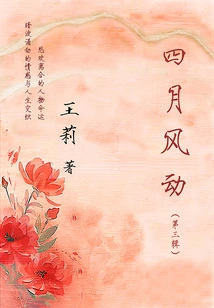
April Wind (part 3)
General Fiction四月风动(第三辑)
Wang Li
In April, the grass grows and orioles fly, and rumors begin with April. A process of spreading lies, like spreading flowers by drumming, turns the situation into bizarre, absurd, scary and ridiculous. The novel "April Wind" tells a realistic story in a black humorous style. The title of the collection of novels is based on this chapter, which means that when the wind is about to come, it will rain before the window. The "Quiet Moat" and "The Landscape at the Back of the Cabin" all contain dark waves of emotions intertwined with life, and the fate and stories of the joys and sorrows of the characters. The novels with themes of youthful love and mid-life emotional crisis are full of ups and downs, heartbreak, emotional collisions and deviant subtleties, lingering sharpness, affectionate sadness and pain. There are also many articles such as "Dialogue" that analyze human nature and values. This collection also has a distinct mark of the times, and contains the most representative stream-of-consciousness expression technique when the literary and artistic trends were active in the mid-1980s. It is a literary masterpiece that is especially worthy of the listener's slow appreciation.
In April, the grass grows and orioles fly, and rumors begin with April. A process of spreading lies, like spreading flowers by drumming, turns the situation into bizarre, absurd, scary and ridiculous. The novel "April Wind" tells a realistic story in a black humorous style. The title of the collection of novels is based on this chapter, which means that when the wind is about to come, it will rain before the window. The "Quiet Moat" and "The Landscape at the Back of the Cabin" all contain dark waves of emotions intertwined with life, and the fate and stories of the joys and sorrows of the characters. The novels with themes of youthful love and mid-life emotional crisis are full of ups and downs, heartbreak, emotional collisions and deviant subtleties, lingering sharpness, affectionate sadness and pain. There are also many articles such as "Dialogue" that analyze human nature and values. This collection also has a distinct mark of the times, and contains the most representative stream-of-consciousness expression technique when the literary and artistic trends were active in the mid-1980s. It is a literary masterpiece that is especially worthy of the listener's slow appreciation.
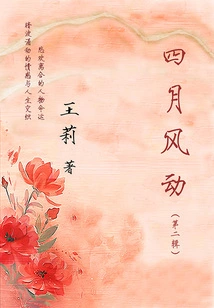
April Wind (second Series)
General Fiction四月风动(第二辑)
Wang Li
In April, the grass grows and orioles fly, and rumors begin with April. A process of spreading lies, like spreading flowers by drumming, turns the situation into bizarre, absurd, scary and ridiculous. The novel "April Wind" tells a realistic story in a black humorous style. The title of the collection of novels is based on this chapter, which means that when the wind is about to come, it will rain before the window. The "Quiet Moat" and "The Landscape at the Back of the Cabin" all contain dark waves of emotions intertwined with life, and the fate and stories of the joys and sorrows of the characters. The novels with themes of youthful love and mid-life emotional crisis are full of ups and downs, heartbreak, emotional collisions and deviant subtleties, lingering sharpness, affectionate sadness and pain. There are also many articles such as "Dialogue" that analyze human nature and values. This collection also has a distinct mark of the times, and contains the most representative stream-of-consciousness expression technique when the literary and artistic trends were active in the mid-1980s. It is a literary masterpiece that is especially worthy of the listener's slow appreciation.
In April, the grass grows and orioles fly, and rumors begin with April. A process of spreading lies, like spreading flowers by drumming, turns the situation into bizarre, absurd, scary and ridiculous. The novel "April Wind" tells a realistic story in a black humorous style. The title of the collection of novels is based on this chapter, which means that when the wind is about to come, it will rain before the window. The "Quiet Moat" and "The Landscape at the Back of the Cabin" all contain dark waves of emotions intertwined with life, and the fate and stories of the joys and sorrows of the characters. The novels with themes of youthful love and mid-life emotional crisis are full of ups and downs, heartbreak, emotional collisions and deviant subtleties, lingering sharpness, affectionate sadness and pain. There are also many articles such as "Dialogue" that analyze human nature and values. This collection also has a distinct mark of the times, and contains the most representative stream-of-consciousness expression technique when the literary and artistic trends were active in the mid-1980s. It is a literary masterpiece that is especially worthy of the listener's slow appreciation.
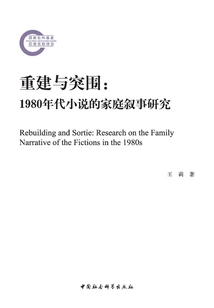
重建与突围:1980年代小说的家庭叙事研究
Wang Li
Family is a pervasive writing object in Chinese literature in the 20th century. This book takes the construction of family in Chinese literature in the 20th century as a clue, takes the relationship between the nation-state, individuals, and families in the process of China's modernization as a starting point, takes the novels of the 1980s as the research object, selects representative texts, and explores how nation-state discourse and personal discourse construct the representation of family in the novels of the 1980s. On the one hand, there is a "going home" direction and complex in the novels of the 1980s. The humanitarian trend of thought has re-endowed family ethics with the positive value of "humanity". The family has become a carrier of reflection and a home for the return of "humanity", saving individuals who have experienced disasters. On the other hand, the humble and trivial appearance of family shows the alienation of daily life under the perspective of enlightenment, and individuals seek the path to self-realization beyond the family.
Family is a pervasive writing object in Chinese literature in the 20th century. This book takes the construction of family in Chinese literature in the 20th century as a clue, takes the relationship between the nation-state, individuals, and families in the process of China's modernization as a starting point, takes the novels of the 1980s as the research object, selects representative texts, and explores how nation-state discourse and personal discourse construct the representation of family in the novels of the 1980s. On the one hand, there is a "going home" direction and complex in the novels of the 1980s. The humanitarian trend of thought has re-endowed family ethics with the positive value of "humanity". The family has become a carrier of reflection and a home for the return of "humanity", saving individuals who have experienced disasters. On the other hand, the humble and trivial appearance of family shows the alienation of daily life under the perspective of enlightenment, and individuals seek the path to self-realization beyond the family.
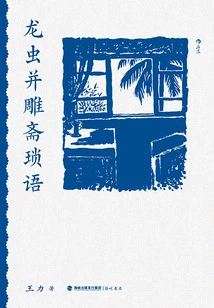
龙虫并雕斋琐语
Wang Li
This book is a collection of Mr. Wang Li's essays. It mainly includes essays written by the author in Kunming during the Anti-Japanese War, as well as some intellectual essays and essays in memory of friends written after the founding of New China. Mr. Wang Li's essays have diverse themes and are close to life. They are written with quotations from classics and carefully crafted language. They seem relaxed and casual, but in fact they contain wit. His intellectual prose is good at explaining the mysteries of the Chinese language in a eloquent way, which is approachable and easy to understand. In this way, the whole book integrates daily life, interest, artistic conception, personality and knowledge, from small to large, with simple language and profound meaning, all-inclusive, as the saying goes, eclectic, "dragon and insect are carved together". Mr. Zhang Shuangdi wrote notes along with the text, making the book clearer and easier to understand. This new edition uses the 1949 edition of the Shanghai Observation Society as the base, and collates it with the 1982 and 1993 editions of the China Social Sciences Press. The differences between each edition are noted. Based on the original, we follow the good ones and correct individual intellectual errors or typos that have been misrepresented for a long time, with a view to improving the accuracy in the future.
This book is a collection of Mr. Wang Li's essays. It mainly includes essays written by the author in Kunming during the Anti-Japanese War, as well as some intellectual essays and essays in memory of friends written after the founding of New China. Mr. Wang Li's essays have diverse themes and are close to life. They are written with quotations from classics and carefully crafted language. They seem relaxed and casual, but in fact they contain wit. His intellectual prose is good at explaining the mysteries of the Chinese language in a eloquent way, which is approachable and easy to understand. In this way, the whole book integrates daily life, interest, artistic conception, personality and knowledge, from small to large, with simple language and profound meaning, all-inclusive, as the saying goes, eclectic, "dragon and insect are carved together". Mr. Zhang Shuangdi wrote notes along with the text, making the book clearer and easier to understand. This new edition uses the 1949 edition of the Shanghai Observation Society as the base, and collates it with the 1982 and 1993 editions of the China Social Sciences Press. The differences between each edition are noted. Based on the original, we follow the good ones and correct individual intellectual errors or typos that have been misrepresented for a long time, with a view to improving the accuracy in the future.
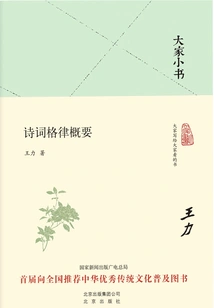
大家小书:诗词格律概要
Wang Li
This book is an academic popular classic written by the famous linguist Mr. Wang Li to facilitate readers' appreciation and creation of classical poetry. It tells the most basic knowledge of classical poetry rhythm. It not only summarizes the previous research results, but also introduces new ideas. It is both serious and scientific. It is a masterpiece refined by Mr. Wang Li on the basis of his research on poetry rhythm.
This book is an academic popular classic written by the famous linguist Mr. Wang Li to facilitate readers' appreciation and creation of classical poetry. It tells the most basic knowledge of classical poetry rhythm. It not only summarizes the previous research results, but also introduces new ideas. It is both serious and scientific. It is a masterpiece refined by Mr. Wang Li on the basis of his research on poetry rhythm.
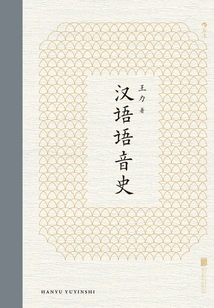
History of Chinese Phonetics
History汉语语音史
Wang Li
This book provides a detailed overview of the development history of Chinese phonetics and introduces some basic knowledge of the history of Chinese phonetics. The whole book is divided into three parts: introduction, phonology through the ages, and the development rules of phonetics. In the introduction, the author discusses the four basic aspects of knowledge required to study the history of Chinese phonetics. In the phonology of past dynasties, the development and changes of phonology from pre-Qin to modern times are sorted out, and a phonetic development table of past dynasties is provided. Finally, in the law of speech development, four main ways of speech development are summarized.
This book provides a detailed overview of the development history of Chinese phonetics and introduces some basic knowledge of the history of Chinese phonetics. The whole book is divided into three parts: introduction, phonology through the ages, and the development rules of phonetics. In the introduction, the author discusses the four basic aspects of knowledge required to study the history of Chinese phonetics. In the phonology of past dynasties, the development and changes of phonology from pre-Qin to modern times are sorted out, and a phonetic development table of past dynasties is provided. Finally, in the law of speech development, four main ways of speech development are summarized.
Flowers and Trees
General Fiction繁花满树
Wang Li
In the charming, prosperous and dubious earthly world, the poetic and wonderful landscape of deserted mountains, flowing water and blooming flowers is no longer just a distant dream, an inner expectation, and a posture of life for modern people. In the rolling red dust, or with the company of mountains and rivers, you can look for the profound and distant humanistic feelings in the beautiful mountains and rivers; or you can sit in the bookstore and feel the soul-moving artistic charm in the rich fragrance of books. This tranquility and tranquility always brings unexpected joy.
In the charming, prosperous and dubious earthly world, the poetic and wonderful landscape of deserted mountains, flowing water and blooming flowers is no longer just a distant dream, an inner expectation, and a posture of life for modern people. In the rolling red dust, or with the company of mountains and rivers, you can look for the profound and distant humanistic feelings in the beautiful mountains and rivers; or you can sit in the bookstore and feel the soul-moving artistic charm in the rich fragrance of books. This tranquility and tranquility always brings unexpected joy.
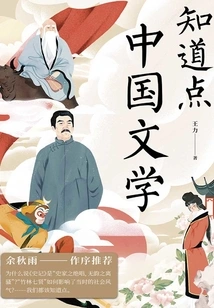
Know Something About Chinese Literature
Literature知道点中国文学
Wang Li
What kind of ancient social life does The Book of Songs reflect? Why is it said that "Historical Records" is "the swansong of historians and a rhymeless lisao"? How did the "Seven Sages of the Bamboo Grove" influence the social atmosphere at that time? ...We should all know better.
What kind of ancient social life does The Book of Songs reflect? Why is it said that "Historical Records" is "the swansong of historians and a rhymeless lisao"? How did the "Seven Sages of the Bamboo Grove" influence the social atmosphere at that time? ...We should all know better.
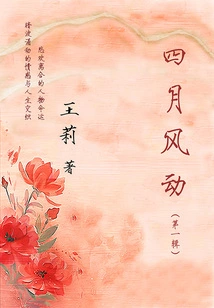
April Wind (part 1)
General Fiction四月风动(第一辑)
Wang Li
In April, the grass grows and orioles fly, and rumors begin with April. A process of spreading lies, like spreading flowers by drumming, turns the situation into bizarre, absurd, scary and ridiculous. The novel "April Wind" tells a realistic story in a black humorous style. The title of the collection of novels is based on this chapter, which means that when the wind is about to come, it will rain before the window. The "Quiet Moat" and "The Landscape at the Back of the Cabin" all contain dark waves of emotions intertwined with life, and the fate and stories of the joys and sorrows of the characters. The novels with themes of youthful love and mid-life emotional crisis are full of ups and downs, heartbreak, emotional collisions and deviant subtleties, lingering sharpness, affectionate sadness and pain. There are also many articles such as "Dialogue" that analyze human nature and values. This collection also has a distinct mark of the times, and contains the most representative stream-of-consciousness expression technique when the literary and artistic trends were active in the mid-1980s. It is a literary masterpiece that is especially worthy of the listener's slow appreciation.
In April, the grass grows and orioles fly, and rumors begin with April. A process of spreading lies, like spreading flowers by drumming, turns the situation into bizarre, absurd, scary and ridiculous. The novel "April Wind" tells a realistic story in a black humorous style. The title of the collection of novels is based on this chapter, which means that when the wind is about to come, it will rain before the window. The "Quiet Moat" and "The Landscape at the Back of the Cabin" all contain dark waves of emotions intertwined with life, and the fate and stories of the joys and sorrows of the characters. The novels with themes of youthful love and mid-life emotional crisis are full of ups and downs, heartbreak, emotional collisions and deviant subtleties, lingering sharpness, affectionate sadness and pain. There are also many articles such as "Dialogue" that analyze human nature and values. This collection also has a distinct mark of the times, and contains the most representative stream-of-consciousness expression technique when the literary and artistic trends were active in the mid-1980s. It is a literary masterpiece that is especially worthy of the listener's slow appreciation.

massage" Life: Research on Bi Feiyu's Creation
General Fiction“推拿”人生:毕飞宇创作研究
Wang Li
This manuscript is a research monograph on Bi Feiyu's novel "Massage". Starting from the text content, the discussion focuses on the theme, connotation and character analysis of the novel "Massage". By analyzing the characters in the novel and analyzing and exploring the moral categories, it is proposed that ""Massage" has filled in a rich and colorful stroke for the bottom narrative of the new century." Interpreting and analyzing the works of "Massage" and conducting a comprehensive and holistic study of Bi Feiyu's creations have great practical significance. (Bi Feiyu, a famous writer, professor at Nanjing University, and vice chairman of the Jiangsu Provincial Writers Association. Main achievements: Lu Xun Literature Award Short Story Award, Main Achievements Lu Xun Literature Award Short Story Award, the 8th Mao Dun Literature Award, People's Literature Award, etc. "That Boy Is Me", "Tsing Yi", "Plain", "Furious Fingers", "Massage")
This manuscript is a research monograph on Bi Feiyu's novel "Massage". Starting from the text content, the discussion focuses on the theme, connotation and character analysis of the novel "Massage". By analyzing the characters in the novel and analyzing and exploring the moral categories, it is proposed that ""Massage" has filled in a rich and colorful stroke for the bottom narrative of the new century." Interpreting and analyzing the works of "Massage" and conducting a comprehensive and holistic study of Bi Feiyu's creations have great practical significance. (Bi Feiyu, a famous writer, professor at Nanjing University, and vice chairman of the Jiangsu Provincial Writers Association. Main achievements: Lu Xun Literature Award Short Story Award, Main Achievements Lu Xun Literature Award Short Story Award, the 8th Mao Dun Literature Award, People's Literature Award, etc. "That Boy Is Me", "Tsing Yi", "Plain", "Furious Fingers", "Massage")
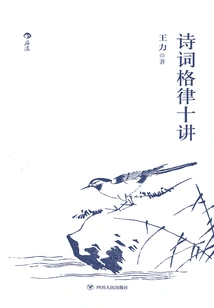
Ten Lectures on Poetry Rhythm
Literature诗词格律十讲
Wang Li
The rhythm of poetry is a summary of the long-term accumulated artistic experience of ancient Chinese poets and is an integral part of the art of poetry. Only by mastering the specific knowledge of the rhythm of old-style poetry can we better understand the artistic charm of the works of famous poets in the past dynasties, especially after the Tang Dynasty. To this end, Mr. Wang Li compiled a booklet aimed at popularizing the basic knowledge of poetry rhythm, which mainly includes "Ten Lectures on Poetry Rhythm", "Remaining Comments on Poetry Rhythm" and two appendices ("Explanation of Three Tang Poems" and "Explanation of Three Song Poems"). The main part is "Ten Lectures on Rhythm and Rhythm of Poetry", which includes ten parts: rhyme and rhythm, five-character quatrains, seven-character quatrains, five-character verses and long rhymes, seven-character verses, changes in rhythm, antitheses, antiquity, word cards and score, and the harmony and rhythm of words. This book does not cover overly complicated metrical knowledge, but only analyzes some key points and describes them in detail, which is more suitable for popularization.
The rhythm of poetry is a summary of the long-term accumulated artistic experience of ancient Chinese poets and is an integral part of the art of poetry. Only by mastering the specific knowledge of the rhythm of old-style poetry can we better understand the artistic charm of the works of famous poets in the past dynasties, especially after the Tang Dynasty. To this end, Mr. Wang Li compiled a booklet aimed at popularizing the basic knowledge of poetry rhythm, which mainly includes "Ten Lectures on Poetry Rhythm", "Remaining Comments on Poetry Rhythm" and two appendices ("Explanation of Three Tang Poems" and "Explanation of Three Song Poems"). The main part is "Ten Lectures on Rhythm and Rhythm of Poetry", which includes ten parts: rhyme and rhythm, five-character quatrains, seven-character quatrains, five-character verses and long rhymes, seven-character verses, changes in rhythm, antitheses, antiquity, word cards and score, and the harmony and rhythm of words. This book does not cover overly complicated metrical knowledge, but only analyzes some key points and describes them in detail, which is more suitable for popularization.
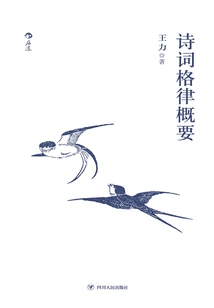
Summary of Poetry Rhythm
Literature诗词格律概要
Wang Li
In addition to selecting some common sense papers and handouts on ancient Chinese such as "Common Sense of Ancient Chinese", "Ancient Chinese Calendar" and "Study of Classical Chinese" by Mr. Wang Li, this book also adds some interesting essays related to ancient Chinese written by Mr. Wang Li. The content is easy to understand and aims at popularization, so that readers can have a preliminary understanding of ancient Chinese. Mr. Wang Li's research on ancient Chinese is extremely profound and has extraordinary insights, which can provide readers with a better reference.
In addition to selecting some common sense papers and handouts on ancient Chinese such as "Common Sense of Ancient Chinese", "Ancient Chinese Calendar" and "Study of Classical Chinese" by Mr. Wang Li, this book also adds some interesting essays related to ancient Chinese written by Mr. Wang Li. The content is easy to understand and aims at popularization, so that readers can have a preliminary understanding of ancient Chinese. Mr. Wang Li's research on ancient Chinese is extremely profound and has extraordinary insights, which can provide readers with a better reference.

风烟俱净,岁月安好
Wang Li
This book contains more than 60 essays by writer Wang Li, divided into six series. Series 1: Keep your heart at a low place; Series 2: Don't wait for decay where you are; Series 3: Women are good; Series 4: The phantom in the sky; Series 5: The moonlight at that time; Series 6: See peach blossoms intoxicated by the spring breeze again. The author uses delicate brushstrokes to describe the surrounding characters, things and scenery, expressing the author's love for life, thinking and perception of life. The language of the book is beautiful and the emotions are real. At the back of the book comes a detailed analysis of the reading test questions to help improve students' reading and writing skills.
This book contains more than 60 essays by writer Wang Li, divided into six series. Series 1: Keep your heart at a low place; Series 2: Don't wait for decay where you are; Series 3: Women are good; Series 4: The phantom in the sky; Series 5: The moonlight at that time; Series 6: See peach blossoms intoxicated by the spring breeze again. The author uses delicate brushstrokes to describe the surrounding characters, things and scenery, expressing the author's love for life, thinking and perception of life. The language of the book is beautiful and the emotions are real. At the back of the book comes a detailed analysis of the reading test questions to help improve students' reading and writing skills.
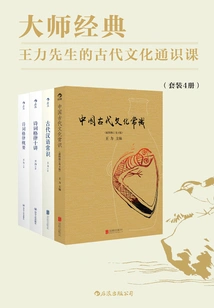
Master's Classics: Mr. Wang Li's General Course on Ancient Culture (set of 4 Volumes in Total)
Literature大师经典:王力先生的古代文化通识课(套装共4册)
Wang Li
"Common Sense of Ancient Chinese Culture" is a concise reading of common sense of ancient Chinese culture that was written by Professor Wang Li and convened by many experts. It has been revised four times over the past 50 years since its publication. It is still the most important and comprehensive basic reference book for the public to understand the face of ancient Chinese culture. This revision breaks through the previous model. Liu Leyuan, a sinology expert who teaches in the United States, is specially hired to take the results of the golden age of Chinese archeology as a starting point. Through "new evidence of ancient history" that combines modern archaeological discoveries with traditional documents, it supplements the latest cultural research results from the perspectives of archaeology and anthropology. This book "Common Sense of Ancient Chinese" not only selects some common-sense papers and handouts on ancient Chinese from Mr. Wang Li's "Common Sense of Ancient Chinese", "Ancient Chinese Calendar", "Study of Classical Chinese", etc., But also supplements some interesting essays related to ancient Chinese written by Mr. Wang Li. The content is easy to understand. The book "Ten Lectures on Poetry Rhythm" mainly includes "Ten Lectures on Poetry Rhythm", "Remaining Comments on Poetry Rhythm" and two appendices ("Explanation of Three Tang Poems" and "Explanation of Three Song Poems"). The main part is "Ten Lectures on Rhythm and Rhythm of Poetry", which includes ten parts: rhyme and rhythm, five-character quatrains, seven-character quatrains, five-character verses and long rhymes, seven-character verses, changes in rhythm, antitheses, antiquity, word cards and score, and the harmony and rhythm of words. "A Summary of Poetry Rhythm" is an academic popular classic written by the famous linguist Mr. Wang Li to facilitate readers' appreciation and creation of classical poetry. It tells the most basic knowledge of classical poetry rhythm.
"Common Sense of Ancient Chinese Culture" is a concise reading of common sense of ancient Chinese culture that was written by Professor Wang Li and convened by many experts. It has been revised four times over the past 50 years since its publication. It is still the most important and comprehensive basic reference book for the public to understand the face of ancient Chinese culture. This revision breaks through the previous model. Liu Leyuan, a sinology expert who teaches in the United States, is specially hired to take the results of the golden age of Chinese archeology as a starting point. Through "new evidence of ancient history" that combines modern archaeological discoveries with traditional documents, it supplements the latest cultural research results from the perspectives of archaeology and anthropology. This book "Common Sense of Ancient Chinese" not only selects some common-sense papers and handouts on ancient Chinese from Mr. Wang Li's "Common Sense of Ancient Chinese", "Ancient Chinese Calendar", "Study of Classical Chinese", etc., But also supplements some interesting essays related to ancient Chinese written by Mr. Wang Li. The content is easy to understand. The book "Ten Lectures on Poetry Rhythm" mainly includes "Ten Lectures on Poetry Rhythm", "Remaining Comments on Poetry Rhythm" and two appendices ("Explanation of Three Tang Poems" and "Explanation of Three Song Poems"). The main part is "Ten Lectures on Rhythm and Rhythm of Poetry", which includes ten parts: rhyme and rhythm, five-character quatrains, seven-character quatrains, five-character verses and long rhymes, seven-character verses, changes in rhythm, antitheses, antiquity, word cards and score, and the harmony and rhythm of words. "A Summary of Poetry Rhythm" is an academic popular classic written by the famous linguist Mr. Wang Li to facilitate readers' appreciation and creation of classical poetry. It tells the most basic knowledge of classical poetry rhythm.