Library
Browse and search books
9 novels found
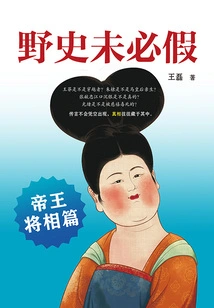
野史未必假2:帝王将相篇
Wang Lei
A brand new sequel to "Unofficial History May Not Be False"! 22 Brand-new wild histories, 22 exciting mysteries! Is Wang Mang a time traveler? Is Zhu Di the biological son of Empress Ma? Was Guangxu poisoned to death by Cixi? Rumors do not appear out of thin air, the truth is often hidden within them. This book tells the familiar unofficial rumors in Chinese history from the Three Dynasties to the Ming and Qing Dynasties, such as the Beacon Fire Opera on the Princes, the First Emperor's Sand Dune Edict, Lu Bu's Play on Diao Chan, the Xuanwu Gate Incident, Wu Zetian's murder of her daughter, the civet cat for the prince, the mystery of Zhu Di's life experience, the Renyin Palace Incident, Yuan The death of Chong Huan, Wu Sangui's sudden death as a beauty, Zhang Xianzhong's massacre of Shu and the sinking of silver, the treasures of the Taiping Heavenly Kingdom, the death of Guangxu, etc., Through the combing of historical materials, logical reasoning, and scenario restoration of relevant records in official and unofficial history, the historical truth behind the events is revealed.
A brand new sequel to "Unofficial History May Not Be False"! 22 Brand-new wild histories, 22 exciting mysteries! Is Wang Mang a time traveler? Is Zhu Di the biological son of Empress Ma? Was Guangxu poisoned to death by Cixi? Rumors do not appear out of thin air, the truth is often hidden within them. This book tells the familiar unofficial rumors in Chinese history from the Three Dynasties to the Ming and Qing Dynasties, such as the Beacon Fire Opera on the Princes, the First Emperor's Sand Dune Edict, Lu Bu's Play on Diao Chan, the Xuanwu Gate Incident, Wu Zetian's murder of her daughter, the civet cat for the prince, the mystery of Zhu Di's life experience, the Renyin Palace Incident, Yuan The death of Chong Huan, Wu Sangui's sudden death as a beauty, Zhang Xianzhong's massacre of Shu and the sinking of silver, the treasures of the Taiping Heavenly Kingdom, the death of Guangxu, etc., Through the combing of historical materials, logical reasoning, and scenario restoration of relevant records in official and unofficial history, the historical truth behind the events is revealed.
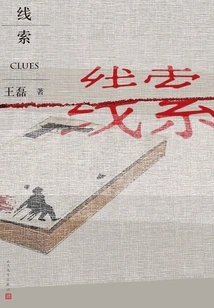
Clue
General Fiction线索
Wang Lei
This is a detective mystery novel, describing the shooting death of a warehouse manager of a power company. Investigators tried to restore the case by investigating the family and social relationships of the deceased. However, due to incomplete information, the case has repeatedly reached dead ends. While the police were worried, an important clue figure appeared and brought his new book "Bestseller". This book uses a writing style that is difficult to distinguish true from false, and draws a "map" for the police to continue solving the case...
This is a detective mystery novel, describing the shooting death of a warehouse manager of a power company. Investigators tried to restore the case by investigating the family and social relationships of the deceased. However, due to incomplete information, the case has repeatedly reached dead ends. While the police were worried, an important clue figure appeared and brought his new book "Bestseller". This book uses a writing style that is difficult to distinguish true from false, and draws a "map" for the police to continue solving the case...
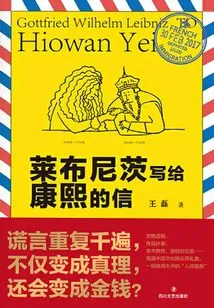
Leibniz's Letter to Kangxi
General Fiction莱布尼茨写给康熙的信
Wang Lei
"Leibniz's Letter to Kangxi" is the latest absurdist realism novel written by the young novelist Wang Lei. Billionaire Ding Laoquan's finger bones were broken. Ding Laoquan's son Ding Qiao suspected that it was the second-generation official Han Zheng, so he fabricated a "Leibniz's Letter to Kangxi" and sold it to Han Zheng through a French cultural relics dealer. Han Zheng found the treasure and publicized it widely after returning to China. He also held an appraisal meeting and a group of experts identified it as authentic. From then on, Han Zheng and Ding Qiao partnered up to open Leibniz Bookstore, Leibniz Hotel, Leibniz Travel Company... The whole novel is full of irony and absurdity. The characters in the book perform various behaviors around a "fake" letter, exposing all kinds of chaos in China's cultural and entertainment industry, with a strong comedy effect and a sense of concern for reality.
"Leibniz's Letter to Kangxi" is the latest absurdist realism novel written by the young novelist Wang Lei. Billionaire Ding Laoquan's finger bones were broken. Ding Laoquan's son Ding Qiao suspected that it was the second-generation official Han Zheng, so he fabricated a "Leibniz's Letter to Kangxi" and sold it to Han Zheng through a French cultural relics dealer. Han Zheng found the treasure and publicized it widely after returning to China. He also held an appraisal meeting and a group of experts identified it as authentic. From then on, Han Zheng and Ding Qiao partnered up to open Leibniz Bookstore, Leibniz Hotel, Leibniz Travel Company... The whole novel is full of irony and absurdity. The characters in the book perform various behaviors around a "fake" letter, exposing all kinds of chaos in China's cultural and entertainment industry, with a strong comedy effect and a sense of concern for reality.
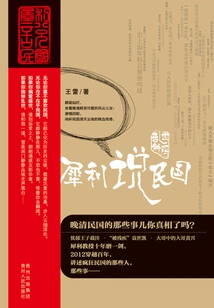
乱世解码:犀利说民国
Wang Lei
This book is an alternative history of the Republic of China for the general public. It provides an alternative interpretation of the most chaotic and exciting troubled times in Chinese history, deciphers the black and white lives of the bigwigs of the Republic of China, and deciphers the rules of survival in troubled times. If you understand the troubled times, you will understand history and life, and you will naturally uncover the ambitions of heroes and tyrants, and the life-and-death knots of great and villains. The author has studied the history of the Republic of China for many years and has consulted tens of millions of words of historical materials. He has a solid professional foundation and a broad ideological vision, which is different from the impetuousness of grassroots history theory and the boring academic history. With rigorous historical facts, sharp perspective, and pleasant writing style, it directly points to people's hearts and heartily decodes the black and white past events in troubled times. History that speaks directly to people's hearts may not necessarily be the best, but it must be the most enjoyable. History can be very exciting, and the Republic of China is certainly even more exciting.
This book is an alternative history of the Republic of China for the general public. It provides an alternative interpretation of the most chaotic and exciting troubled times in Chinese history, deciphers the black and white lives of the bigwigs of the Republic of China, and deciphers the rules of survival in troubled times. If you understand the troubled times, you will understand history and life, and you will naturally uncover the ambitions of heroes and tyrants, and the life-and-death knots of great and villains. The author has studied the history of the Republic of China for many years and has consulted tens of millions of words of historical materials. He has a solid professional foundation and a broad ideological vision, which is different from the impetuousness of grassroots history theory and the boring academic history. With rigorous historical facts, sharp perspective, and pleasant writing style, it directly points to people's hearts and heartily decodes the black and white past events in troubled times. History that speaks directly to people's hearts may not necessarily be the best, but it must be the most enjoyable. History can be very exciting, and the Republic of China is certainly even more exciting.
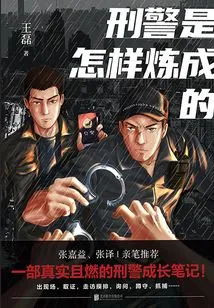
How to Become a Detective
General Fiction刑警是怎样炼成的
Wang Lei
The author of this book has worked in front-line criminal investigation departments for a long time and has deep feelings and unique understanding of this work. This is not a novel with suspense and reasoning as its main features. Instead, it focuses on the daily life of the criminal police team and individual cases, showing readers the various criminal police officers who are often hidden behind the cases. In this book, you will get to know Captain Li who is obsessed with solving crimes and makes the criminal police team his home, Mr. Shen who likes to wear floral shirts and loves to dress up, and Jetta Zhang, a stunt driving expert who can drift... The profession of criminal police often makes them become the background characters in those shocking stories, but each of them actually has his or her own unknown and exciting story.
The author of this book has worked in front-line criminal investigation departments for a long time and has deep feelings and unique understanding of this work. This is not a novel with suspense and reasoning as its main features. Instead, it focuses on the daily life of the criminal police team and individual cases, showing readers the various criminal police officers who are often hidden behind the cases. In this book, you will get to know Captain Li who is obsessed with solving crimes and makes the criminal police team his home, Mr. Shen who likes to wear floral shirts and loves to dress up, and Jetta Zhang, a stunt driving expert who can drift... The profession of criminal police often makes them become the background characters in those shocking stories, but each of them actually has his or her own unknown and exciting story.
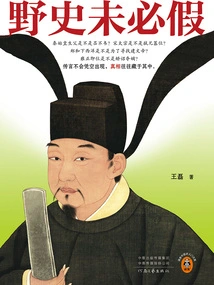
野史未必假
Wang Lei
From the Three Sovereigns and Five Emperors to the Ming and Qing Dynasties, we will reveal the historical truth in popular unofficial history for you! This book analyzes 22 popular unofficial histories in Chinese history from Three Dynasties and Five Emperors to the Ming and Qing Dynasties. It reveals the historical truth in popular unofficial histories through scene reproduction, historical data collection, and logical reasoning. Is Qin Shihuang's biological father Lu Buwei? Did Song Taizong kill his brother and usurp the throne? Did Zheng He go to the Western Seas to find Emperor Jianwen? Was Yongzheng's accession to the throne a false edict to seize the direct descendants? Pretending to be a princess for more than 20 years without anyone finding out? Which of the two "Prince Chongzhen" in the north and south is the fake? ...Rumors do not appear out of thin air, the truth is often hidden within them.
From the Three Sovereigns and Five Emperors to the Ming and Qing Dynasties, we will reveal the historical truth in popular unofficial history for you! This book analyzes 22 popular unofficial histories in Chinese history from Three Dynasties and Five Emperors to the Ming and Qing Dynasties. It reveals the historical truth in popular unofficial histories through scene reproduction, historical data collection, and logical reasoning. Is Qin Shihuang's biological father Lu Buwei? Did Song Taizong kill his brother and usurp the throne? Did Zheng He go to the Western Seas to find Emperor Jianwen? Was Yongzheng's accession to the throne a false edict to seize the direct descendants? Pretending to be a princess for more than 20 years without anyone finding out? Which of the two "Prince Chongzhen" in the north and south is the fake? ...Rumors do not appear out of thin air, the truth is often hidden within them.
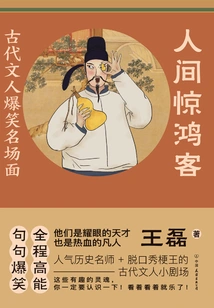
人间惊鸿客:古代文人爆笑名场面
Wang Lei
Did you know that Li Bai was a famous son-in-law in ancient times? Why did the immortal poet, who did not envy wealth, marry into a wealthy family twice? Su Dongpo is not only a great writer in Chinese history, but also a veritable "foodie"! Dongpo pork, Dongpo elbow, Dongpo cuttlefish, Dongpo tofu, Dongpo soup, these delicacies loved by modern people are all related to his old man. Li Qingzhao, a talented woman through the ages, was also trapped by a "scumbag". She would rather spend two years in jail than sue her husband and run towards freedom without hesitation. From Sima Xiangru in the Han Dynasty to Tang Yin in the Ming Dynasty, "The Shocking Guest" selects twenty ancient literati to tell their lives and the historical stories of their dynasties in a humorous way. The whole book uses the stories of literati as clues to connect the rise and fall of Chinese history and explore the historical details hidden in the writings of literati.
Did you know that Li Bai was a famous son-in-law in ancient times? Why did the immortal poet, who did not envy wealth, marry into a wealthy family twice? Su Dongpo is not only a great writer in Chinese history, but also a veritable "foodie"! Dongpo pork, Dongpo elbow, Dongpo cuttlefish, Dongpo tofu, Dongpo soup, these delicacies loved by modern people are all related to his old man. Li Qingzhao, a talented woman through the ages, was also trapped by a "scumbag". She would rather spend two years in jail than sue her husband and run towards freedom without hesitation. From Sima Xiangru in the Han Dynasty to Tang Yin in the Ming Dynasty, "The Shocking Guest" selects twenty ancient literati to tell their lives and the historical stories of their dynasties in a humorous way. The whole book uses the stories of literati as clues to connect the rise and fall of Chinese history and explore the historical details hidden in the writings of literati.
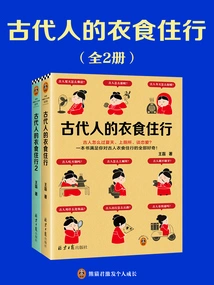
古代人的衣食住行(全2册)
Wang Lei
How did the ancients spend summer, go to the bathroom, and fall in love? One book to satisfy all your curiosity about the daily life of ancient people! Was going to the toilet a dangerous thing for ancient people? In ancient times, toilets were very simple. They were just digging a big pit in the open air. People used the toilet next to the pit. If they accidentally fell into the pit, they would drown if they didn't fall to death. Don't laugh, this kind of thing really happened in history... Were the ancients tired from work? In ancient times, "beating workers" mainly referred to officials and government servants. They work almost 6 days a week, from 6 am to 6 pm every day. Therefore, the ancient work system can be called the "666" work system. How did the ancients live at night? The night life of ancient civilians mainly consisted of chatting with their families by moonlight, telling neighborhood gossip or jokes, collectively referred to as "talking in the vernacular". As for "reading at night", that is the lifestyle of wealthy people. After all, lighting was too expensive in ancient times!
How did the ancients spend summer, go to the bathroom, and fall in love? One book to satisfy all your curiosity about the daily life of ancient people! Was going to the toilet a dangerous thing for ancient people? In ancient times, toilets were very simple. They were just digging a big pit in the open air. People used the toilet next to the pit. If they accidentally fell into the pit, they would drown if they didn't fall to death. Don't laugh, this kind of thing really happened in history... Were the ancients tired from work? In ancient times, "beating workers" mainly referred to officials and government servants. They work almost 6 days a week, from 6 am to 6 pm every day. Therefore, the ancient work system can be called the "666" work system. How did the ancients live at night? The night life of ancient civilians mainly consisted of chatting with their families by moonlight, telling neighborhood gossip or jokes, collectively referred to as "talking in the vernacular". As for "reading at night", that is the lifestyle of wealthy people. After all, lighting was too expensive in ancient times!
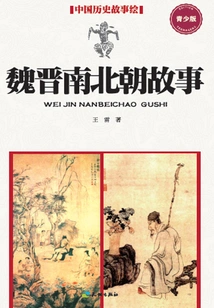
魏晋南北朝故事(青少版)
Wang Lei
The content of "Chinese Historical Story Painting" dates from ancient times to the late Qing Dynasty. The author selected people and events that were instructive during this long history and wrote a series of relaxed and interesting short stories. The book contains about 700 stories, which are coherent and take the development of Chinese history as the main line, starting from the ancient times. The major historical events and deeds of characters are basically all told, and the content is rich and thick. It is not only a collection of historical continuous stories, but also a large-scale general history of China, suitable for readers between the ages of nine and fourteen.
The content of "Chinese Historical Story Painting" dates from ancient times to the late Qing Dynasty. The author selected people and events that were instructive during this long history and wrote a series of relaxed and interesting short stories. The book contains about 700 stories, which are coherent and take the development of Chinese history as the main line, starting from the ancient times. The major historical events and deeds of characters are basically all told, and the content is rich and thick. It is not only a collection of historical continuous stories, but also a large-scale general history of China, suitable for readers between the ages of nine and fourteen.