Library
Browse and search books
10 novels found
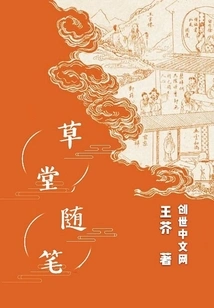
Caotang Essays
Short Fiction草堂随笔
Wang Jie
With fresh spring in my heart, I count the fallen flowers in my spare time. Wang Jie's essay, corrections are welcome.
With fresh spring in my heart, I count the fallen flowers in my spare time. Wang Jie's essay, corrections are welcome.
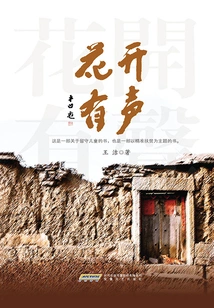
Flowers Bloom with Sound
Literature花开有声
Wang Jie
This is a book about left-behind children and a book with the theme of targeted poverty alleviation. Support teacher Zhang Xiaohui faced the poverty and living conditions of a group of left-behind children in Lijiaba Village, a remote mountain village in Shaanxi Province. She was kind-hearted and decided to overcome the pressure from many aspects and help them get out of their predicament. She raises daily necessities for the children through charity activities, uses knowledge to teach the children about the world, and impresses the children's parents with her kindness. After years of hard work, the children have the happy childhood they deserve. Writer Wang Jie is an active practitioner of activities to help left-behind children. She poured her life experience and sincere love as a woman, a mother, and a writer into her works, allowing readers to experience sorrow, entanglement, joy, and love. The flowers bloom loudly and are fragrant.
This is a book about left-behind children and a book with the theme of targeted poverty alleviation. Support teacher Zhang Xiaohui faced the poverty and living conditions of a group of left-behind children in Lijiaba Village, a remote mountain village in Shaanxi Province. She was kind-hearted and decided to overcome the pressure from many aspects and help them get out of their predicament. She raises daily necessities for the children through charity activities, uses knowledge to teach the children about the world, and impresses the children's parents with her kindness. After years of hard work, the children have the happy childhood they deserve. Writer Wang Jie is an active practitioner of activities to help left-behind children. She poured her life experience and sincere love as a woman, a mother, and a writer into her works, allowing readers to experience sorrow, entanglement, joy, and love. The flowers bloom loudly and are fragrant.

Looking for Stories
General Fiction寻找故事
Wang Jie
Although the town is small, it also has a complete collection of Five Elements and Eight Novels. Of course, there are indispensable writers of novels, and Zhou Min is one of them. Zhou Min was not very talented and well-known, and at best he could only coax the people of the small town, but those young people who were full of literary dreams still had to respectfully call him "Teacher Zhou" when they saw him. Zhou Min was also very satisfied, because it was a pleasant thing to have someone respect him. Zhou Min began writing novels in the early 1980s. At that time, the novel craze was sweeping the country. He tried his best and wrote dozens of short and medium-length stories about his transfer to the countryside and after entering the factory. He actually achieved success. He published a novel collection "Purple Mist" and successfully joined the Provincial Writers Association.
Although the town is small, it also has a complete collection of Five Elements and Eight Novels. Of course, there are indispensable writers of novels, and Zhou Min is one of them. Zhou Min was not very talented and well-known, and at best he could only coax the people of the small town, but those young people who were full of literary dreams still had to respectfully call him "Teacher Zhou" when they saw him. Zhou Min was also very satisfied, because it was a pleasant thing to have someone respect him. Zhou Min began writing novels in the early 1980s. At that time, the novel craze was sweeping the country. He tried his best and wrote dozens of short and medium-length stories about his transfer to the countryside and after entering the factory. He actually achieved success. He published a novel collection "Purple Mist" and successfully joined the Provincial Writers Association.

Qiqi Taoyan
Short Fiction七七桃颜
Wang Jie
The initial state of writing poetry. Thanks to the village girl Cui'er for accompanying me. Seven series with 100,000 words. Dedicated to Tweety.
The initial state of writing poetry. Thanks to the village girl Cui'er for accompanying me. Seven series with 100,000 words. Dedicated to Tweety.
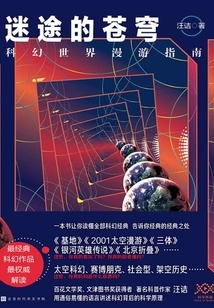
迷途的苍穹:科幻世界漫游指南
Wang Jie
"War of the Worlds", "Foundation", "The Three-Body Problem", "The Legend of the Galactic Heroes"..., What scientific knowledge is hidden behind these classic science fiction works? Which works of hard science fiction are worth watching? Which works are pseudo-science fiction disguised as science fiction? Quantum, black hole, light speed, wormhole, sophon, dichotomy foil, water droplet, which of these science fiction knowledge is true and which is false? Will the sci-fi world come true? From the classical era to the golden age of science fiction, from alien invasions, future epics, space operas, cyberpunks, superheroes, time travel to dystopia, Mr. Wang Jie will take you into the world of science fiction to fully understand the entire process of how science fiction moved from the classical era to the golden age and then to the new wave, and review the most classic science fiction works in these eras.
"War of the Worlds", "Foundation", "The Three-Body Problem", "The Legend of the Galactic Heroes"..., What scientific knowledge is hidden behind these classic science fiction works? Which works of hard science fiction are worth watching? Which works are pseudo-science fiction disguised as science fiction? Quantum, black hole, light speed, wormhole, sophon, dichotomy foil, water droplet, which of these science fiction knowledge is true and which is false? Will the sci-fi world come true? From the classical era to the golden age of science fiction, from alien invasions, future epics, space operas, cyberpunks, superheroes, time travel to dystopia, Mr. Wang Jie will take you into the world of science fiction to fully understand the entire process of how science fiction moved from the classical era to the golden age and then to the new wave, and review the most classic science fiction works in these eras.
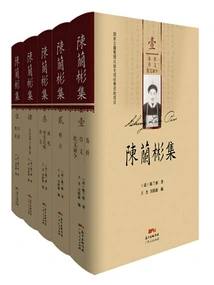
Collection of Chen Lanbin
Literature陈兰彬集
Wang Jie
"Chen Lanbin Collection" is a collection of various writings by Chen Lanbin, an important official, scholar, and the first Chinese minister to the United States and the first supervisor of students studying in the United States in the late Qing Dynasty. The book contains a total of 36 memorials by Chen Lanbin, 42 notes to the U. S. Federal government, 47 messages to the Prime Minister's Office and Li Hongzhang, 6 approval orders issued to subordinates, 50 letters, 31 essays, as well as the submissions and oral confessions of the Chinese workers in Cuba, "Journey to the United States" (Diary), poems, couplets, etc. The whole book is about 1.5 Million words.
"Chen Lanbin Collection" is a collection of various writings by Chen Lanbin, an important official, scholar, and the first Chinese minister to the United States and the first supervisor of students studying in the United States in the late Qing Dynasty. The book contains a total of 36 memorials by Chen Lanbin, 42 notes to the U. S. Federal government, 47 messages to the Prime Minister's Office and Li Hongzhang, 6 approval orders issued to subordinates, 50 letters, 31 essays, as well as the submissions and oral confessions of the Chinese workers in Cuba, "Journey to the United States" (Diary), poems, couplets, etc. The whole book is about 1.5 Million words.

Spring Rhyme
General Fiction春韵
Wang Jie
There is no water flowing in the river. He thought: Where is the river full of water? After twenty years of bleeding, is it all gone? The sun is also much stronger than before. He stepped on large and small cobblestones, and suddenly felt that the leather shoes were awkward and not as comfortable as wearing straw sandals before. Not far across the river is a ditch. The strong wind squeezed out of the narrow valley was quite cool. He put down his suitcase, opened his jacket, put one hand on his hip and held a cigarette in the other, standing thoughtfully at the entrance to the village. The village is very quiet. Occasionally a dog barks. Smoke curls softly, winding along the trees and rising along the ridges. Tiaoergou is like a static picture, which has been static for twenty years. He was disappointed.
There is no water flowing in the river. He thought: Where is the river full of water? After twenty years of bleeding, is it all gone? The sun is also much stronger than before. He stepped on large and small cobblestones, and suddenly felt that the leather shoes were awkward and not as comfortable as wearing straw sandals before. Not far across the river is a ditch. The strong wind squeezed out of the narrow valley was quite cool. He put down his suitcase, opened his jacket, put one hand on his hip and held a cigarette in the other, standing thoughtfully at the entrance to the village. The village is very quiet. Occasionally a dog barks. Smoke curls softly, winding along the trees and rising along the ridges. Tiaoergou is like a static picture, which has been static for twenty years. He was disappointed.
唐代黠戛斯历史研究
Wang Jie
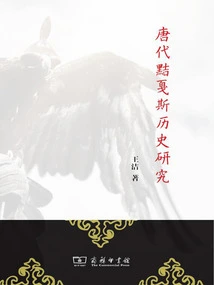
The Xijias were one of the northern ethnic groups in the Tang Dynasty. They were active in the upper reaches of the Jianhe River (today's Yenisei River). They were the ancestors of the Kirgiz people and the Kyrgyz people in Central Asia in what is now Xinjiang, China. In the Western Han Dynasty, Xiugasi first appeared in the annals of Chinese history under the name of Jiankun. After the Wei, Jin, and Sui and Tang dynasties, Xijiasi established contact with the Tang Dynasty. In the fifth year of Emperor Wenzong's reign in the Tang Dynasty (840), Xijias defeated the Uighur Khanate that ruled Mobei and forced the remaining Uighurs to move westward, which had a major impact on the history of the Mongolian Plateau and even Central Asia. The history of ancient Xijiasi has both the general commonality of the northern grassland peoples and its own characteristics: Politically, the Xijiasi has a complex social structure, with multiple official systems of northern ethnic groups and Central Plains dynasties coexisting in parallel; economically, the Xijiasi is a mixed economy in the forest-steppe transition zone, with the development of agriculture, animal husbandry, commerce, and handicrafts, and is deeply involved in the development of the Prairie Silk Road. Trade activities; militarily, Higas fought against tribal regimes such as Turks, Uighurs, and Tubos, and defeated the Mobei Uighurs in 840, which shocked the interior of Asia; culturally, the handed down Yenisey inscriptions show that Higas used ancient Turkic characters, and the calendar used both Turkic and Central Plains. In short, the history of Higas in the Tang Dynasty reveals the complex characteristics of its culture. The Tang Dynasty was the most important stage in the historical development of the Xijiasi nation. The Central Plains dynasty with which they had direct contact for the first time, entered the Tang Dynasty during the reign of Emperor Taizong of the Tang Dynasty and was granted the title of Governor of Jiankun, and resumed contact with the Tang Dynasty during the Wuzong Dynasty of the Tang Dynasty. In addition, the Xijiasi also established their own tribe's khanate for the first time during this period, and competed with the Northern Uighur Khanate in the Momo, which shocked the grasslands and the Central Plains. Whether in the history of this nation or in the history of East Asia as a whole, the history of the Tang Dynasty Xijiasi is of great significance.
The Xijias were one of the northern ethnic groups in the Tang Dynasty. They were active in the upper reaches of the Jianhe River (today's Yenisei River). They were the ancestors of the Kirgiz people and the Kyrgyz people in Central Asia in what is now Xinjiang, China. In the Western Han Dynasty, Xiugasi first appeared in the annals of Chinese history under the name of Jiankun. After the Wei, Jin, and Sui and Tang dynasties, Xijiasi established contact with the Tang Dynasty. In the fifth year of Emperor Wenzong's reign in the Tang Dynasty (840), Xijias defeated the Uighur Khanate that ruled Mobei and forced the remaining Uighurs to move westward, which had a major impact on the history of the Mongolian Plateau and even Central Asia. The history of ancient Xijiasi has both the general commonality of the northern grassland peoples and its own characteristics: Politically, the Xijiasi has a complex social structure, with multiple official systems of northern ethnic groups and Central Plains dynasties coexisting in parallel; economically, the Xijiasi is a mixed economy in the forest-steppe transition zone, with the development of agriculture, animal husbandry, commerce, and handicrafts, and is deeply involved in the development of the Prairie Silk Road. Trade activities; militarily, Higas fought against tribal regimes such as Turks, Uighurs, and Tubos, and defeated the Mobei Uighurs in 840, which shocked the interior of Asia; culturally, the handed down Yenisey inscriptions show that Higas used ancient Turkic characters, and the calendar used both Turkic and Central Plains. In short, the history of Higas in the Tang Dynasty reveals the complex characteristics of its culture. The Tang Dynasty was the most important stage in the historical development of the Xijiasi nation. The Central Plains dynasty with which they had direct contact for the first time, entered the Tang Dynasty during the reign of Emperor Taizong of the Tang Dynasty and was granted the title of Governor of Jiankun, and resumed contact with the Tang Dynasty during the Wuzong Dynasty of the Tang Dynasty. In addition, the Xijiasi also established their own tribe's khanate for the first time during this period, and competed with the Northern Uighur Khanate in the Momo, which shocked the grasslands and the Central Plains. Whether in the history of this nation or in the history of East Asia as a whole, the history of the Tang Dynasty Xijiasi is of great significance.
Maritime History
History航海史话
Wang Jie
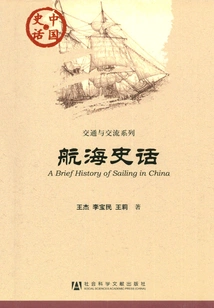
My country's navigation has a long history. As early as the Neolithic period 7,000 years ago, our ancestors were able to "cut wood to make boats and cut wood to make jigs." During the slave society period, with the birth of wooden boats, large-scale maritime transportation and maritime migration occurred, and China's navigation industry began to take shape. After that, it went through three major development periods of Qin and Han, Sui and Tang, Song and Yuan Dynasties, and Zheng He's voyages to the West in the early Ming Dynasty pushed ancient China's navigation industry to its peak. In the form of special topics, this book introduces the development overview of Chinese maritime civilization from ancient times to modern times according to various aspects such as Chinese maritime figures, maritime events, maritime technology, navigation regulations and management institutions, ports, etc. What is the mystery of the Yin people's voyage to America? Is the legend of Xu Fu's eastward journey to Japan true? What countries did Zheng He pass through during his voyages to the West? Readers can get answers one by one from this book.
My country's navigation has a long history. As early as the Neolithic period 7,000 years ago, our ancestors were able to "cut wood to make boats and cut wood to make jigs." During the slave society period, with the birth of wooden boats, large-scale maritime transportation and maritime migration occurred, and China's navigation industry began to take shape. After that, it went through three major development periods of Qin and Han, Sui and Tang, Song and Yuan Dynasties, and Zheng He's voyages to the West in the early Ming Dynasty pushed ancient China's navigation industry to its peak. In the form of special topics, this book introduces the development overview of Chinese maritime civilization from ancient times to modern times according to various aspects such as Chinese maritime figures, maritime events, maritime technology, navigation regulations and management institutions, ports, etc. What is the mystery of the Yin people's voyage to America? Is the legend of Xu Fu's eastward journey to Japan true? What countries did Zheng He pass through during his voyages to the West? Readers can get answers one by one from this book.
Jingwei No. 9
General Fiction精卫9号
Wang Jie
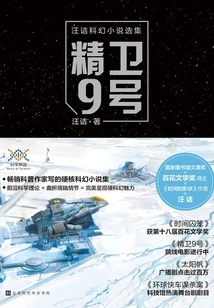
There are a total of six short stories in this book, including "Jingwei No. 9", "Solar Sails", "Time Cage", "Battle of the Eye in the Sky", "Murder on the Global Express" and "The Weight of Life and Death". Each short story perfectly presents the super charm of hard science fiction. Among them, "Jingwei 9": The surprise of discovering life on Enceladus was diluted by the bad news that the expedition team members were infected with the virus in a blink of an eye. Jingwei 9 took on the important task of rescue alone, and bigger accidents followed. How will the most tender window in the human heart resist the cold laws of the universe? "Solar Sailing": A space race of unprecedented scale, filled with suspense due to the outbreak of a super solar flare. The Moskva took the risk to reduce the weight of the spacecraft, and the Qu Yuan took the risk to implement Plan B. Who will reach the end of Mars first? "Murder on the Global Express": A murder occurred on the Global Express traveling at 30,000 kilometers per hour. Which video recorder was lying?
There are a total of six short stories in this book, including "Jingwei No. 9", "Solar Sails", "Time Cage", "Battle of the Eye in the Sky", "Murder on the Global Express" and "The Weight of Life and Death". Each short story perfectly presents the super charm of hard science fiction. Among them, "Jingwei 9": The surprise of discovering life on Enceladus was diluted by the bad news that the expedition team members were infected with the virus in a blink of an eye. Jingwei 9 took on the important task of rescue alone, and bigger accidents followed. How will the most tender window in the human heart resist the cold laws of the universe? "Solar Sailing": A space race of unprecedented scale, filled with suspense due to the outbreak of a super solar flare. The Moskva took the risk to reduce the weight of the spacecraft, and the Qu Yuan took the risk to implement Plan B. Who will reach the end of Mars first? "Murder on the Global Express": A murder occurred on the Global Express traveling at 30,000 kilometers per hour. Which video recorder was lying?