Library
Browse and search books
7 novels found
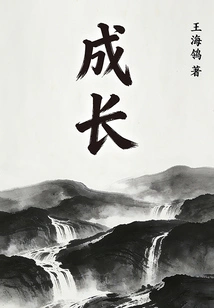
Growing Up
General Fiction成长
Wang Hailu
Young Peng Fei is stubborn and rebellious. His father Peng Xiangjiang is the chief of staff of the Air Force Airborne Division. His mother Haiyun gave up her diplomat ideal for the sake of the family and devoted all her efforts to her son's growth. Young Peng Fei's high score of 678 originally made his mother Hai Yun very happy. Just as mother and son were discussing whether to apply for Tsinghua University or Peking University, Peng Fei, out of anger with his father, who had always been estranged from him, signed up for the Air Force recruitment and was admitted regardless of his family's objections. From then on, he resolutely embarked on the arduous and rugged road of growth from student to soldier, and from soldier to pilot. In the devilish training of the flight academy, the young Peng Fei experienced the harsh military training and the ruthless and strict pilot elimination system... After becoming a golden military aviation pilot, Peng Fei met, fell in love and married with An Ye, a journalist who yearned to become China's Farage. However, when romantic love turned into the reality of trivial marriage life, conflicts ensued. Before the marriage, An Ye was mentally prepared and unwavering in her resolve. Only when she was in the situation did she know that what she really needed to deal with was not the overwhelming force of the mountain, but the daily repeated trivial wear and tear like drops of water piercing the stone. How do two people with busy careers take care of their families? Should career give way to marriage? How should men and women divide their labor in the family? What kind of choices will the characters in the novel make under the conflict and collision of different views on love, life, and values? The work focuses on Peng Fei's pursuit of ideals and persistence in love, focusing on two generations of a family, including the sacrifice of family and career, the generation gap between father and son, the estrangement between husband and wife, and the conflict between mother-in-law and daughter-in-law. In "Growing Up", it is not only children who need to grow up, but also adults!
Young Peng Fei is stubborn and rebellious. His father Peng Xiangjiang is the chief of staff of the Air Force Airborne Division. His mother Haiyun gave up her diplomat ideal for the sake of the family and devoted all her efforts to her son's growth. Young Peng Fei's high score of 678 originally made his mother Hai Yun very happy. Just as mother and son were discussing whether to apply for Tsinghua University or Peking University, Peng Fei, out of anger with his father, who had always been estranged from him, signed up for the Air Force recruitment and was admitted regardless of his family's objections. From then on, he resolutely embarked on the arduous and rugged road of growth from student to soldier, and from soldier to pilot. In the devilish training of the flight academy, the young Peng Fei experienced the harsh military training and the ruthless and strict pilot elimination system... After becoming a golden military aviation pilot, Peng Fei met, fell in love and married with An Ye, a journalist who yearned to become China's Farage. However, when romantic love turned into the reality of trivial marriage life, conflicts ensued. Before the marriage, An Ye was mentally prepared and unwavering in her resolve. Only when she was in the situation did she know that what she really needed to deal with was not the overwhelming force of the mountain, but the daily repeated trivial wear and tear like drops of water piercing the stone. How do two people with busy careers take care of their families? Should career give way to marriage? How should men and women divide their labor in the family? What kind of choices will the characters in the novel make under the conflict and collision of different views on love, life, and values? The work focuses on Peng Fei's pursuit of ideals and persistence in love, focusing on two generations of a family, including the sacrifice of family and career, the generation gap between father and son, the estrangement between husband and wife, and the conflict between mother-in-law and daughter-in-law. In "Growing Up", it is not only children who need to grow up, but also adults!
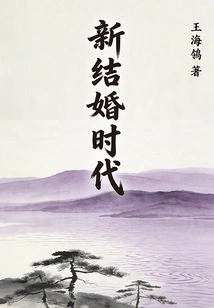
New Era of Marriage
General Fiction新结婚时代
Wang Hailu
"New Marriage Era" is a novel written by writer Wang Hailu. As the final work of his "Marriage Trilogy", it continues the realistic analysis of contemporary marriage and love relationships. The work takes the cultural differences between urban and rural areas as an entry point to show the collision between traditional ethics and modern values in Chinese society during the transition period. The novel revolves around the marriage of Gu Xiaoxi, an urban intellectual woman, and He Jianguo, a rural youth from Yimeng Mountain. It reveals the impact of the urban-rural divide on marriage through conflicts such as family involvement and conflicts in living habits. The subplot includes the sibling relationship between Gu Xiaohang and his older colleague, and the twilight love between Gu's father and the nanny in the mountainous area. The three sets of misplaced love and marriage models are intertwined to present the ethical dilemmas faced by different generations and classes. The author uses realistic techniques to describe the penetration of material factors and family status concepts into marriage, and explores the complex entanglement between individual freedom and family responsibility in marriage relationships in modern society.
"New Marriage Era" is a novel written by writer Wang Hailu. As the final work of his "Marriage Trilogy", it continues the realistic analysis of contemporary marriage and love relationships. The work takes the cultural differences between urban and rural areas as an entry point to show the collision between traditional ethics and modern values in Chinese society during the transition period. The novel revolves around the marriage of Gu Xiaoxi, an urban intellectual woman, and He Jianguo, a rural youth from Yimeng Mountain. It reveals the impact of the urban-rural divide on marriage through conflicts such as family involvement and conflicts in living habits. The subplot includes the sibling relationship between Gu Xiaohang and his older colleague, and the twilight love between Gu's father and the nanny in the mountainous area. The three sets of misplaced love and marriage models are intertwined to present the ethical dilemmas faced by different generations and classes. The author uses realistic techniques to describe the penetration of material factors and family status concepts into marriage, and explores the complex entanglement between individual freedom and family responsibility in marriage relationships in modern society.
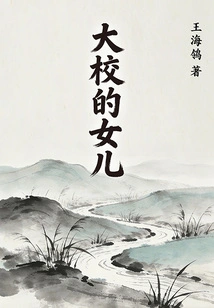
The College's Daughter
General Fiction大校的女儿
Wang Hailu
The novel focuses on the emotional entanglement between Jiang Shi'an, a rural soldier in the army's communications company in the 1970s, and Han Lin, who came from a privileged background. Jiang Shi'an was forced to marry his fiancée due to family pressure. When the two reunited twenty years later, Han Lin gradually understood her inner emotions, showing the emotional dilemma and life choices of the military group under the changing times. Through the intertwining of fate spanning decades, the work continues the author's discussion of women's views on marriage and self-growth, and combines the details of military life to present an individual's spiritual awakening in the current of society.
The novel focuses on the emotional entanglement between Jiang Shi'an, a rural soldier in the army's communications company in the 1970s, and Han Lin, who came from a privileged background. Jiang Shi'an was forced to marry his fiancée due to family pressure. When the two reunited twenty years later, Han Lin gradually understood her inner emotions, showing the emotional dilemma and life choices of the military group under the changing times. Through the intertwining of fate spanning decades, the work continues the author's discussion of women's views on marriage and self-growth, and combines the details of military life to present an individual's spiritual awakening in the current of society.
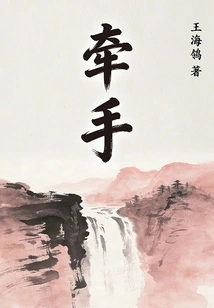
Hold Hands
General Fiction牵手
Wang Hailu
The novel takes the marriage crisis of Zhong Rui and Xia Xiaoxue as the main line. Through the analysis of the emotional alienation and communication gap between husband and wife, it shows the changes in the concept of marriage and love in Chinese society in the late 1990s. The work revolves around the conflict between professional women's self-worth and family responsibilities, explores the game of interests and emotions in marriage, and depicts plots such as the crisis of infidelity and the identity dilemma of a housewife. The book puts forward the viewpoint of "shared years are important to marriage", emphasizes the importance of women maintaining independent consciousness in marriage, and reveals the collision between traditional concepts and modern values. The narrative style continues the author's profound insight into the ethics of marriage and love, using the contradictions of daily life to reflect the essential proposition of marriage survival.
The novel takes the marriage crisis of Zhong Rui and Xia Xiaoxue as the main line. Through the analysis of the emotional alienation and communication gap between husband and wife, it shows the changes in the concept of marriage and love in Chinese society in the late 1990s. The work revolves around the conflict between professional women's self-worth and family responsibilities, explores the game of interests and emotions in marriage, and depicts plots such as the crisis of infidelity and the identity dilemma of a housewife. The book puts forward the viewpoint of "shared years are important to marriage", emphasizes the importance of women maintaining independent consciousness in marriage, and reveals the collision between traditional concepts and modern values. The narrative style continues the author's profound insight into the ethics of marriage and love, using the contradictions of daily life to reflect the essential proposition of marriage survival.
New Love Era
General Fiction新恋爱时代
Wang Hailu
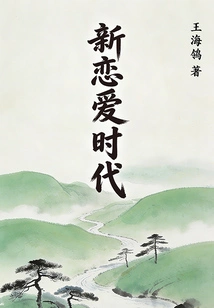
"New Era of Love" is a novel written by Chinese writer Wang Haiyu, which continues his creative vein of marriage and love themes. The work focuses on the post-80s youth group, with three urban women from different backgrounds as the protagonists, showing the growth process of contemporary young people in workplace competition and marriage and love choices. The novel adopts a multi-line narrative: Deng Xiaoke, a newcomer in finance, reconstructs his life plan amidst professional hardships and starts an emotional entanglement with Zheng Haichao; Shen Hua, who is materialistic, accepts the pursuit of a wealthy man after facing a career setback; Wei Shanshan, a master of Northern Drifting, breaks through the differences in status and falls in love with a garden worker. Through realistic dilemmas such as further education, starting a business, marriage and love, it explores the conflict between ideals and reality, and the balance between self-worth and emotional belonging. The TV series of the same name adapted in 2013 was written by Wang Haiyu himself and continues the main line of the original work.
"New Era of Love" is a novel written by Chinese writer Wang Haiyu, which continues his creative vein of marriage and love themes. The work focuses on the post-80s youth group, with three urban women from different backgrounds as the protagonists, showing the growth process of contemporary young people in workplace competition and marriage and love choices. The novel adopts a multi-line narrative: Deng Xiaoke, a newcomer in finance, reconstructs his life plan amidst professional hardships and starts an emotional entanglement with Zheng Haichao; Shen Hua, who is materialistic, accepts the pursuit of a wealthy man after facing a career setback; Wei Shanshan, a master of Northern Drifting, breaks through the differences in status and falls in love with a garden worker. Through realistic dilemmas such as further education, starting a business, marriage and love, it explores the conflict between ideals and reality, and the balance between self-worth and emotional belonging. The TV series of the same name adapted in 2013 was written by Wang Haiyu himself and continues the main line of the original work.
It's Okay If You Don't Get Married
General Fiction不嫁则已
Wang Hailu
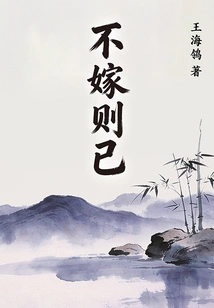
"You Are Not Married" is the core work of writer Wang Haiyu's "Marriage Trilogy". This book explores the shackles of traditional concepts of marriage and love on modern society through the emotional entanglements of five pairs of men and women with different marital statuses, using a realistic approach to explore the deep social factors and gender role conflicts that lead to the breakdown of marriages.
"You Are Not Married" is the core work of writer Wang Haiyu's "Marriage Trilogy". This book explores the shackles of traditional concepts of marriage and love on modern society through the emotional entanglements of five pairs of men and women with different marital statuses, using a realistic approach to explore the deep social factors and gender role conflicts that lead to the breakdown of marriages.
Chinese Style Divorce
General Fiction中国式离婚
Wang Hailu
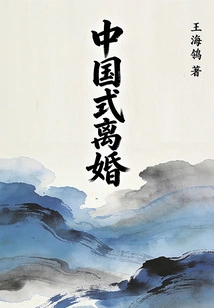
"Chinese Style Divorce" is a novel written by Wang Haiyu that deeply analyzes the current situation of Chinese marriage. Through the emotional entanglement of three couples, it explores betrayal, trust and responsibility in marriage. The novel reveals three kinds of betrayal under the marriage contract: betrayal of the heart, betrayal of the body and betrayal of the mind and body. The main plot revolves around Lin Xiaofeng and Song Jianping, an ordinary couple, showing the hurt and pain caused by disharmony, intolerance and irrationality in marriage, and ultimately the trajectory of divorce. The book also depicts the stories of two couples, Juanzi and Liu Dongbei, Xiao Li and Song Jianping, which together constitute three typical states of women in Chinese marriages.
"Chinese Style Divorce" is a novel written by Wang Haiyu that deeply analyzes the current situation of Chinese marriage. Through the emotional entanglement of three couples, it explores betrayal, trust and responsibility in marriage. The novel reveals three kinds of betrayal under the marriage contract: betrayal of the heart, betrayal of the body and betrayal of the mind and body. The main plot revolves around Lin Xiaofeng and Song Jianping, an ordinary couple, showing the hurt and pain caused by disharmony, intolerance and irrationality in marriage, and ultimately the trajectory of divorce. The book also depicts the stories of two couples, Juanzi and Liu Dongbei, Xiao Li and Song Jianping, which together constitute three typical states of women in Chinese marriages.