Library
Browse and search books
2 novels found
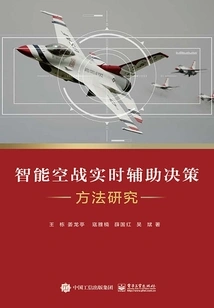
智能空战实时辅助决策方法研究
Wang Dong Et Al.
The evolution of modern air combat has put forward higher requirements for air combat platforms and airborne weapon systems. At the same time, improvements in equipment performance have also placed more stringent requirements on pilots. Faced with abundant information data and drastically changing air combat situations, the time left for pilots to make decision-making judgments is drastically shortened, which requires pilots to make quick maneuvering decisions. However, this will inevitably lead to an increase in the pilot's decision-making error rate and a decrease in the survival probability of the fighter aircraft, thereby affecting the effectiveness of air combat. Currently, in air combat training, the confrontation between the offensive and defensive sides is fierce, and the situation and environment are becoming increasingly complex. The situation of pilots misjudging the situation, delaying fighter aircraft, and missing advantageous positions during air combat is also on the rise. In order to effectively deal with offensive and defensive confrontations under informationized conditions, this book explains the intelligent real-time auxiliary decision-making method for air combat. The book is mainly divided into four parts: air combat situation element extraction, air combat situation assessment, attack positioning decision-making, and maneuvering evasion decision-making. It focuses on solving the problems of rapid situation awareness, attack positioning, and maneuvering evasion decision-making in the auxiliary decision-making system. This book is suitable for readers who are interested in intelligent assisted decision-making in air combat.
The evolution of modern air combat has put forward higher requirements for air combat platforms and airborne weapon systems. At the same time, improvements in equipment performance have also placed more stringent requirements on pilots. Faced with abundant information data and drastically changing air combat situations, the time left for pilots to make decision-making judgments is drastically shortened, which requires pilots to make quick maneuvering decisions. However, this will inevitably lead to an increase in the pilot's decision-making error rate and a decrease in the survival probability of the fighter aircraft, thereby affecting the effectiveness of air combat. Currently, in air combat training, the confrontation between the offensive and defensive sides is fierce, and the situation and environment are becoming increasingly complex. The situation of pilots misjudging the situation, delaying fighter aircraft, and missing advantageous positions during air combat is also on the rise. In order to effectively deal with offensive and defensive confrontations under informationized conditions, this book explains the intelligent real-time auxiliary decision-making method for air combat. The book is mainly divided into four parts: air combat situation element extraction, air combat situation assessment, attack positioning decision-making, and maneuvering evasion decision-making. It focuses on solving the problems of rapid situation awareness, attack positioning, and maneuvering evasion decision-making in the auxiliary decision-making system. This book is suitable for readers who are interested in intelligent assisted decision-making in air combat.
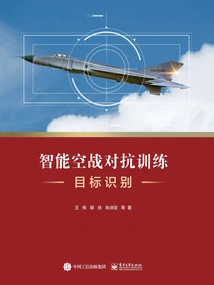
智能空战对抗训练目标识别
Wang Dong Et Al.
Existing target detection and recognition technology has achieved remarkable results in ideal environments (single background, high target resolution, etc.), But often fails to work properly in more universal and open environments. Research on detection and recognition of small targets in complex scenes faces challenges at three levels: the complexity of the environment, the complexity of target characteristics, and the incompleteness of data. The basic idea of this paper to solve this problem is to modify the joint probability distribution of the target domain samples in the feature space under the guidance of source domain knowledge, thereby improving the separability of the sample target domain features. This paper focuses on the problem of inconsistent distribution from three levels: context information, information compensation and data enhancement.
Existing target detection and recognition technology has achieved remarkable results in ideal environments (single background, high target resolution, etc.), But often fails to work properly in more universal and open environments. Research on detection and recognition of small targets in complex scenes faces challenges at three levels: the complexity of the environment, the complexity of target characteristics, and the incompleteness of data. The basic idea of this paper to solve this problem is to modify the joint probability distribution of the target domain samples in the feature space under the guidance of source domain knowledge, thereby improving the separability of the sample target domain features. This paper focuses on the problem of inconsistent distribution from three levels: context information, information compensation and data enhancement.