Library
Browse and search books
14 novels found
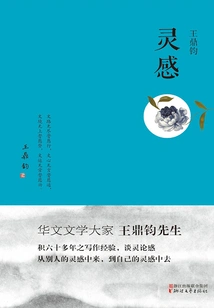
Inspiration
Literature灵感
Wang Dingjun
Wang Dingjun, a master of Chinese literature, wrote "Inspiration". He was first influenced by the poetry and notes of ancient people, and later was inspired by the "notebook literature" of today's people. It consists of four parts: "Inspiration", "Inspiration Supplement", "Five Lectures on Inspiration" and "Inspiration Interview". Among them, the "Five Lectures on Inspiration" include "Talk about archetypes, whether big or long", "Talk about imitation as a teacher and friend", "Talk about structure when everything is complete", "Talk about implicit and explicit metaphors" and "Talk about novelty and change, talk about sentence construction". "Inspiration interviews" include "Aesthetics professor Han Baode talks about the sense of inspiration", "Poet Gao Shangqin (Gao Xinjiang) talks about the taste of inspiration" and "Novel writer Shifan talks about inspiration transplantation". The simplified Chinese version of "Inspiration" published this time has added many new entries and five new lectures on inspiration, providing practical experience. This is a volume of leisurely sketches and an exhibition of inspiration specimens. Reading this book, you can get inspiration from others and your own inspiration.
Wang Dingjun, a master of Chinese literature, wrote "Inspiration". He was first influenced by the poetry and notes of ancient people, and later was inspired by the "notebook literature" of today's people. It consists of four parts: "Inspiration", "Inspiration Supplement", "Five Lectures on Inspiration" and "Inspiration Interview". Among them, the "Five Lectures on Inspiration" include "Talk about archetypes, whether big or long", "Talk about imitation as a teacher and friend", "Talk about structure when everything is complete", "Talk about implicit and explicit metaphors" and "Talk about novelty and change, talk about sentence construction". "Inspiration interviews" include "Aesthetics professor Han Baode talks about the sense of inspiration", "Poet Gao Shangqin (Gao Xinjiang) talks about the taste of inspiration" and "Novel writer Shifan talks about inspiration transplantation". The simplified Chinese version of "Inspiration" published this time has added many new entries and five new lectures on inspiration, providing practical experience. This is a volume of leisurely sketches and an exhibition of inspiration specimens. Reading this book, you can get inspiration from others and your own inspiration.
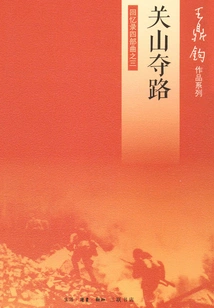
关山夺路:回忆录四部曲之三
Wang Dingjun
The author was in the Kuomintang army and went through the two major battles of Liaoshen and Pingjin; in 1949, he was captured by the People's Liberation Army in Tianjin and underwent prisoner camp training. Wearing the uniform of the People's Liberation Army, he walked the entire Jiaoji Railway from Qingdao to Shanghai, and finally left Taiwan... Along the way, contrasts, crises, and conflicts extended, entangled with each other, and rolled forward, which was thrilling. The author distills and sublimates the anger, sadness, and regret of the past four years into a unique memory that transcends politics, class, and personal gains and losses: "The Kuomintang and the Communist Party are like two mountains, and I am like a small river. I have to fight for my way through the mountains and come out with twists and turns. This is a wonderful life."
The author was in the Kuomintang army and went through the two major battles of Liaoshen and Pingjin; in 1949, he was captured by the People's Liberation Army in Tianjin and underwent prisoner camp training. Wearing the uniform of the People's Liberation Army, he walked the entire Jiaoji Railway from Qingdao to Shanghai, and finally left Taiwan... Along the way, contrasts, crises, and conflicts extended, entangled with each other, and rolled forward, which was thrilling. The author distills and sublimates the anger, sadness, and regret of the past four years into a unique memory that transcends politics, class, and personal gains and losses: "The Kuomintang and the Communist Party are like two mountains, and I am like a small river. I have to fight for my way through the mountains and come out with twists and turns. This is a wonderful life."
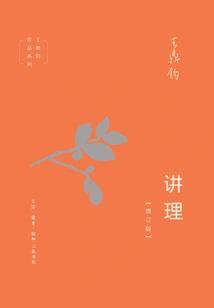
Reasoning (updated Edition)
Literature讲理(增订版)
Wang Dingjun
Wang Dingjun, a native of Lanling, Shandong Province, was born in a traditional farming and studying family in 1925. He came to Taiwan in 1949 and worked for China Broadcasting Corporation (Taiwan) and China Television Corporation (Taiwan). He also served as editor-in-chief of several newspaper supplements. In 1979, he was hired to edit bilingual textbooks at a university in the United States, and has since settled in New York. Wang Dingjun's creative career lasted for more than half a century and he wrote nearly forty kinds of works. From his works in the early 1960s to "Open Life" in 1975, and then to "Seven Skills of Composition" in the early 1980s, his works such as "Four Books on Life" and "Four Books on Composition" are extremely popular in Taiwan and remain popular to this day.
Wang Dingjun, a native of Lanling, Shandong Province, was born in a traditional farming and studying family in 1925. He came to Taiwan in 1949 and worked for China Broadcasting Corporation (Taiwan) and China Television Corporation (Taiwan). He also served as editor-in-chief of several newspaper supplements. In 1979, he was hired to edit bilingual textbooks at a university in the United States, and has since settled in New York. Wang Dingjun's creative career lasted for more than half a century and he wrote nearly forty kinds of works. From his works in the early 1960s to "Open Life" in 1975, and then to "Seven Skills of Composition" in the early 1980s, his works such as "Four Books on Life" and "Four Books on Composition" are extremely popular in Taiwan and remain popular to this day.
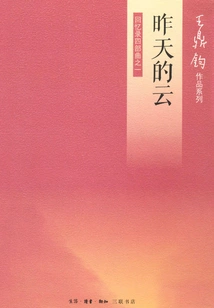
昨天的云:回忆录四部曲之一
Wang Dingjun
The author is familiar with the local customs and historical anecdotes of his hometown; at the same time, he places the individual's experiences in the grand social background, seeing the big from the small, showing a kind of depth and power in the simplicity. The author says that this book is a biography of the friendship he has seen in his life, and it is a reward for friendship: support and help are friendship, comfort and encouragement are also friendship; subtle influence is friendship, and sticks, drinks and warnings are also friendship; good words and deeds are friendship, and interesting anecdotes are also friendship; and a few strokes of smudges on the non-meaningful places are also a kind of friendship...
The author is familiar with the local customs and historical anecdotes of his hometown; at the same time, he places the individual's experiences in the grand social background, seeing the big from the small, showing a kind of depth and power in the simplicity. The author says that this book is a biography of the friendship he has seen in his life, and it is a reward for friendship: support and help are friendship, comfort and encouragement are also friendship; subtle influence is friendship, and sticks, drinks and warnings are also friendship; good words and deeds are friendship, and interesting anecdotes are also friendship; and a few strokes of smudges on the non-meaningful places are also a kind of friendship...
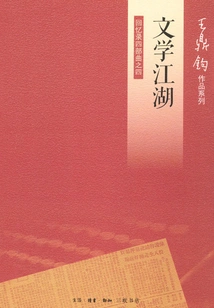
文学江湖:回忆录四部曲之四
Wang Dingjun
From his retreat to Taiwan with the Kuomintang troops in 1949 to his immigration to the United States in 1978, the author spent three "decades" feeling and recording Taiwan's great history and his own small joys and sorrows from a personal perspective. The "literary world" that the author personally experienced is a microcosm of Taiwan's changes over the past thirty years, from the embarrassment and confusion in the early 1950s, to the humiliation and panic during the White Terror, to the "psychological exhaustion" during the Cold War, and when Taiwan's economic take-off and the ambition to "counterattack the mainland" became a laughing stock, he had no choice but to choose to take root.
From his retreat to Taiwan with the Kuomintang troops in 1949 to his immigration to the United States in 1978, the author spent three "decades" feeling and recording Taiwan's great history and his own small joys and sorrows from a personal perspective. The "literary world" that the author personally experienced is a microcosm of Taiwan's changes over the past thirty years, from the embarrassment and confusion in the early 1950s, to the humiliation and panic during the White Terror, to the "psychological exhaustion" during the Cold War, and when Taiwan's economic take-off and the ambition to "counterattack the mainland" became a laughing stock, he had no choice but to choose to take root.
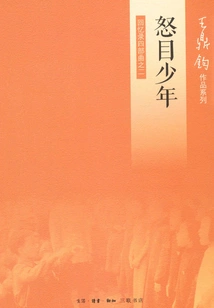
The Angry Eyed Boy: Memoirs Part Two
Literature怒目少年:回忆录四部曲之二
Wang Dingjun
From the summer of 1942 to the victory of the Anti-Japanese War in 1945, a middle school student in exile traveled to Fuyang, Anhui, Hanyin, Shaanxi and other places with his experiences, knowledge and thoughts. In this period of hardship and displacement, the author is like a small chess piece scattered around, deeply understanding the living conditions of the exiled students, witnessing the fate of ordinary people, and revealing in detail the cause and effect of the formation of ruffians, rural autonomy, and youth armies, as well as all living beings in society.
From the summer of 1942 to the victory of the Anti-Japanese War in 1945, a middle school student in exile traveled to Fuyang, Anhui, Hanyin, Shaanxi and other places with his experiences, knowledge and thoughts. In this period of hardship and displacement, the author is like a small chess piece scattered around, deeply understanding the living conditions of the exiled students, witnessing the fate of ordinary people, and revealing in detail the cause and effect of the formation of ruffians, rural autonomy, and youth armies, as well as all living beings in society.
Literary Seeds (enhanced Edition)
Literature文学种子(增订版)
Wang Dingjun
In those years, I often missed my middle school life and wanted to write something for young people in middle school. When I wrote, I felt that I was with them. I wrote five books one after another to discuss composition with them, and how to go beyond composition into literary writing. These five books became a series in the eyes of publishers. Now, I re-examine this set of books. I have corrected what should be corrected and added what should be supplemented. I have launched a new version and written a new preface for the new version.
In those years, I often missed my middle school life and wanted to write something for young people in middle school. When I wrote, I felt that I was with them. I wrote five books one after another to discuss composition with them, and how to go beyond composition into literary writing. These five books became a series in the eyes of publishers. Now, I re-examine this set of books. I have corrected what should be corrected and added what should be supplemented. I have launched a new version and written a new preface for the new version.
Reading of "guwen Guanzhi
Literature《古文观止》化读
Wang Dingjun
The author reads the classics of "Gu Wen Guan Zhi" and first explains clearly the meanings, syntax, allusions, the author's knowledge background, circumstances, reasons for writing, etc., So that the literal meaning of the classical Chinese article is clear and unmistakable, and the author's ideological gist is highlighted. On this basis, advance and analyze the article's layout, rhetorical skills, argumentation logic, style and momentum, etc., So that readers can grasp and understand the advantages of the article as a whole. Finally, going a step further, it is particularly unique to be able to interpret the spiritual world of the ancients through erudition and one's own life realm cultivation.
The author reads the classics of "Gu Wen Guan Zhi" and first explains clearly the meanings, syntax, allusions, the author's knowledge background, circumstances, reasons for writing, etc., So that the literal meaning of the classical Chinese article is clear and unmistakable, and the author's ideological gist is highlighted. On this basis, advance and analyze the article's layout, rhetorical skills, argumentation logic, style and momentum, etc., So that readers can grasp and understand the advantages of the article as a whole. Finally, going a step further, it is particularly unique to be able to interpret the spiritual world of the ancients through erudition and one's own life realm cultivation.
It's Great to Live to Old Age
Literature活到老,真好
Wang Dingjun
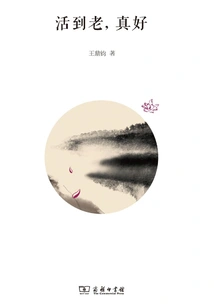
This book is a collection of the author's essays, covering a wide range of contents, including life insights, life essays, literary criticism, and social remarks, which mainly reflect the author's thoughts in his later years. The manuscripts are divided into three series: life, friendship, and wisdom. Although the collected articles are not long, they are sophisticated, insightful, and highly readable. This book was launched in Taiwan by Erya Taiwan in 1999 and received good feedback. The reading trend that Mr. Wang Dingjun has triggered in mainland China in recent years has attracted a large number of readers to pay attention to his works. This time, a new edition has been launched in the Commercial Press, with 16 additional articles.
This book is a collection of the author's essays, covering a wide range of contents, including life insights, life essays, literary criticism, and social remarks, which mainly reflect the author's thoughts in his later years. The manuscripts are divided into three series: life, friendship, and wisdom. Although the collected articles are not long, they are sophisticated, insightful, and highly readable. This book was launched in Taiwan by Erya Taiwan in 1999 and received good feedback. The reading trend that Mr. Wang Dingjun has triggered in mainland China in recent years has attracted a large number of readers to pay attention to his works. This time, a new edition has been launched in the Commercial Press, with 16 additional articles.
桃花流水杳然去
Wang Dingjun
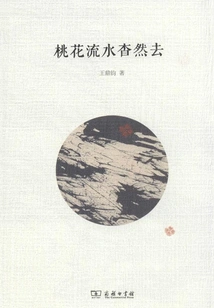
This book is a collection of recent prose written by the author. It involves literature, history, characters, personal travels, early memories, social phenomena and many other aspects, and is divided into four series according to content. There are both transparent literary criticisms such as "The Prism of 1949" and sophisticated "micro-talk" about world affairs such as "Han Han's Travels in Taiwan"; there are both deep personal memories such as "Military Villages and Military Village Culture" and pure religious sentiments such as "Religion and Life".
This book is a collection of recent prose written by the author. It involves literature, history, characters, personal travels, early memories, social phenomena and many other aspects, and is divided into four series according to content. There are both transparent literary criticisms such as "The Prism of 1949" and sophisticated "micro-talk" about world affairs such as "Han Han's Travels in Taiwan"; there are both deep personal memories such as "Military Villages and Military Village Culture" and pure religious sentiments such as "Religion and Life".
Seven Skills of Composition
Literature作文七巧
Wang Dingjun
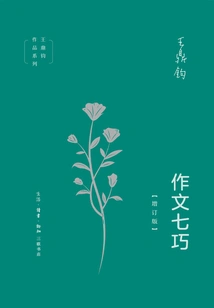
Young friends are not afraid of having technology without temperament, but they are afraid of having temperament without technology. People who are interested in writing should really pay attention to technical training as soon as possible and prepare a "container" for their temperament as soon as possible.
Young friends are not afraid of having technology without temperament, but they are afraid of having temperament without technology. People who are interested in writing should really pay attention to technical training as soon as possible and prepare a "container" for their temperament as soon as possible.
The Romance of Ancient Wen Guanzhi
Literature古文观止演义
Wang Dingjun
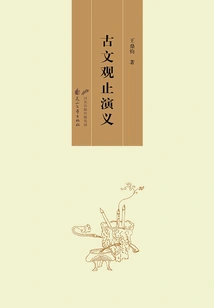
"The Romance of Ancient Wen Guan Zhi" is a wonderful "translation" of the twenty-four articles in "Gu Wen Guan Zhi" by Mr. Wang Dingjun, a famous contemporary Chinese literature master and prose master. Mr. Wang Dingjun, in his dual capacity as a writer and scholar, based on ancient Chinese literary theory and the "close reading method" of European and American New Criticism as a reference, conducted a wonderful "translation" of the works from point to line, from interpretation to restoration, from two dimensions to multi-dimensionality, from knowledge to creation, from works to life, from culture to philosophy, and from literature to religion. This opened up the spiritual world composed of words and elevated the acceptance of literature to the height of "parallel cultivation".
"The Romance of Ancient Wen Guan Zhi" is a wonderful "translation" of the twenty-four articles in "Gu Wen Guan Zhi" by Mr. Wang Dingjun, a famous contemporary Chinese literature master and prose master. Mr. Wang Dingjun, in his dual capacity as a writer and scholar, based on ancient Chinese literary theory and the "close reading method" of European and American New Criticism as a reference, conducted a wonderful "translation" of the works from point to line, from interpretation to restoration, from two dimensions to multi-dimensionality, from knowledge to creation, from works to life, from culture to philosophy, and from literature to religion. This opened up the spiritual world composed of words and elevated the acceptance of literature to the height of "parallel cultivation".
Six Essentials for Composition
Literature作文六要
Wang Dingjun
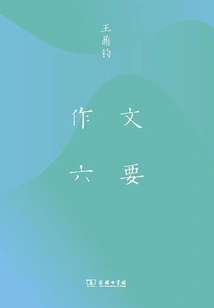
"Six Essentials of Grammar" is a long-lost work of the master prose master Wang Dingjun. It is also one of his classic works on how to write. Ding Gong summarized many years of writing practice and experience, and sorted out and refined the six steps of writing: observation, imagination, experience, selection, combination, and expression, which are equivalent to the "Six Essentials of Grammar" and are the six basic skills that everyone who studies writing should learn and master. The copyright of this book has now been taken back by Ding Gong, and it has been carefully revised and "reborn from the ashes"; it is also an act of Ding Gong's golden needle to save people and selfless sharing. The whole book is based on six key points, and each key point is structured from the dual perspectives of "Teacher Huang" as the "teacher" and the students as "learners". It is easy to read and thought-provoking; supplemented by students' "responses", "work examples" and "my practice", the layers are clear, step-by-step in-depth, and multiple echoes are helpful for application. This book is an important work for writing masters to teach writing methods.
"Six Essentials of Grammar" is a long-lost work of the master prose master Wang Dingjun. It is also one of his classic works on how to write. Ding Gong summarized many years of writing practice and experience, and sorted out and refined the six steps of writing: observation, imagination, experience, selection, combination, and expression, which are equivalent to the "Six Essentials of Grammar" and are the six basic skills that everyone who studies writing should learn and master. The copyright of this book has now been taken back by Ding Gong, and it has been carefully revised and "reborn from the ashes"; it is also an act of Ding Gong's golden needle to save people and selfless sharing. The whole book is based on six key points, and each key point is structured from the dual perspectives of "Teacher Huang" as the "teacher" and the students as "learners". It is easy to read and thought-provoking; supplemented by students' "responses", "work examples" and "my practice", the layers are clear, step-by-step in-depth, and multiple echoes are helpful for application. This book is an important work for writing masters to teach writing methods.
Wang Dingjun's Memoirs Quartet
Literature王鼎钧回忆录四部曲
Wang Dingjun
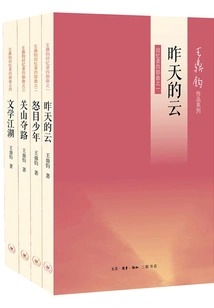
Wang Dingjun's tetralogy of memoirs: "Yesterday's Clouds", "Angry Eyed Boy", "Seizing the Road", "Literary Jianghu" Anti-Japanese War, Exile, Civil War, White Terror... The world was in chaos at that time, but these four memoirs have a clear context, using personal experiences of chaos to show the turbulent era like the Flame Mountain. They read like a chapter novel, with wonderful stories connected one after another - this is actually what the octogenarian author bought with his youth, blood and tears! What is rare is that the author did not write his memoirs as an article in which he complained about his own blood and tears. Instead, he turned his blood and tears into pearls with the pursuit of beauty in literature, the pursuit of truth in history, and the pursuit of philosophical explanations, in order to present the existence of a generation of sentient beings and try to arouse today's people's attention and understanding of the most important collective experience of the Chinese people of that era. There is no sensationalism or shouting, it is calm and calm, but it has epic magnificence and the power to touch the soul.
Wang Dingjun's tetralogy of memoirs: "Yesterday's Clouds", "Angry Eyed Boy", "Seizing the Road", "Literary Jianghu" Anti-Japanese War, Exile, Civil War, White Terror... The world was in chaos at that time, but these four memoirs have a clear context, using personal experiences of chaos to show the turbulent era like the Flame Mountain. They read like a chapter novel, with wonderful stories connected one after another - this is actually what the octogenarian author bought with his youth, blood and tears! What is rare is that the author did not write his memoirs as an article in which he complained about his own blood and tears. Instead, he turned his blood and tears into pearls with the pursuit of beauty in literature, the pursuit of truth in history, and the pursuit of philosophical explanations, in order to present the existence of a generation of sentient beings and try to arouse today's people's attention and understanding of the most important collective experience of the Chinese people of that era. There is no sensationalism or shouting, it is calm and calm, but it has epic magnificence and the power to touch the soul.