Library
Browse and search books
3 novels found
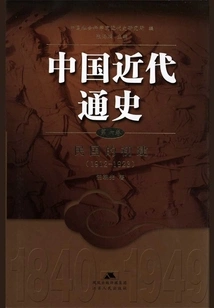
中国近代通史·第六卷:民国的初建(1912-1923)
Wang Chaoguang
This volume covers the period from 1912 to 1923, describing the basic social conditions during the period when the Republic of China was established after the Revolution of 1911. The main events during this period include the rule of the Beiyang warlords, Yuan Shikai's proclaimed emperor and the War to Protect the Law, the May Fourth Movement and the establishment of the Communist Party of China, the two Zhili-Fengtian wars, and the political turmoil in Beijing during this period. Against this broad background, the author narrates the basic situation of China's social development in the early Republic of China, describes the extremely ups and downs of the golden period of the economy in the early Republic of China, and illustrates that China's traditional economy is still struggling in the process of transforming into a modern economy.
This volume covers the period from 1912 to 1923, describing the basic social conditions during the period when the Republic of China was established after the Revolution of 1911. The main events during this period include the rule of the Beiyang warlords, Yuan Shikai's proclaimed emperor and the War to Protect the Law, the May Fourth Movement and the establishment of the Communist Party of China, the two Zhili-Fengtian wars, and the political turmoil in Beijing during this period. Against this broad background, the author narrates the basic situation of China's social development in the early Republic of China, describes the extremely ups and downs of the golden period of the economy in the early Republic of China, and illustrates that China's traditional economy is still struggling in the process of transforming into a modern economy.
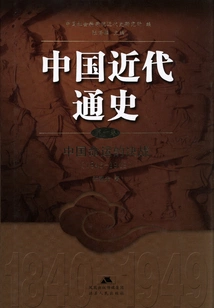
General History of Modern China (volume 10): the Decisive Battle for China's Destiny (1945-1949)
History中国近代通史(第十卷):中国命运的决战(1945-1949)
Wang Chaoguang
For the study of modern Chinese history, the 20th century is a century of beginnings, a century of transformation, a century of innovation, and a century of gains. The study of modern Chinese history is an important branch of Chinese history in the 20th century. In the 20th century, Chinese history transformed from a semi-colonial and semi-feudal society to a socialist society, which has undergone earth-shaking changes. The study of modern Chinese history also underwent earth-shaking changes in the 20th century. It separated from traditional Chinese history. In the 1940s, the study of modern Chinese history with bourgeois tendencies that served semi-colonial and semi-feudal society and represented the interests of the ruling class dominated. The study of modern Chinese history guided by Marxism emerged during the New Democratic Revolution. After the founding of New China, Marxist research on modern Chinese history gradually took the dominant position.
For the study of modern Chinese history, the 20th century is a century of beginnings, a century of transformation, a century of innovation, and a century of gains. The study of modern Chinese history is an important branch of Chinese history in the 20th century. In the 20th century, Chinese history transformed from a semi-colonial and semi-feudal society to a socialist society, which has undergone earth-shaking changes. The study of modern Chinese history also underwent earth-shaking changes in the 20th century. It separated from traditional Chinese history. In the 1940s, the study of modern Chinese history with bourgeois tendencies that served semi-colonial and semi-feudal society and represented the interests of the ruling class dominated. The study of modern Chinese history guided by Marxism emerged during the New Democratic Revolution. After the founding of New China, Marxist research on modern Chinese history gradually took the dominant position.
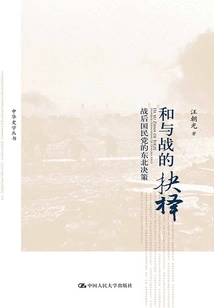
和与战的抉择:战后国民党的东北决策(中华史学丛书)
Wang Chaoguang
About the Book Northeast has played a special and important role in the evolution of Chinese history after the end of the Anti-Japanese War. The struggle between the Kuomintang and the Communist Party for the Northeast was not only related to both sides' control of the Northeast, but also affected the overall strategic deployment of both sides. The Northeast once became the focus of the evolution of China's political and military situation, and thus affected China's political trend and outcome after the war. This book takes the international Cold War, Sino-Soviet relations, and Sino-US relations as the background, and uses the relationship between the Kuomintang and the Communist Party and the Kuomintang and the Communist Party's struggle for the Northeast as the basis for research. It observes and discusses the origin, formulation, implementation, impact, and pros and cons of the postwar Kuomintang's Northeast decision-making, and uses this to analyze why the Kuomintang eventually lost the Northeast and thus lost its power to govern in mainland China.
About the Book Northeast has played a special and important role in the evolution of Chinese history after the end of the Anti-Japanese War. The struggle between the Kuomintang and the Communist Party for the Northeast was not only related to both sides' control of the Northeast, but also affected the overall strategic deployment of both sides. The Northeast once became the focus of the evolution of China's political and military situation, and thus affected China's political trend and outcome after the war. This book takes the international Cold War, Sino-Soviet relations, and Sino-US relations as the background, and uses the relationship between the Kuomintang and the Communist Party and the Kuomintang and the Communist Party's struggle for the Northeast as the basis for research. It observes and discusses the origin, formulation, implementation, impact, and pros and cons of the postwar Kuomintang's Northeast decision-making, and uses this to analyze why the Kuomintang eventually lost the Northeast and thus lost its power to govern in mainland China.