Library
Browse and search books
6 novels found
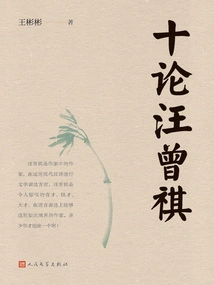
Ten Essays on Wang Zengqi
Literature十论汪曾祺
Wang Binbin
The book consists of a series of ten essays, which conducts a detailed and in-depth study of Wang Zengqi's novel creation from multiple angles. The characteristics of this book are mainly reflected in three points. First, a relatively full study was conducted on Wang Zengqi's early novel creation. Wang Zengqi wrote more than forty novels in the 1940s, but the research on this part of his works has been obviously weak. This book puts more effort into this aspect; based on detailed text analysis, it points out the artistic characteristics and unique value of Wang Zengqi's early novels. Second, the book combines Wang Zengqi's life experience and personal temperament to conduct an in-depth analysis and study of Wang Zengqi's novel creation resources, pointing out that the unique interest, charm and value of Wang Zengqi's novels are related to his unique novel creation resources. The third and most important point is that the book focuses on the study of the rhetorical art and language aesthetics of Wang Zengqi's novels. Wang Zengqi's novels win with his perfect language skills, and this book reveals Wang Zengqi's rhetorical ingenuity from multiple aspects, thus making Wang Zengqi's value in the history of new Chinese literature more prominent.
The book consists of a series of ten essays, which conducts a detailed and in-depth study of Wang Zengqi's novel creation from multiple angles. The characteristics of this book are mainly reflected in three points. First, a relatively full study was conducted on Wang Zengqi's early novel creation. Wang Zengqi wrote more than forty novels in the 1940s, but the research on this part of his works has been obviously weak. This book puts more effort into this aspect; based on detailed text analysis, it points out the artistic characteristics and unique value of Wang Zengqi's early novels. Second, the book combines Wang Zengqi's life experience and personal temperament to conduct an in-depth analysis and study of Wang Zengqi's novel creation resources, pointing out that the unique interest, charm and value of Wang Zengqi's novels are related to his unique novel creation resources. The third and most important point is that the book focuses on the study of the rhetorical art and language aesthetics of Wang Zengqi's novels. Wang Zengqi's novels win with his perfect language skills, and this book reveals Wang Zengqi's rhetorical ingenuity from multiple aspects, thus making Wang Zengqi's value in the history of new Chinese literature more prominent.
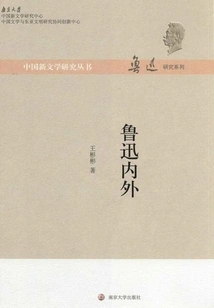
Lu Xun Inside and Outside
Literature鲁迅内外
Wang Binbin
This book is a monograph written by the famous contemporary literary critic Wang Binbin specifically about Lu Xun. It collects articles about Lu Xun, his works, and his research published in various publications in the past twenty years. He made unique insights into the value standards of Lu Xun's research, the relationship between Lu Xun and liberalism, and the issues in the comparison between Lu Xun and Hu Shi.
This book is a monograph written by the famous contemporary literary critic Wang Binbin specifically about Lu Xun. It collects articles about Lu Xun, his works, and his research published in various publications in the past twenty years. He made unique insights into the value standards of Lu Xun's research, the relationship between Lu Xun and liberalism, and the issues in the comparison between Lu Xun and Hu Shi.
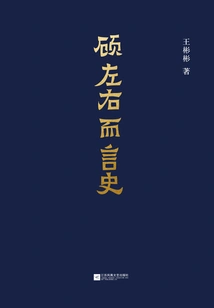
Talking About History
Literature顾左右而言史
Wang Binbin
This book is a collection of historical and humanistic essays by the famous scholar Wang Binbin. Wang Binbin's articles are both scholarly and scholarly, writing with conscience and writing history. Talking about the May Fourth Movement, denounced Fang Qiu; "Lessons on Public Morality of "Chinese and Dogs Are Not Allowed"" tells a story that is clear and intolerant; "The Afterlife of Zhang Taiyan" traces the story from top to bottom, exploring and deducing the story of a cultural elder Duan's life and death are little known; "Hu Shi's Facing Chen Jitang" abandons the "left" view of "right" hope, writing with the conscience and independent personality of an intellectual, with a high position and unique insights.
This book is a collection of historical and humanistic essays by the famous scholar Wang Binbin. Wang Binbin's articles are both scholarly and scholarly, writing with conscience and writing history. Talking about the May Fourth Movement, denounced Fang Qiu; "Lessons on Public Morality of "Chinese and Dogs Are Not Allowed"" tells a story that is clear and intolerant; "The Afterlife of Zhang Taiyan" traces the story from top to bottom, exploring and deducing the story of a cultural elder Duan's life and death are little known; "Hu Shi's Facing Chen Jitang" abandons the "left" view of "right" hope, writing with the conscience and independent personality of an intellectual, with a high position and unique insights.
高晓声的鱼水情
Wang Binbin
The so-called "fish-water love" here refers to Gao Xiaosheng's feelings for fish and water. Gao Xiaosheng's hometown is Wujin, Changzhou, Jiangsu. This is a typical water town. Rivers crisscross the rivers. Gao Xiaosheng has been obsessed with water and fish since childhood. He has extraordinary feelings for the water in his hometown and the fish in the water. Among new literature writers, Shen Congwen has long been praised for his descriptions of water. Wang Zengqi, who also grew up in a water town, has unique and exquisite expressions of water in his works. And Gao Xiaosheng's performance with water is definitely not inferior to anyone else's. As for writing about fish, among Chinese writers, I have not seen anyone comparable to Gao Xiaosheng. It can be said that Gao Xiaosheng is one of the Chinese writers who writes best about water, but he is also the Chinese writer who writes best about fish. There is no "one". Gao Xiaosheng's essay "The Place I'm Most Familiar with" has introduced his hometown.
The so-called "fish-water love" here refers to Gao Xiaosheng's feelings for fish and water. Gao Xiaosheng's hometown is Wujin, Changzhou, Jiangsu. This is a typical water town. Rivers crisscross the rivers. Gao Xiaosheng has been obsessed with water and fish since childhood. He has extraordinary feelings for the water in his hometown and the fish in the water. Among new literature writers, Shen Congwen has long been praised for his descriptions of water. Wang Zengqi, who also grew up in a water town, has unique and exquisite expressions of water in his works. And Gao Xiaosheng's performance with water is definitely not inferior to anyone else's. As for writing about fish, among Chinese writers, I have not seen anyone comparable to Gao Xiaosheng. It can be said that Gao Xiaosheng is one of the Chinese writers who writes best about water, but he is also the Chinese writer who writes best about fish. There is no "one". Gao Xiaosheng's essay "The Place I'm Most Familiar with" has introduced his hometown.
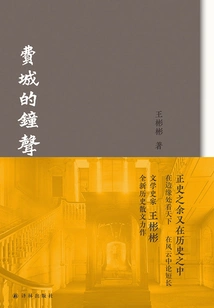
Bells of Philadelphia
History费城的钟声
Wang Binbin
This book is a new collection of new historical and humanistic prose works published in recent years by Wang Binbin, a contemporary literary historian, professor at the School of Liberal Arts of Nanjing University, and Yangtze Scholar Distinguished Professor of the Ministry of Education. It includes ten works including "Chen Baozhen's Throat Bone", "Chen Yinke's Views on Traditional Chinese Medicine", "How Was Hu Shi the American Ambassador?", "The Bells of Philadelphia", and "Chiang Kai-shek's Internal Worries During the Anti-Japanese War". The article dissects history from a diagonal angle, looks at the world from the edge, and discusses the pros and cons in the storm. Wang Binbin, ancient and modern, is omnipotent in heaven and earth, and is omnipotent that Taoists have not yet discovered. What he writes seems to be casual anecdotes or even street gossip, but it is about earth-shattering changes. He is astonishing with his general knowledge of literature and history, his skill in textual research and identification of materials, his sophisticated and wise Spring and Autumn style of writing and his unique style.
This book is a new collection of new historical and humanistic prose works published in recent years by Wang Binbin, a contemporary literary historian, professor at the School of Liberal Arts of Nanjing University, and Yangtze Scholar Distinguished Professor of the Ministry of Education. It includes ten works including "Chen Baozhen's Throat Bone", "Chen Yinke's Views on Traditional Chinese Medicine", "How Was Hu Shi the American Ambassador?", "The Bells of Philadelphia", and "Chiang Kai-shek's Internal Worries During the Anti-Japanese War". The article dissects history from a diagonal angle, looks at the world from the edge, and discusses the pros and cons in the storm. Wang Binbin, ancient and modern, is omnipotent in heaven and earth, and is omnipotent that Taoists have not yet discovered. What he writes seems to be casual anecdotes or even street gossip, but it is about earth-shattering changes. He is astonishing with his general knowledge of literature and history, his skill in textual research and identification of materials, his sophisticated and wise Spring and Autumn style of writing and his unique style.
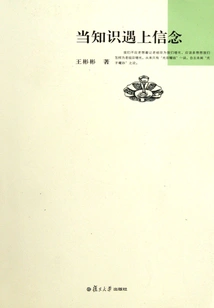
When Knowledge Meets Belief
Literature当知识遇上信念
Wang Binbin
This book is the author's latest collection of cultural essays, in which the author focuses on contemporary literature and cultural issues in the form of essays. The articles in the book express his thoughts on literary and cultural issues that have attracted widespread attention in contemporary times.
This book is the author's latest collection of cultural essays, in which the author focuses on contemporary literature and cultural issues in the form of essays. The articles in the book express his thoughts on literary and cultural issues that have attracted widespread attention in contemporary times.