Library
Browse and search books
1 novel found
京师同文馆输入的国际法术语研究
Wan Qizhou
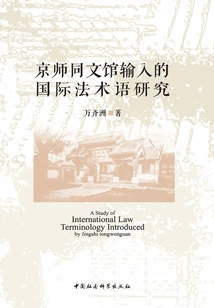
In response to the current situation, the Qing government, which was defeated in the two Opium Wars, established the Capital Tongwen Hall in the summer of 1862. The museum was originally a language school. After the American missionary Ding Yuliang became the chief instructor, it gradually became an important place for introducing Western legal culture, and the translation and introduction of international law works were particularly detailed. Faced with the technical terms of international law with sophisticated semantics, American missionaries such as Ding Weiliang, who did not study law, overcame many difficulties and translated and published the most cutting-edge international law works at the time, such as "The Law of All Nations". For example, "International Law", "Sovereignty", "Citizen", "Terrtory", "State", etc. Are translated as "public law", "sovereignty", "people", "jiang" and "state". Explore the Western meanings of these words and the classical meanings of the translated words in Chinese, clarify their spread, variation, and finalization process, and then elaborate on their impact on modern Chinese people's thoughts. This can provide a glimpse of the colorful ideological and cultural content of modern China, and also demonstrate the characteristics of Chinese culture and the differences between Chinese and Western cultures. As Chen Yinke said, "Any interpretation of a word is a cultural history."
In response to the current situation, the Qing government, which was defeated in the two Opium Wars, established the Capital Tongwen Hall in the summer of 1862. The museum was originally a language school. After the American missionary Ding Yuliang became the chief instructor, it gradually became an important place for introducing Western legal culture, and the translation and introduction of international law works were particularly detailed. Faced with the technical terms of international law with sophisticated semantics, American missionaries such as Ding Weiliang, who did not study law, overcame many difficulties and translated and published the most cutting-edge international law works at the time, such as "The Law of All Nations". For example, "International Law", "Sovereignty", "Citizen", "Terrtory", "State", etc. Are translated as "public law", "sovereignty", "people", "jiang" and "state". Explore the Western meanings of these words and the classical meanings of the translated words in Chinese, clarify their spread, variation, and finalization process, and then elaborate on their impact on modern Chinese people's thoughts. This can provide a glimpse of the colorful ideological and cultural content of modern China, and also demonstrate the characteristics of Chinese culture and the differences between Chinese and Western cultures. As Chen Yinke said, "Any interpretation of a word is a cultural history."