Library
Browse and search books
1 novel found
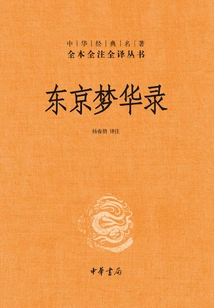
Tokyo Dreams
History东京梦华录
Translation And Annotation By Yang Chunqiao
"Tokyo Menghua Lu", written by Meng Yuanlao of the Song Dynasty. This book takes the form of notes and records all aspects of Bianliang in Tokyo during the Northern Song Dynasty, mainly during the Zhenghe and Xuanhe reigns of Emperor Huizong, from the construction of the capital city gates, the main river bridges to the palace buildings, from the location of official offices inside and outside the imperial city to the main streets and shops in the city, from court ceremonies such as court gatherings and suburban festivals to folk customs such as weddings and childbirth. , Covering almost everything from food and daily life to seasonal events, from singing and dancing to various street scenes, depicting Bianliang, Tokyo, the most prosperous city in the first half of the 11th century. From it, you can feel the prosperous urban economy and rich urban life of the Song Dynasty. It is an important historical document for studying the urban economy and culture of the Northern Song Dynasty. Meng Yuanlao, the author of "Tokyo Menghua Lu", was a survivor of the Northern Song Dynasty. This book was written in the 17th year of Shaoxing in the Southern Song Dynasty, which was the 20th year after the fall of the Northern Song Dynasty. Therefore, the book also used the description of the prosperous and prosperous times to express his feelings of regret. Therefore, under the special background of the Southern Song Dynasty, when the Southern Song Dynasty settled in a corner of the Yangtze River and then perished at the hands of the Mongolian cavalry, it aroused the emotional resonance of the people who had subjugated their country. It appeared in the middle and late Southern Song Dynasty. His "Old Man's Records of West Lake" and "Records of Capital City", as well as "Old Martial Arts" and "Mengliang Lu" which recalled the capital Lin'an after the fall of the Song Dynasty, are all similar in style, technique and content. Academic circles often name these works "Meng Hua Ti". Even until the late Ming Dynasty, Zhang Dai's "Tao'an Dream Memories" and "West Lake Meng Xun" can still be regarded as the remnants of "Tokyo Meng Hua Lu". Therefore, from this perspective, "Tokyo Menghualu" can be regarded as a pioneering work. Underneath the surface narrative of "Dream Hua Ti" in "Tokyo Meng Hua Lu", there are also hidden historical events that Meng Yuanlao witnessed during the Huizong Dynasty for more than 20 years. For example, the description of Tokyo's tall and majestic city walls implies that Huizong adopted Cai Jing's opinions to renovate the outer city. He changed Taizu's zigzag city wall to be straight on all sides, which greatly reduced its defensive function. When the Jin soldiers attacked the city during the Jingkang period, because of its straightness, the entire city wall was crumbling with one shot. For example, in the description of court ceremonies such as the Zhengdan court meeting and the sacrifice to heaven in the southern suburbs, there are hints that Huizong reformed the ritual music, made a new "Dasheng music", rebuilt a new three-story round hill for worshiping the sky (Qingcheng Zhai Palace), and promulgated the "Zhenghe Five Rites and New Rituals", which quite meant that he claimed to be a holy king. It is this combination of surface and underlying narratives that "Tokyo Dreams" explores the reason why the centuries-old prosperity of the Northern Song Dynasty turned into a dream once war broke out.
"Tokyo Menghua Lu", written by Meng Yuanlao of the Song Dynasty. This book takes the form of notes and records all aspects of Bianliang in Tokyo during the Northern Song Dynasty, mainly during the Zhenghe and Xuanhe reigns of Emperor Huizong, from the construction of the capital city gates, the main river bridges to the palace buildings, from the location of official offices inside and outside the imperial city to the main streets and shops in the city, from court ceremonies such as court gatherings and suburban festivals to folk customs such as weddings and childbirth. , Covering almost everything from food and daily life to seasonal events, from singing and dancing to various street scenes, depicting Bianliang, Tokyo, the most prosperous city in the first half of the 11th century. From it, you can feel the prosperous urban economy and rich urban life of the Song Dynasty. It is an important historical document for studying the urban economy and culture of the Northern Song Dynasty. Meng Yuanlao, the author of "Tokyo Menghua Lu", was a survivor of the Northern Song Dynasty. This book was written in the 17th year of Shaoxing in the Southern Song Dynasty, which was the 20th year after the fall of the Northern Song Dynasty. Therefore, the book also used the description of the prosperous and prosperous times to express his feelings of regret. Therefore, under the special background of the Southern Song Dynasty, when the Southern Song Dynasty settled in a corner of the Yangtze River and then perished at the hands of the Mongolian cavalry, it aroused the emotional resonance of the people who had subjugated their country. It appeared in the middle and late Southern Song Dynasty. His "Old Man's Records of West Lake" and "Records of Capital City", as well as "Old Martial Arts" and "Mengliang Lu" which recalled the capital Lin'an after the fall of the Song Dynasty, are all similar in style, technique and content. Academic circles often name these works "Meng Hua Ti". Even until the late Ming Dynasty, Zhang Dai's "Tao'an Dream Memories" and "West Lake Meng Xun" can still be regarded as the remnants of "Tokyo Meng Hua Lu". Therefore, from this perspective, "Tokyo Menghualu" can be regarded as a pioneering work. Underneath the surface narrative of "Dream Hua Ti" in "Tokyo Meng Hua Lu", there are also hidden historical events that Meng Yuanlao witnessed during the Huizong Dynasty for more than 20 years. For example, the description of Tokyo's tall and majestic city walls implies that Huizong adopted Cai Jing's opinions to renovate the outer city. He changed Taizu's zigzag city wall to be straight on all sides, which greatly reduced its defensive function. When the Jin soldiers attacked the city during the Jingkang period, because of its straightness, the entire city wall was crumbling with one shot. For example, in the description of court ceremonies such as the Zhengdan court meeting and the sacrifice to heaven in the southern suburbs, there are hints that Huizong reformed the ritual music, made a new "Dasheng music", rebuilt a new three-story round hill for worshiping the sky (Qingcheng Zhai Palace), and promulgated the "Zhenghe Five Rites and New Rituals", which quite meant that he claimed to be a holy king. It is this combination of surface and underlying narratives that "Tokyo Dreams" explores the reason why the centuries-old prosperity of the Northern Song Dynasty turned into a dream once war broke out.