Library
Browse and search books
1 novel found
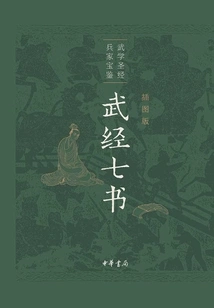
武经七书(插图版)
Translation And Annotation By Pian Yuqian, Li Jiemin, Sheng Dongling And Others
"Zuo Zhuan" says: "The great affairs of the country lie in worship and military service." War and army construction have been valued by rulers of all dynasties. In order to meet the needs of military struggle, teaching, and military examinations at that time, in the third year of Yuanfeng (1080), Emperor Shenzong of the Song Dynasty ordered Zhu Fu, the director of the Imperial Academy, and He Qufei, a doctor of martial arts, to select and compile military books. They selected seven military books from more than 340 ancient Chinese military books that were popular at the time: "Sun Tzu's Art of War", "Wu Zi's Art of War", "Sima's Art", "Huang Shigong's Three Strategies", "Wei Liaozi", "Six Tao" and "Tang Taizong Li Weigong's Questions", a total of 25 volumes, as martial arts classics, and designated them as must-read martial arts textbooks. This is the famous "Seven Books of Martial Arts". The compilation and promulgation of the "Seven Books of Martial Arts" was a contribution of the Northern Song Dynasty court to the construction of military theory. It expounds a series of military strategic thoughts and tactical principles, and embodies the insightful insights of ancient Chinese people's understanding of war. Whether in military theory or in war practice, it has had a profound impact on later generations and even the world. Emperor Gaozong of the Southern Song Dynasty also designated the "Seven Books of Martial Arts" as the content of the examination for selecting generals. Zhu Yuanzhang, the founder of the Ming Dynasty, advocated that "officers' descendants should read martial arts books". In view of the urgent need for military struggle and teaching, he ordered the Ministry of War to engrave the "Seven Books of Martial Arts" and distribute it to relevant officials, senior generals and their descendants for study. Since the 17th century, many reprints and translated and annotated editions have appeared in Japan, while "The Art of War" and "The Art of War by Wu Zi" have become more widely circulated in Europe, Asia and the United States. It is not only the spiritual wealth of the Chinese nation, but also the common spiritual wealth of the people of the world. In this publication, ancient literature scholars and experts were invited to annotate and translate the entire "Seven Books of Military Classics" with brief annotations and simplified translations to assist reading of the original text. We hope that more readers can read and understand "Seven Books of Military Classics" and grasp the ideological connotation and value of Chinese military books.
"Zuo Zhuan" says: "The great affairs of the country lie in worship and military service." War and army construction have been valued by rulers of all dynasties. In order to meet the needs of military struggle, teaching, and military examinations at that time, in the third year of Yuanfeng (1080), Emperor Shenzong of the Song Dynasty ordered Zhu Fu, the director of the Imperial Academy, and He Qufei, a doctor of martial arts, to select and compile military books. They selected seven military books from more than 340 ancient Chinese military books that were popular at the time: "Sun Tzu's Art of War", "Wu Zi's Art of War", "Sima's Art", "Huang Shigong's Three Strategies", "Wei Liaozi", "Six Tao" and "Tang Taizong Li Weigong's Questions", a total of 25 volumes, as martial arts classics, and designated them as must-read martial arts textbooks. This is the famous "Seven Books of Martial Arts". The compilation and promulgation of the "Seven Books of Martial Arts" was a contribution of the Northern Song Dynasty court to the construction of military theory. It expounds a series of military strategic thoughts and tactical principles, and embodies the insightful insights of ancient Chinese people's understanding of war. Whether in military theory or in war practice, it has had a profound impact on later generations and even the world. Emperor Gaozong of the Southern Song Dynasty also designated the "Seven Books of Martial Arts" as the content of the examination for selecting generals. Zhu Yuanzhang, the founder of the Ming Dynasty, advocated that "officers' descendants should read martial arts books". In view of the urgent need for military struggle and teaching, he ordered the Ministry of War to engrave the "Seven Books of Martial Arts" and distribute it to relevant officials, senior generals and their descendants for study. Since the 17th century, many reprints and translated and annotated editions have appeared in Japan, while "The Art of War" and "The Art of War by Wu Zi" have become more widely circulated in Europe, Asia and the United States. It is not only the spiritual wealth of the Chinese nation, but also the common spiritual wealth of the people of the world. In this publication, ancient literature scholars and experts were invited to annotate and translate the entire "Seven Books of Military Classics" with brief annotations and simplified translations to assist reading of the original text. We hope that more readers can read and understand "Seven Books of Military Classics" and grasp the ideological connotation and value of Chinese military books.