Library
Browse and search books
5 novels found
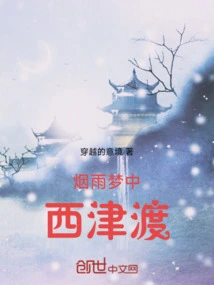
Xijin Ferry in Misty Rain Dream
Xuanhuan烟雨梦中西津渡
The Artistic Conception Of Time Travel
Introduction to the novel "Xijin Ferry in a Dream of Misty Rain" In the spring of the twenty-fifth year of Jingyao's reign, the Nine-Dragon Sword was born in Xijindu Blacksmith's Shop, causing a bloody storm in the world. Young Leng Shuihan flees from disaster with his master Guan Yuntian. He encounters close friends such as the red-clad knight Ling Biao and the hidden weapon master Song He, and becomes involved in a series of conspiracy plots by the Cao Gang, palace rebellion, and invasion by foreign forces. From the dangerous ancient road of Xijin Ferry to the bloodshed in the palace of Jinling City, from the secrets of the earthly immortals in Jiangxinzhou to the Buddhist method of suppressing demons in Tianwaitian, everyone uses chivalry as the blade and friendship as the shield. In the light of swords and shadows, they awaken their sword hearts, solve the mystery of their life experience, and join forces to put down the rebellion and protect the three holy objects. Many years later, the descendants of the Jianghu family have passed down their moral principles, and old friends with white hair reunited on the Xijin ferry to watch the Yangtze River surge. The chivalrous spirit has been passed down from generation to generation in the misty years. Reader's imagination space 1. Is there a connection between the Guan family secrets hidden in the Nine Dragon Sword and the ancient secret realm? Is there a greater worldview hidden there? 2.? The truth behind the ancient monsters behind the extraterritorial forces. Will the undissipated evil spirits trigger a new crisis in the world? 3. How can the young Guan Zu and other descendants inherit the power of the token and continue the chivalrous legend of Xijin Ferry? 4. Will Ling Biao and his wife, who are traveling around the world, discover more undiscovered secrets of the world along the way?
Introduction to the novel "Xijin Ferry in a Dream of Misty Rain" In the spring of the twenty-fifth year of Jingyao's reign, the Nine-Dragon Sword was born in Xijindu Blacksmith's Shop, causing a bloody storm in the world. Young Leng Shuihan flees from disaster with his master Guan Yuntian. He encounters close friends such as the red-clad knight Ling Biao and the hidden weapon master Song He, and becomes involved in a series of conspiracy plots by the Cao Gang, palace rebellion, and invasion by foreign forces. From the dangerous ancient road of Xijin Ferry to the bloodshed in the palace of Jinling City, from the secrets of the earthly immortals in Jiangxinzhou to the Buddhist method of suppressing demons in Tianwaitian, everyone uses chivalry as the blade and friendship as the shield. In the light of swords and shadows, they awaken their sword hearts, solve the mystery of their life experience, and join forces to put down the rebellion and protect the three holy objects. Many years later, the descendants of the Jianghu family have passed down their moral principles, and old friends with white hair reunited on the Xijin ferry to watch the Yangtze River surge. The chivalrous spirit has been passed down from generation to generation in the misty years. Reader's imagination space 1. Is there a connection between the Guan family secrets hidden in the Nine Dragon Sword and the ancient secret realm? Is there a greater worldview hidden there? 2.? The truth behind the ancient monsters behind the extraterritorial forces. Will the undissipated evil spirits trigger a new crisis in the world? 3. How can the young Guan Zu and other descendants inherit the power of the token and continue the chivalrous legend of Xijin Ferry? 4. Will Ling Biao and his wife, who are traveling around the world, discover more undiscovered secrets of the world along the way?
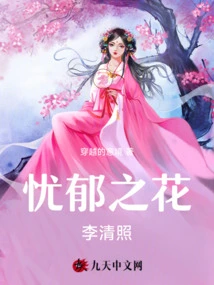
The Flower of Melancholy by Li Qingzhao
Ancient Romance忧郁之花李清照
The Artistic Conception Of Time Travel
"The Flower of Melancholy - Li Qingzhao" outlines the legendary life of the talented Li Qingzhao through the ages with delicate brushstrokes. In 1084, at Lixiating in Jinan, seven-year-old Li Qingzhao began to sing out his heroic poems, and he made an innocent promise with his cousin Li Jiongming to start the legend. As a child, she began to develop talents and love under the guidance of her father. A woman from the Jinan Poetry Society disguised herself as a man and amazed everyone. During a trip to Bianjing, she met Zhao Mingcheng, opening a romantic chapter. During her years in Bianjing, she expressed her views on current affairs during the turmoil of Taixue, and had many experiences such as the Spring Gathering and the Love at the Xiangguo Temple. Her relationship with Zhao Mingcheng became more and more intense, and she frequently published excellent poems, recording beauty and affection. But fate brings twists and turns in the family, difficulties in collecting books, and career twists and turns. The two support each other, and their love settles in the hardships. The Jingkang Incident was like a bolt from the blue, war was raging, Li Qingzhao fled with "Inscriptions on Gold and Stone" in his arms, Zhao Mingcheng died of illness, and she was devastated. In his later years, he took refuge in a deserted village in Shaoxing, recalling the past under the swaying thatch eaves on New Year's Eve. He still cared about poetry until the end of his life. Although she is gone, her spirit and works will never wither like flowers. The funeral was respected by everyone, remembered by literati and poets, and passed down by word of mouth among the people, inspiring future generations to pursue freedom. Opening this book is like traveling back in time. You can appreciate the rhythm of Song poetry, feel the vicissitudes of the times, understand the true meaning of life, and find the light of power in Li Qingzhao's story.
"The Flower of Melancholy - Li Qingzhao" outlines the legendary life of the talented Li Qingzhao through the ages with delicate brushstrokes. In 1084, at Lixiating in Jinan, seven-year-old Li Qingzhao began to sing out his heroic poems, and he made an innocent promise with his cousin Li Jiongming to start the legend. As a child, she began to develop talents and love under the guidance of her father. A woman from the Jinan Poetry Society disguised herself as a man and amazed everyone. During a trip to Bianjing, she met Zhao Mingcheng, opening a romantic chapter. During her years in Bianjing, she expressed her views on current affairs during the turmoil of Taixue, and had many experiences such as the Spring Gathering and the Love at the Xiangguo Temple. Her relationship with Zhao Mingcheng became more and more intense, and she frequently published excellent poems, recording beauty and affection. But fate brings twists and turns in the family, difficulties in collecting books, and career twists and turns. The two support each other, and their love settles in the hardships. The Jingkang Incident was like a bolt from the blue, war was raging, Li Qingzhao fled with "Inscriptions on Gold and Stone" in his arms, Zhao Mingcheng died of illness, and she was devastated. In his later years, he took refuge in a deserted village in Shaoxing, recalling the past under the swaying thatch eaves on New Year's Eve. He still cared about poetry until the end of his life. Although she is gone, her spirit and works will never wither like flowers. The funeral was respected by everyone, remembered by literati and poets, and passed down by word of mouth among the people, inspiring future generations to pursue freedom. Opening this book is like traveling back in time. You can appreciate the rhythm of Song poetry, feel the vicissitudes of the times, understand the true meaning of life, and find the light of power in Li Qingzhao's story.
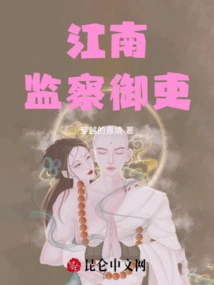
Jiangnan Supervisory Officials
Ancient Romance江南监察御吏
The Artistic Conception Of Time Travel
Introduction to the novel "Jiangnan Supervisory Censor" In the autumn of the 35th year of Kangxi's reign, 34-year-old Cao Yin went south with a secret order. As Jiangning Zhizao and Jiangnan supervisory censor, he secretly investigated local corruption. He has a beautiful face and a thoughtful mind. As soon as he arrived in the south of the Yangtze River, he discovered the county magistrate Cheng Lin who was "disguising herself as a man" - she used her identity to cover up the fact that she was embezzling money and paying taxes. Cao Yin dealt with him according to law, and shocked the officialdom in the first battle. After that, he followed the clues: he investigated the financial officer for falsely reporting losses and enriching his own pockets, he found the personnel officer for selling his official position to get a title, the water conservancy officer cut corners and caused the river embankment to burst, and he punished the education officer for embezzling student money. Every case encountered resistance, and the prefect of Jiangning even set up an ambush to pursue him and held a Hongmen Banquet. Fortunately, the 28-year-old bodyguard Li Yong protected him closely. With his ability of "listening to sounds to identify dangers" and "quick sword control of enemies", he helped Cao Yin escape from death many times. An anti-corruption storm spanning finance, personnel, water conservancy, and education has finally been launched in Jiangnan, and it has also straightened out chaos such as extravagant weddings and funerals, and bullying in the market. Core selling point 1.? Clear focus on the main line: Taking "women disguised as men as county magistrates" as the starting point, the corruption cases in many fields such as finance and personnel are connected in series and progressed layer by layer. 2. There is a sharp contrast between the characters: Cao Yin is elegant and upright, and judges cases wisely, while Li Yong is silent, loyal and courageous, and protects the master with force. He moves and is still, and his image is three-dimensional. 3. The plot is thrilling and exciting: from pursuits and ambushes to outsmarting corrupt officials, every case has a twist, and the successful anti-corruption ending is both satisfying and positive. 4. High degree of detail restoration: Incorporating details such as the official system, water conservancy management, and education system of the Qing Dynasty, making the anti-corruption story more historically realistic.
Introduction to the novel "Jiangnan Supervisory Censor" In the autumn of the 35th year of Kangxi's reign, 34-year-old Cao Yin went south with a secret order. As Jiangning Zhizao and Jiangnan supervisory censor, he secretly investigated local corruption. He has a beautiful face and a thoughtful mind. As soon as he arrived in the south of the Yangtze River, he discovered the county magistrate Cheng Lin who was "disguising herself as a man" - she used her identity to cover up the fact that she was embezzling money and paying taxes. Cao Yin dealt with him according to law, and shocked the officialdom in the first battle. After that, he followed the clues: he investigated the financial officer for falsely reporting losses and enriching his own pockets, he found the personnel officer for selling his official position to get a title, the water conservancy officer cut corners and caused the river embankment to burst, and he punished the education officer for embezzling student money. Every case encountered resistance, and the prefect of Jiangning even set up an ambush to pursue him and held a Hongmen Banquet. Fortunately, the 28-year-old bodyguard Li Yong protected him closely. With his ability of "listening to sounds to identify dangers" and "quick sword control of enemies", he helped Cao Yin escape from death many times. An anti-corruption storm spanning finance, personnel, water conservancy, and education has finally been launched in Jiangnan, and it has also straightened out chaos such as extravagant weddings and funerals, and bullying in the market. Core selling point 1.? Clear focus on the main line: Taking "women disguised as men as county magistrates" as the starting point, the corruption cases in many fields such as finance and personnel are connected in series and progressed layer by layer. 2. There is a sharp contrast between the characters: Cao Yin is elegant and upright, and judges cases wisely, while Li Yong is silent, loyal and courageous, and protects the master with force. He moves and is still, and his image is three-dimensional. 3. The plot is thrilling and exciting: from pursuits and ambushes to outsmarting corrupt officials, every case has a twist, and the successful anti-corruption ending is both satisfying and positive. 4. High degree of detail restoration: Incorporating details such as the official system, water conservancy management, and education system of the Qing Dynasty, making the anti-corruption story more historically realistic.
Will of the Century
Modern Romance世纪遗嘱
The Artistic Conception Of Time Travel
Introduction to "The Will of the Century" She was the last princess of the late Qing Dynasty, Aisin Gioro Xianxing. She was born in troubled times and rebelled against the shackles of the royal family since she was a child. After studying in Japan and seeing the truth about the invasion, he resolutely cut off the dream of restoration, transformed into an underground anti-Japanese clergyman, conveyed secrets to the party as a royal family, eradicated Japanese spies on the tip of the knife, and practiced his original intention of saving the country with his blood. However, as fate would have it, she was labeled as "Yoshiko Kawashima's sister" and was imprisoned for twenty years. She fell from the clouds into the quagmire, but she always insisted on her innocence and never changed her sincerity. In his later years, he was reborn as "Jin Xiangyu", founded a school to sow peace, and spent the rest of his life building a bridge of friendship between China and Japan. Selling point 1. The journey of Gege's rebellious awakening in the late Qing Dynasty, from a royal princess to an anti-Japanese comrade, the identity contrast is extremely tense; 2.? The underground resistance against Japan is thrilling, the tip of a knife licks blood to deliver intelligence and eradicate spies. The plot is gripping; 3.? A half-life of ups and downs, from cloud to prison to education pioneer, the legendary life is tear-jerking; 4. A microcosm of an era that spans three dynasties, showing women's tenacity and sincerity in their personal destiny and the righteousness of their family and country.
Introduction to "The Will of the Century" She was the last princess of the late Qing Dynasty, Aisin Gioro Xianxing. She was born in troubled times and rebelled against the shackles of the royal family since she was a child. After studying in Japan and seeing the truth about the invasion, he resolutely cut off the dream of restoration, transformed into an underground anti-Japanese clergyman, conveyed secrets to the party as a royal family, eradicated Japanese spies on the tip of the knife, and practiced his original intention of saving the country with his blood. However, as fate would have it, she was labeled as "Yoshiko Kawashima's sister" and was imprisoned for twenty years. She fell from the clouds into the quagmire, but she always insisted on her innocence and never changed her sincerity. In his later years, he was reborn as "Jin Xiangyu", founded a school to sow peace, and spent the rest of his life building a bridge of friendship between China and Japan. Selling point 1. The journey of Gege's rebellious awakening in the late Qing Dynasty, from a royal princess to an anti-Japanese comrade, the identity contrast is extremely tense; 2.? The underground resistance against Japan is thrilling, the tip of a knife licks blood to deliver intelligence and eradicate spies. The plot is gripping; 3.? A half-life of ups and downs, from cloud to prison to education pioneer, the legendary life is tear-jerking; 4. A microcosm of an era that spans three dynasties, showing women's tenacity and sincerity in their personal destiny and the righteousness of their family and country.
Mother Hua Xu
Ancient Romance国母华胥
The Artistic Conception Of Time Travel
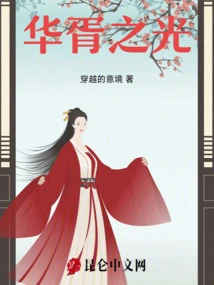
"Mother of the Nation Hua Xu" is like a fantasy journey across time and space. The novel intertwines ancient times and modern times. The core character Hua Xu has a striking birthmark of lightning between his eyebrows. Lei Ze's conception starts the inheritance of civilization. He leads the tribe to move west and return east, builds the nine tripods, and lays the foundation for the abdication system. It is a symbol of the glory of matrilineal society and the enlightenment of civilization. Fuxi, a boy who tamed horses, grew up to be the architect of civilization, creating gossip and inventing tools, but he was constantly in conflict with the divine power; Nuwa healed the body and mind with the twelve-rhythm bone flute, launched a textile revolution, formulated etiquette, and reconciled contradictions with gentleness. The supporting character Cangjie is obsessed with inventing characters and creating oracle bone archives, but he is stuck in the dilemma of promoting knowledge; the Wu Zhu team once held divine power, performed divination, medical treatment, and observed astronomical phenomena, and then clashed with rational civilization. Emperor Yan formed an alliance with the Huaxu tribe and integrated farming and nomadic civilization; Chiyou provoked a war over salt ponds and bronze technology. The inherited figures Gun and Yu took over the task of water control and deciphered the Jiuding river map; the Zhou royal family elevated Hua Xu to offer sacrifices. In the modern branch, archaeological captain Lin Yumo uses holographic projection and other technologies to explore the Huaxu Mausoleum, discovering many super-era relics, and persistently pursues the truth despite many difficulties. A group of painted pottery craftsmen create Yangshao cultural aesthetics, and nine expedition teams spread tribal skills. Together, they weave a grand picture of the evolution of human civilization, showing wonderful stories of civilization inheritance, ideological collision, and diverse integration from ancient times to modern times, leading readers to explore the lost code of civilization.
"Mother of the Nation Hua Xu" is like a fantasy journey across time and space. The novel intertwines ancient times and modern times. The core character Hua Xu has a striking birthmark of lightning between his eyebrows. Lei Ze's conception starts the inheritance of civilization. He leads the tribe to move west and return east, builds the nine tripods, and lays the foundation for the abdication system. It is a symbol of the glory of matrilineal society and the enlightenment of civilization. Fuxi, a boy who tamed horses, grew up to be the architect of civilization, creating gossip and inventing tools, but he was constantly in conflict with the divine power; Nuwa healed the body and mind with the twelve-rhythm bone flute, launched a textile revolution, formulated etiquette, and reconciled contradictions with gentleness. The supporting character Cangjie is obsessed with inventing characters and creating oracle bone archives, but he is stuck in the dilemma of promoting knowledge; the Wu Zhu team once held divine power, performed divination, medical treatment, and observed astronomical phenomena, and then clashed with rational civilization. Emperor Yan formed an alliance with the Huaxu tribe and integrated farming and nomadic civilization; Chiyou provoked a war over salt ponds and bronze technology. The inherited figures Gun and Yu took over the task of water control and deciphered the Jiuding river map; the Zhou royal family elevated Hua Xu to offer sacrifices. In the modern branch, archaeological captain Lin Yumo uses holographic projection and other technologies to explore the Huaxu Mausoleum, discovering many super-era relics, and persistently pursues the truth despite many difficulties. A group of painted pottery craftsmen create Yangshao cultural aesthetics, and nine expedition teams spread tribal skills. Together, they weave a grand picture of the evolution of human civilization, showing wonderful stories of civilization inheritance, ideological collision, and diverse integration from ancient times to modern times, leading readers to explore the lost code of civilization.