Library
Browse and search books
14 novels found
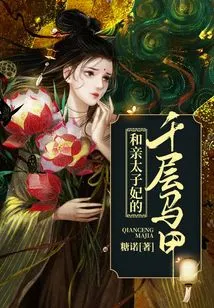
The Thousand Layer Vest of the Prince Consort
Ancient Romance和亲太子妃的千层马甲
Tangnuo
On the eve of the marriage of Prince Beiyan to Princess Shengliang, the little beggar A Zhao was sent to the marriage carriage and became the princess with the largest dowry. Faced with the prince's disgust and troublemaking, A Zhao was neither sad nor happy, and faced it calmly. However, when the old friends meet each other one by one, conspiracies, tricks, and frame-ups follow one after another, can A Zhao still cope with it calmly? When the hidden identity is revealed layer by layer, will the hidden truth gradually emerge?
On the eve of the marriage of Prince Beiyan to Princess Shengliang, the little beggar A Zhao was sent to the marriage carriage and became the princess with the largest dowry. Faced with the prince's disgust and troublemaking, A Zhao was neither sad nor happy, and faced it calmly. However, when the old friends meet each other one by one, conspiracies, tricks, and frame-ups follow one after another, can A Zhao still cope with it calmly? When the hidden identity is revealed layer by layer, will the hidden truth gradually emerge?
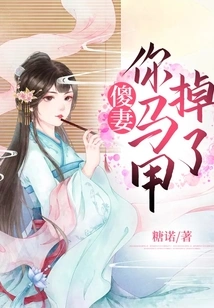
Silly Wife, Your Vest Fell Off
Ancient Romance傻妻,你马甲掉了
Tangnuo
[This is the story of a female bandit] Xie Tie is a bandit. A female bandit, and even a female bandit leader. Originally, Emperor Shangao was occupying a distant place in front of the local bully, until one day, the old emperor suddenly went on patrol incognito. Seeing that their ragtag group had good fighting ability, he waved his hand and ordered to recruit them. As a result, Xie Tie suddenly turned into a prince in purple clothes. Old Emperor: Where is the Purple-clothed Marquis whom I conferred? Xie Tie: Your Majesty, I'm here! Looking at the innocent-looking little girl in front of him, the old emperor was no longer calm. Why didn't anyone tell me that Xie Tie was a woman? --Two major events have happened to the Xie family in Pingle Town, Dancheng recently. The first thing is that the third girl of the Xie family who was kidnapped by bandits is back. But Ren is a fool. In this second incident, the talented and beautiful fourth girl of the Xie family was hired. "Male Protagonist Copywriting Short Plot" When Wei Ci was unconscious, his mother came back with a young wife for him. One day when he woke up, his wife kissed him with a bright smile. Wei Ci's ears turned red. Hehe (??) My heart was moved. Later, Wei Ci earned a royal title for his young daughter-in-law and came back. My mother's heart is not calm anymore. Unexpectedly, the little fool suddenly changed his identity and became a prince in purple clothes... What should I do if my daughter-in-law has a higher status than me? Wei Ci: Not afraid (?˙˙?)
[This is the story of a female bandit] Xie Tie is a bandit. A female bandit, and even a female bandit leader. Originally, Emperor Shangao was occupying a distant place in front of the local bully, until one day, the old emperor suddenly went on patrol incognito. Seeing that their ragtag group had good fighting ability, he waved his hand and ordered to recruit them. As a result, Xie Tie suddenly turned into a prince in purple clothes. Old Emperor: Where is the Purple-clothed Marquis whom I conferred? Xie Tie: Your Majesty, I'm here! Looking at the innocent-looking little girl in front of him, the old emperor was no longer calm. Why didn't anyone tell me that Xie Tie was a woman? --Two major events have happened to the Xie family in Pingle Town, Dancheng recently. The first thing is that the third girl of the Xie family who was kidnapped by bandits is back. But Ren is a fool. In this second incident, the talented and beautiful fourth girl of the Xie family was hired. "Male Protagonist Copywriting Short Plot" When Wei Ci was unconscious, his mother came back with a young wife for him. One day when he woke up, his wife kissed him with a bright smile. Wei Ci's ears turned red. Hehe (??) My heart was moved. Later, Wei Ci earned a royal title for his young daughter-in-law and came back. My mother's heart is not calm anymore. Unexpectedly, the little fool suddenly changed his identity and became a prince in purple clothes... What should I do if my daughter-in-law has a higher status than me? Wei Ci: Not afraid (?˙˙?)
将门嫡女难为妃
Tangnuo
I smile like a flower for you, but I can't wait for you to have a cup of tea. I have learned music, chess, calligraphy and painting, but I can't wait for you to be beautiful all my life. I wrote a sweet story for you, but I can't exchange for your lifelong concern. I wrote three lifetime love words for you, but I can't exchange for your red wedding dress.
I smile like a flower for you, but I can't wait for you to have a cup of tea. I have learned music, chess, calligraphy and painting, but I can't wait for you to be beautiful all my life. I wrote a sweet story for you, but I can't exchange for your lifelong concern. I wrote three lifetime love words for you, but I can't exchange for your red wedding dress.
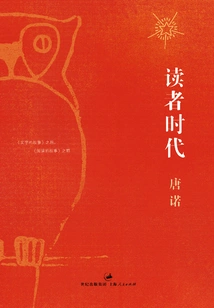
Reader Era
General Fiction读者时代
Tangnuo
"The Age of Readers" is a text that I have carefully read, thought about, and written carefully in the past three or four years for each of the amazing books (including movies) and the amazing writers behind them (seriousness is the only way you can repay these books and these people). The position they set for themselves is entry, not praise or criticism; what they seek is possibility to replace only one answer. Therefore, this is a reader's book, not a reviewer's book. The most difficult job they give themselves is how to summon the same kind in a world as vast as an ice field, so that each book can find people who read it.
"The Age of Readers" is a text that I have carefully read, thought about, and written carefully in the past three or four years for each of the amazing books (including movies) and the amazing writers behind them (seriousness is the only way you can repay these books and these people). The position they set for themselves is entry, not praise or criticism; what they seek is possibility to replace only one answer. Therefore, this is a reader's book, not a reviewer's book. The most difficult job they give themselves is how to summon the same kind in a world as vast as an ice field, so that each book can find people who read it.
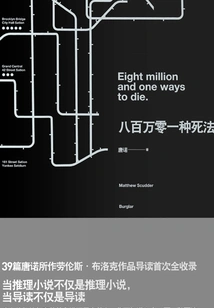
Eight Million and One Ways to Die
Literature八百万零一种死法
Tangnuo
The introduction to Tang Nuo's mystery novels has now become a whispered legend among some mystery fans, almost like a rare bird specimen, or a top-notch cellared wine of a certain vintage, or something like a fantasy. The text jumps gracefully like a samba step between classical humanistic education, city maps, poetic appreciation pedigrees, and a huge maze-like modern crime scene where "all deaths shuttle between incomparable magnificence and incomparable danger and cruelty." Bullock's characters like Matthew Scudder, a private detective, and Bernie Rodenbart, a natural-born thief, who are like his best friends, use their cold and sarcastic human images to face the injustice of modern cities that have lost sympathy and understanding. "A lonely man fights against a huge world of injustice."
The introduction to Tang Nuo's mystery novels has now become a whispered legend among some mystery fans, almost like a rare bird specimen, or a top-notch cellared wine of a certain vintage, or something like a fantasy. The text jumps gracefully like a samba step between classical humanistic education, city maps, poetic appreciation pedigrees, and a huge maze-like modern crime scene where "all deaths shuttle between incomparable magnificence and incomparable danger and cruelty." Bullock's characters like Matthew Scudder, a private detective, and Bernie Rodenbart, a natural-born thief, who are like his best friends, use their cold and sarcastic human images to face the injustice of modern cities that have lost sympathy and understanding. "A lonely man fights against a huge world of injustice."
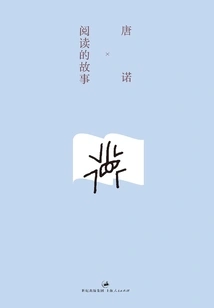
Reading Stories (new Edition)
Literature阅读的故事(新版)
Tangnuo
"Reading Stories" edited by Tang Nuo was originally well-intentioned, but the final result can only be honest. This original kindness is still retained in the title of each chapter, such as what to do if you can't read the book, what to do if you don't have time to read, and so on. The names of these chapters are like the fossilized remains of Jurassic dinosaurs, which proves that it really existed - originally, it not only tried to persuade people to read, but also tried to help people solve common problems that they may encounter during reading in a very practical way. It was a beautiful idea.
"Reading Stories" edited by Tang Nuo was originally well-intentioned, but the final result can only be honest. This original kindness is still retained in the title of each chapter, such as what to do if you can't read the book, what to do if you don't have time to read, and so on. The names of these chapters are like the fossilized remains of Jurassic dinosaurs, which proves that it really existed - originally, it not only tried to persuade people to read, but also tried to help people solve common problems that they may encounter during reading in a very practical way. It was a beautiful idea.
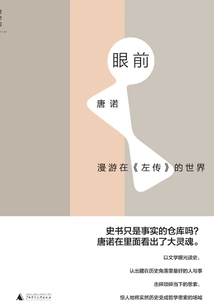
眼前:漫游在《左传》的世界
Tangnuo
Tang Nuo reads "Zuo Zhuan", the same Tang Nuo, but different historical prose writing. Tang Nuo repeatedly went in and out of the world of "Zuo Zhuan", trying again and again to enter the inner world of historical figures such as Zichan, Zhao Wu, Shen Gong Wuchen, and even Confucius and Zuo Qiuming, exploring what the most outstanding minds of the Spring and Autumn Period saw and thought at that time and place, and what kind of profound accumulation and thinking they had in certain words and deeds, thereby identifying the best people and best deeds hidden in the gaps in history, and making the Spring and Autumn Period present a more complex, profound, and three-dimensional world. Things of lust, stories about ghosts and gods, meetings to kill soldiers, the big soul of a small country, dreams from more than two thousand years ago, the flower-like thoughts of the Spring and Autumn Period and the Warring States Period... Starting from this, the author quoted from many sources, and explored and extended around eight questions from a literary perspective, amazingly turning actual history into a field of philosophical thinking. Thousand-year-old texts began to ripple into this moment, which is "Before My Eyes".
Tang Nuo reads "Zuo Zhuan", the same Tang Nuo, but different historical prose writing. Tang Nuo repeatedly went in and out of the world of "Zuo Zhuan", trying again and again to enter the inner world of historical figures such as Zichan, Zhao Wu, Shen Gong Wuchen, and even Confucius and Zuo Qiuming, exploring what the most outstanding minds of the Spring and Autumn Period saw and thought at that time and place, and what kind of profound accumulation and thinking they had in certain words and deeds, thereby identifying the best people and best deeds hidden in the gaps in history, and making the Spring and Autumn Period present a more complex, profound, and three-dimensional world. Things of lust, stories about ghosts and gods, meetings to kill soldiers, the big soul of a small country, dreams from more than two thousand years ago, the flower-like thoughts of the Spring and Autumn Period and the Warring States Period... Starting from this, the author quoted from many sources, and explored and extended around eight questions from a literary perspective, amazingly turning actual history into a field of philosophical thinking. Thousand-year-old texts began to ripple into this moment, which is "Before My Eyes".
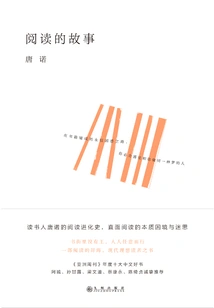
Read the Story
Literature阅读的故事
Tangnuo
"The Story of Reading" opens each chapter with a fragment from Marquez's "The General in the Labyrinth", exploring the essential dilemmas and various myths about books and reading. Fourteen articles touch on various aspects of reading - when, how to start, how much it costs, how to read, memory, limitations, meaning, confusion, etc. Tang Nuo honestly faces it, describes it, and provides readers with his own thinking and solutions to help readers solve various problems encountered during reading. He also shares with Borges, Calvino, Benjamin, Graham Greene and others to discuss the joy and confusion of reading, as well as the various feelings that reading can evoke. Tang Nuo uses the in-depth experience of a professional reader, the broad vision of a polymath, and the poetic and dense thinking path to open up an extremely broad and deep world for readers that has never been seen in the ordinary behavior of reading, a sea of meaning full of possibilities.
"The Story of Reading" opens each chapter with a fragment from Marquez's "The General in the Labyrinth", exploring the essential dilemmas and various myths about books and reading. Fourteen articles touch on various aspects of reading - when, how to start, how much it costs, how to read, memory, limitations, meaning, confusion, etc. Tang Nuo honestly faces it, describes it, and provides readers with his own thinking and solutions to help readers solve various problems encountered during reading. He also shares with Borges, Calvino, Benjamin, Graham Greene and others to discuss the joy and confusion of reading, as well as the various feelings that reading can evoke. Tang Nuo uses the in-depth experience of a professional reader, the broad vision of a polymath, and the poetic and dense thinking path to open up an extremely broad and deep world for readers that has never been seen in the ordinary behavior of reading, a sea of meaning full of possibilities.
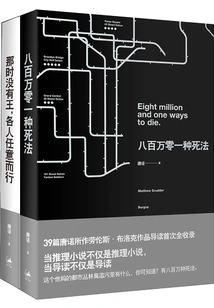
Introduction to Tang Nuo's Reasoning
General Fiction唐诺推理导读
Tangnuo
"Introduction to Tang Nuo's Reasoning" includes: "Eight Million and One Ways to Die" and "There was no king at that time, and everyone did as they pleased." "Eight Million and One Ways to Die" is not only a mystery novel, but also an introduction. Tang Nuo, who brought Lawrence Block to the Chinese-speaking world, has included all 39 mysteries in the Taiwanese version for the first time. "There was no king at that time, and everyone did as he pleased" is a model of Tangnuo-style writing that is free and easy, fully assembled. Cai Kangyong's private reading recommendation: "cultivate very precise and high-standard appreciation skills", read this book.
"Introduction to Tang Nuo's Reasoning" includes: "Eight Million and One Ways to Die" and "There was no king at that time, and everyone did as they pleased." "Eight Million and One Ways to Die" is not only a mystery novel, but also an introduction. Tang Nuo, who brought Lawrence Block to the Chinese-speaking world, has included all 39 mysteries in the Taiwanese version for the first time. "There was no king at that time, and everyone did as he pleased" is a model of Tangnuo-style writing that is free and easy, fully assembled. Cai Kangyong's private reading recommendation: "cultivate very precise and high-standard appreciation skills", read this book.
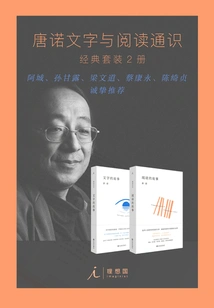
唐诺文字与阅读通识(经典套装2册)
Tangnuo
This collection of Tang Nuo's works includes the following two works: 1. "The Story of Reading" - the evolution history of reading by scholar Tang Nuo, facing the essential dilemmas and myths of reading; a sincere and practical reading guide; a dictionary of reading, modern ideal reading 2. "The Story of Words" - Tang Nuo, a word wanderer, a tracing and reasoning journey on Oracle Street; returning to the dawn of words, looking for the first clock of Oracle; an encyclopedic short history of Chinese characters, a majestic and interesting general reading book on words.
This collection of Tang Nuo's works includes the following two works: 1. "The Story of Reading" - the evolution history of reading by scholar Tang Nuo, facing the essential dilemmas and myths of reading; a sincere and practical reading guide; a dictionary of reading, modern ideal reading 2. "The Story of Words" - Tang Nuo, a word wanderer, a tracing and reasoning journey on Oracle Street; returning to the dawn of words, looking for the first clock of Oracle; an encyclopedic short history of Chinese characters, a majestic and interesting general reading book on words.
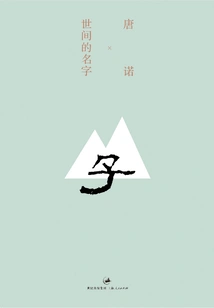
Worldly Name
Literature世间的名字
Tangnuo
"Names in the World" is the latest collection of essays by the famous book lover Tang Nuo. For the first time, it puts aside the categories of book reviews, introductions, and readings, and does not talk about books. It restores Tang Nuo himself as a prose writer. He is as focused as a hedgehog, as understanding as a fox, and his words are both lyrical and eloquent. Gentleness, talking about various appearances - rich man, smoker, liar; talking about various professions - doctor, tennis player, editor; talking about various identities - old man, brother, classmate and family. For Tang Nuo: depth is on the surface, and the name is the reality.
"Names in the World" is the latest collection of essays by the famous book lover Tang Nuo. For the first time, it puts aside the categories of book reviews, introductions, and readings, and does not talk about books. It restores Tang Nuo himself as a prose writer. He is as focused as a hedgehog, as understanding as a fox, and his words are both lyrical and eloquent. Gentleness, talking about various appearances - rich man, smoker, liar; talking about various professions - doctor, tennis player, editor; talking about various identities - old man, brother, classmate and family. For Tang Nuo: depth is on the surface, and the name is the reality.
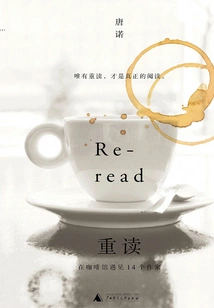
Rereading: Meeting 14 Writers in a Café
Literature重读:在咖啡馆遇见14个作家
Tangnuo
Better reading than an infinite list. The sixteen articles included in this book, sentence by sentence, were all written by the author in a cafe in Taipei at fixed times and places over several years. Unbridled thoughts about those great works that should be read again and again, about the themes and values of happiness that are being lost today, and even more about ourselves. Facing the infinite list of books and life, re-reading is rather a stop and turn back midway, to think clearly about what you want to get close to, what you see, and why you set out. Therefore, the so-called encounter is actually a guaranteed encounter: in the real world, good things disappear as quickly as they come. You have to search high and low and prepare yourself.
Better reading than an infinite list. The sixteen articles included in this book, sentence by sentence, were all written by the author in a cafe in Taipei at fixed times and places over several years. Unbridled thoughts about those great works that should be read again and again, about the themes and values of happiness that are being lost today, and even more about ourselves. Facing the infinite list of books and life, re-reading is rather a stop and turn back midway, to think clearly about what you want to get close to, what you see, and why you set out. Therefore, the so-called encounter is actually a guaranteed encounter: in the real world, good things disappear as quickly as they come. You have to search high and low and prepare yourself.
End
Literature尽头
Tangnuo
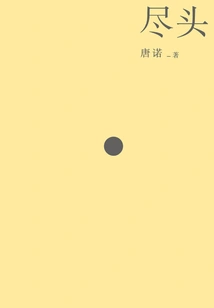
One of the most respected writers in the Chinese-speaking world, writer Tang Nuo's latest prose masterpiece. Using the end as a coordinate, explore our current situation here and now. Acheng, Zhu Tianwen and Liang Wendao are highly recommended. The end is often far away, but sometimes it is reality. Exploring the end is to look at the distance and the joy of reaching the distance. It is an effort to transcend the here and now. Taking the end as the coordinate and looking back at reality, we can discover when and where we are, what we have forgotten, and what we have missed. The writer Tang Nuo put the thoughts that have been lingering for many years into writing, using his unique poetic and speculative language to create a masterpiece of 450,000 words. About the distance, about writing, and more about the reality we live in.
One of the most respected writers in the Chinese-speaking world, writer Tang Nuo's latest prose masterpiece. Using the end as a coordinate, explore our current situation here and now. Acheng, Zhu Tianwen and Liang Wendao are highly recommended. The end is often far away, but sometimes it is reality. Exploring the end is to look at the distance and the joy of reaching the distance. It is an effort to transcend the here and now. Taking the end as the coordinate and looking back at reality, we can discover when and where we are, what we have forgotten, and what we have missed. The writer Tang Nuo put the thoughts that have been lingering for many years into writing, using his unique poetic and speculative language to create a masterpiece of 450,000 words. About the distance, about writing, and more about the reality we live in.
Seeking a Sword: Age·reading·writing
Literature求剑:年纪·阅读·书写
Tangnuo
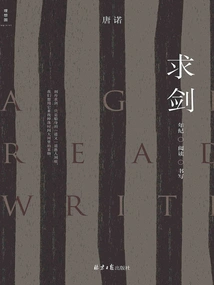
"Carving a boat to seek a sword. It's just a series of fool's marks on the hull. We want to use it to find something that has fallen into the river of time." "Asking for a Sword" is a new prose work by the writer Tang Nuo, with 23 pieces of heavy thinking on "age, reading, and writing". Tang Nuo, who is gradually entering his twilight years, adds the perspective of age to his daily reading and writing, turning it into a new perspective and new element for reading and writing. Increasing age every year forces writers to face an increasingly younger world at all times. The biggest advantage is that books also become younger. As a result, reading and writing create a calm and followable rotation, which can reveal step by step and penetrate into the place where the author hopes to reach. Tang Nuo uses the unique perspective of "age", his unique writing style and his thinking to reach the end of thinking, to take us into Woolf, Kundera, Turgenev, Dostoyevsky, Borges, Calvino, Herzen, Kant, Zhang Ailing , Zhu Tianxin, Agatha Christie, Yamada Yoji, Zhong Xiaoyang, Hou Hsiao-hsien, Ariyoshi Hiroyuki and others. From reading and writing to film and television variety shows, we can identify those things that are denser and more personal than words and images, and reopen our horizons. In the world of creation and writing, there is a trend that is close to a general rule. A creator who is really good, especially one who is willing to continue to focus on the world and people, will always slowly move towards the real world as his age, his cognitive progress, and the various wonderful maturations that time affects his body.
"Carving a boat to seek a sword. It's just a series of fool's marks on the hull. We want to use it to find something that has fallen into the river of time." "Asking for a Sword" is a new prose work by the writer Tang Nuo, with 23 pieces of heavy thinking on "age, reading, and writing". Tang Nuo, who is gradually entering his twilight years, adds the perspective of age to his daily reading and writing, turning it into a new perspective and new element for reading and writing. Increasing age every year forces writers to face an increasingly younger world at all times. The biggest advantage is that books also become younger. As a result, reading and writing create a calm and followable rotation, which can reveal step by step and penetrate into the place where the author hopes to reach. Tang Nuo uses the unique perspective of "age", his unique writing style and his thinking to reach the end of thinking, to take us into Woolf, Kundera, Turgenev, Dostoyevsky, Borges, Calvino, Herzen, Kant, Zhang Ailing , Zhu Tianxin, Agatha Christie, Yamada Yoji, Zhong Xiaoyang, Hou Hsiao-hsien, Ariyoshi Hiroyuki and others. From reading and writing to film and television variety shows, we can identify those things that are denser and more personal than words and images, and reopen our horizons. In the world of creation and writing, there is a trend that is close to a general rule. A creator who is really good, especially one who is willing to continue to focus on the world and people, will always slowly move towards the real world as his age, his cognitive progress, and the various wonderful maturations that time affects his body.