Library
Browse and search books
7 novels found
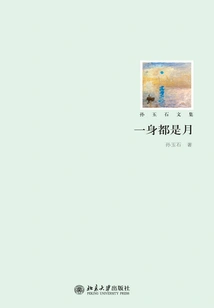
Full of Moons
Literature一身都是月
Sun Yushi
The main content of "My Body Is Full of Moon" includes: Looking back at the style of satirical literature of an era - the words of the editor of "Zhang Tianyi's Satirical Novels", "Only one can express everything - the editor's postscript to "Selected Poems of the Symbolist School", the bitter seeds harvest golden joy - "Appreciation of the outstanding literary works of contemporary Chinese college students" ·Preface to "Poetry Volume", hoping that "good stories" will not disappear in dreams - Wei Junxiu's preface to the reprint of "Lu Xun (Wild Grass) Exploration", approaching the voice of a departed nation - Lu Di compiled the preface to "Selected Poems of Contemporary Manchu Poets", a song of a short life - the preface to "Selected Prose of Zhu Xiang", etc.
The main content of "My Body Is Full of Moon" includes: Looking back at the style of satirical literature of an era - the words of the editor of "Zhang Tianyi's Satirical Novels", "Only one can express everything - the editor's postscript to "Selected Poems of the Symbolist School", the bitter seeds harvest golden joy - "Appreciation of the outstanding literary works of contemporary Chinese college students" ·Preface to "Poetry Volume", hoping that "good stories" will not disappear in dreams - Wei Junxiu's preface to the reprint of "Lu Xun (Wild Grass) Exploration", approaching the voice of a departed nation - Lu Di compiled the preface to "Selected Poems of Contemporary Manchu Poets", a song of a short life - the preface to "Selected Prose of Zhu Xiang", etc.
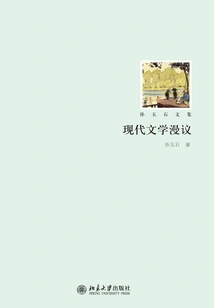
Random Discussion of Modern Literature
Literature现代文学漫议
Sun Yushi
The main content of "Modern Literature Review" includes: Lao She's artistic status and the update of the concept of modern literary history, exploration of the tragic psychology of Lao She and his works "Teahouse" and "Under the Red Flag", listening to Lao She's voice in Sendai, Japan, attached: the transcript of the recording of Lao She's speech in Sendai, Lao She's speech, Lao She's speech in the second session, the literary spirit and character that illuminates the future - written for the tenth anniversary of the death of Mr. Ye Shengtao, on Yang Hui's literary thoughts and literary criticism, etc.
The main content of "Modern Literature Review" includes: Lao She's artistic status and the update of the concept of modern literary history, exploration of the tragic psychology of Lao She and his works "Teahouse" and "Under the Red Flag", listening to Lao She's voice in Sendai, Japan, attached: the transcript of the recording of Lao She's speech in Sendai, Lao She's speech, Lao She's speech in the second session, the literary spirit and character that illuminates the future - written for the tenth anniversary of the death of Mr. Ye Shengtao, on Yang Hui's literary thoughts and literary criticism, etc.
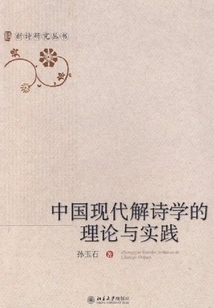
中国现代解诗学的理论与实践
Sun Yushi
Since the emergence of modern Chinese poetry, especially modern new poetry, it has been facing the question of being "difficult to understand". This book aims at this problem, based on the efforts of Zhu Ziqing, Wen Yiduo and others to "interpret poetry", starting from the internal construction and external environment of new poetry, trying to establish a new path for interpreting modern Chinese poetry, especially modern poetry.
Since the emergence of modern Chinese poetry, especially modern new poetry, it has been facing the question of being "difficult to understand". This book aims at this problem, based on the efforts of Zhu Ziqing, Wen Yiduo and others to "interpret poetry", starting from the internal construction and external environment of new poetry, trying to establish a new path for interpreting modern Chinese poetry, especially modern poetry.
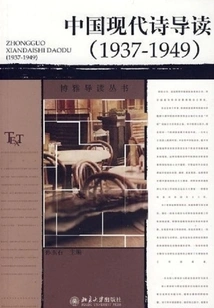
中国现代诗导读(1937-1949)
Sun Yushi
Modern Chinese poetry, also called "new poetry", refers to the vernacular poetry that originated from the "May Fourth Movement" period to the founding of New China in 1949, that is, poetry that uses modern Chinese, freely expresses thoughts and feelings, and is eclectic in form. This book contains many literary dialogues between poets and poet interpreters.
Modern Chinese poetry, also called "new poetry", refers to the vernacular poetry that originated from the "May Fourth Movement" period to the founding of New China in 1949, that is, poetry that uses modern Chinese, freely expresses thoughts and feelings, and is eclectic in form. This book contains many literary dialogues between poets and poet interpreters.
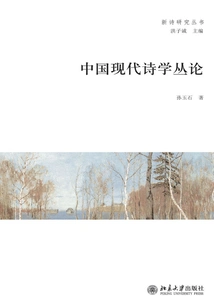
中国现代诗学丛论
Sun Yushi
Introduction to "Chinese Modern Poetics Series": The 1930s is considered the "golden age" for the development of new Chinese poetry. "Chinese Modern Poetics Series" is divided into three parts. The first part studies the occurrence and transformation of the modern poetry trend in this period, the artistic connection between foreign poetry trends and traditional poetry, and makes in-depth discussions on Lin Geng, Fei Ming, He Qifang, etc. The second part uses a historical narrative to review the development process of new poetry in the past 30 years and reflect on it. The third part explores and analyzes the writings of many poets, revealing their artistic personality and poetic thoughts.
Introduction to "Chinese Modern Poetics Series": The 1930s is considered the "golden age" for the development of new Chinese poetry. "Chinese Modern Poetics Series" is divided into three parts. The first part studies the occurrence and transformation of the modern poetry trend in this period, the artistic connection between foreign poetry trends and traditional poetry, and makes in-depth discussions on Lin Geng, Fei Ming, He Qifang, etc. The second part uses a historical narrative to review the development process of new poetry in the past 30 years and reflect on it. The third part explores and analyzes the writings of many poets, revealing their artistic personality and poetic thoughts.
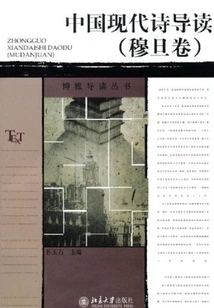
中国现代诗导读(穆旦卷)
Sun Yushi
Modern Chinese poetry, also called "new poetry", refers to the vernacular poetry that originated from the "May Fourth Movement" period to the founding of New China in 1949, that is, poetry that uses modern Chinese, freely expresses thoughts and feelings, and is eclectic in form. This book contains many literary dialogues between poets and poet interpreters.
Modern Chinese poetry, also called "new poetry", refers to the vernacular poetry that originated from the "May Fourth Movement" period to the founding of New China in 1949, that is, poetry that uses modern Chinese, freely expresses thoughts and feelings, and is eclectic in form. This book contains many literary dialogues between poets and poet interpreters.
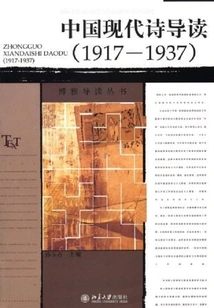
中国现代诗导读(1917-1937)
Sun Yushi
"Introduction to Modern Chinese Poetry (1917-1937)" contains many literary dialogues between poets and poetry interpreters, which can be read by those engaged in related research or readers who are interested in Chinese literature. Modern Chinese poetry, also called "new poetry", refers to the vernacular poetry that originated from the "May Fourth Movement" period to the founding of New China in 1949, that is, poetry that uses modern Chinese, freely expresses thoughts and feelings, and is eclectic in form.
"Introduction to Modern Chinese Poetry (1917-1937)" contains many literary dialogues between poets and poetry interpreters, which can be read by those engaged in related research or readers who are interested in Chinese literature. Modern Chinese poetry, also called "new poetry", refers to the vernacular poetry that originated from the "May Fourth Movement" period to the founding of New China in 1949, that is, poetry that uses modern Chinese, freely expresses thoughts and feelings, and is eclectic in form.