Library
Browse and search books
6 novels found
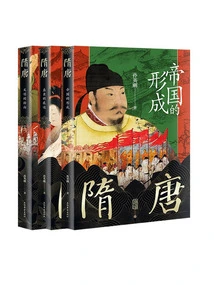
孙英刚精讲隋唐史(全三册)
Sun Yinggang
This book breaks away from the traditional writing method that takes political history as the main line. It selects representative figures among the Guanlong nobles and Shandong heroes. It introduces the formation of the Sui and Tang ruling classes and their national character from various dimensions, such as family networks, religious beliefs, regional characteristics, etc. Each volume is divided into ten chapters, mainly in chronological order, with selected important historical nodes and historical figures discussed and examined. The whole book not only retains the original literature materials, but also adds the author's wonderful explanations, allowing readers to read selectively. The latest research papers are specially noted in the footnotes to assist readers in need of further reading. There is also a "Tell me more" unit at the end of each chapter, which introduces readers to the methods of reading history and the key points of the chapter.
This book breaks away from the traditional writing method that takes political history as the main line. It selects representative figures among the Guanlong nobles and Shandong heroes. It introduces the formation of the Sui and Tang ruling classes and their national character from various dimensions, such as family networks, religious beliefs, regional characteristics, etc. Each volume is divided into ten chapters, mainly in chronological order, with selected important historical nodes and historical figures discussed and examined. The whole book not only retains the original literature materials, but also adds the author's wonderful explanations, allowing readers to read selectively. The latest research papers are specially noted in the footnotes to assist readers in need of further reading. There is also a "Tell me more" unit at the end of each chapter, which introduces readers to the methods of reading history and the key points of the chapter.
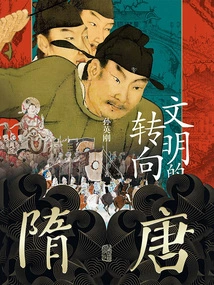
隋唐:文明的转向
Sun Yinggang
This volume fully presents the panoramic view of the Anshi Rebellion and explains in detail the separatist regime of vassal towns in the late Tang Dynasty. The main feature of this period is that the Tang Dynasty's attempt to revitalize the country was intertwined with the separatism of feudal vassal towns, partisanship, and the dictatorship of eunuchs. Each volume is divided into ten chapters, mainly in chronological order, with selected important historical nodes and historical figures discussed and examined. The whole book not only retains the original literature materials, but also adds the author's wonderful explanations, allowing readers to read selectively. The latest research papers are specially noted in the footnotes to assist readers in need of further reading. There is also a "Tell me more" unit at the end of each chapter, which introduces readers to the methods of reading history and the key points of the chapter.
This volume fully presents the panoramic view of the Anshi Rebellion and explains in detail the separatist regime of vassal towns in the late Tang Dynasty. The main feature of this period is that the Tang Dynasty's attempt to revitalize the country was intertwined with the separatism of feudal vassal towns, partisanship, and the dictatorship of eunuchs. Each volume is divided into ten chapters, mainly in chronological order, with selected important historical nodes and historical figures discussed and examined. The whole book not only retains the original literature materials, but also adds the author's wonderful explanations, allowing readers to read selectively. The latest research papers are specially noted in the footnotes to assist readers in need of further reading. There is also a "Tell me more" unit at the end of each chapter, which introduces readers to the methods of reading history and the key points of the chapter.
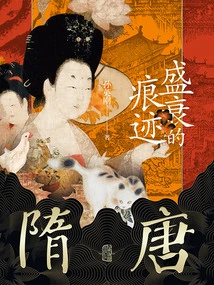
隋唐:盛衰的痕迹
Sun Yinggang
This volume begins with the Queen's accession to the throne and spans from the prosperous Kaiyuan era to the eve of the Anshi Rebellion. "Cosmopolitanism" has been the most commonly used concept by Chinese and foreign scholars for half a century to describe the Tang Dynasty. The characteristics of this kind of cosmopolitanism are robustness and tolerance, and it recreates Chinese civilization with an openness to all rivers, thereby bringing about the brilliance and glory of religion, culture, institutions, and knowledge. In the Tang Dynasty, especially in the prosperous Tang Dynasty and before, the Huayi debate did not occupy the mainstream. Emperor Taizong of the Tang Dynasty believed that both Huayi and Huayi were his own people. This book starts from the time when Empress Wu comes to power, spanning from the end of the prosperous Kaiyuan era to before the Anshi Rebellion. This period is a key turning point in the prosperity and decline of the Tang Dynasty, and it is also the period with the most distinctive characteristics of "cosmopolitanism" in the Sui and Tang Dynasties. Each volume is divided into ten chapters, mainly in chronological order, with selected important historical nodes and historical figures discussed and examined. The whole book not only retains the original literature materials, but also adds the author's wonderful explanations, allowing readers to read selectively. The latest research papers are specially noted in the footnotes to assist readers in need of further reading. There is also a "Tell me more" unit at the end of each chapter, which introduces readers to the methods of reading history and the key points of the chapter.
This volume begins with the Queen's accession to the throne and spans from the prosperous Kaiyuan era to the eve of the Anshi Rebellion. "Cosmopolitanism" has been the most commonly used concept by Chinese and foreign scholars for half a century to describe the Tang Dynasty. The characteristics of this kind of cosmopolitanism are robustness and tolerance, and it recreates Chinese civilization with an openness to all rivers, thereby bringing about the brilliance and glory of religion, culture, institutions, and knowledge. In the Tang Dynasty, especially in the prosperous Tang Dynasty and before, the Huayi debate did not occupy the mainstream. Emperor Taizong of the Tang Dynasty believed that both Huayi and Huayi were his own people. This book starts from the time when Empress Wu comes to power, spanning from the end of the prosperous Kaiyuan era to before the Anshi Rebellion. This period is a key turning point in the prosperity and decline of the Tang Dynasty, and it is also the period with the most distinctive characteristics of "cosmopolitanism" in the Sui and Tang Dynasties. Each volume is divided into ten chapters, mainly in chronological order, with selected important historical nodes and historical figures discussed and examined. The whole book not only retains the original literature materials, but also adds the author's wonderful explanations, allowing readers to read selectively. The latest research papers are specially noted in the footnotes to assist readers in need of further reading. There is also a "Tell me more" unit at the end of each chapter, which introduces readers to the methods of reading history and the key points of the chapter.
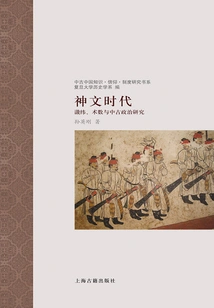
神文时代:谶纬、术数与中古政治研究
Sun Yinggang
This book focuses on the content of Weishu in medieval writings and the Weixue thoughts embodied in specific political activities, and explores the relationship between knowledge, belief and political legitimacy in the Middle Ages. In the context where there is no modern political theory to rely on, "peace", "auspiciousness", "disaster", "mandate of destiny", etc. Are the main political languages. The "Dragon Picture", "Fengji", "Jingyun", "Heqing", etc. Are the main political symbols. The topics covered in this book are not only an important part of the world of knowledge and belief in the Middle Ages, but also relate to the relationship between political ups and downs and ideological ups and downs. Using the Middle Ages as a sample, we also have some thoughts on understanding the shaping of political legitimacy throughout human history.
This book focuses on the content of Weishu in medieval writings and the Weixue thoughts embodied in specific political activities, and explores the relationship between knowledge, belief and political legitimacy in the Middle Ages. In the context where there is no modern political theory to rely on, "peace", "auspiciousness", "disaster", "mandate of destiny", etc. Are the main political languages. The "Dragon Picture", "Fengji", "Jingyun", "Heqing", etc. Are the main political symbols. The topics covered in this book are not only an important part of the world of knowledge and belief in the Middle Ages, but also relate to the relationship between political ups and downs and ideological ups and downs. Using the Middle Ages as a sample, we also have some thoughts on understanding the shaping of political legitimacy throughout human history.
灿烂辉煌的开放世界:隋唐五代
Sun Yinggang
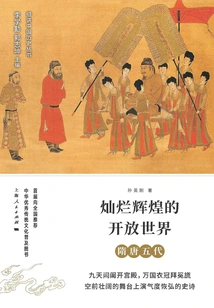
The "Chinese History Series in Detail" is co-edited by the famous scholar Li Xueqin and the publisher Guo Zhikun, and is a credible and popular Chinese history written by the new generation of Chinese scholars. During the Sui and Tang Dynasties, the unified era of peace came again. The country was prosperous, the politics were clear, and the country actively absorbed foreign cultures. It was the world's leader in politics, economy, culture and other aspects at that time, which greatly affected the world, especially the surrounding countries in East Asia. This era is often regarded as an era of vigorous self-confidence in Chinese civilization. This book "The Brilliant and Brilliant Open World: Sui, Tang and Five Dynasties" provides a unique interpretation of the history of the Sui, Tang and Five Dynasties from the perspective of Chinese history and Asian history. The ups and downs and cultural integration of the East Asian pattern, the expansion and cultural confidence of the Sui and Tang empires, the Anshi Rebellion and the defeat of the Tang Dynasty, and the brief division and reunification of the Five Dynasties and Ten Kingdoms are all wonderfully presented in it.
The "Chinese History Series in Detail" is co-edited by the famous scholar Li Xueqin and the publisher Guo Zhikun, and is a credible and popular Chinese history written by the new generation of Chinese scholars. During the Sui and Tang Dynasties, the unified era of peace came again. The country was prosperous, the politics were clear, and the country actively absorbed foreign cultures. It was the world's leader in politics, economy, culture and other aspects at that time, which greatly affected the world, especially the surrounding countries in East Asia. This era is often regarded as an era of vigorous self-confidence in Chinese civilization. This book "The Brilliant and Brilliant Open World: Sui, Tang and Five Dynasties" provides a unique interpretation of the history of the Sui, Tang and Five Dynasties from the perspective of Chinese history and Asian history. The ups and downs and cultural integration of the East Asian pattern, the expansion and cultural confidence of the Sui and Tang empires, the Anshi Rebellion and the defeat of the Tang Dynasty, and the brief division and reunification of the Five Dynasties and Ten Kingdoms are all wonderfully presented in it.
隋唐:帝国的形成
Sun Yinggang
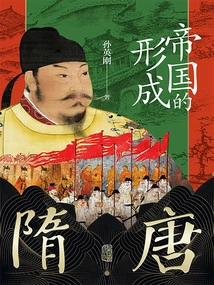
This book begins with Emperor Wen of the Sui Dynasty and ends with Empress Wu taking power. During this period, aristocratic politics was still the main thread of Chinese history. This is especially reflected in the emergence of a large number of princely political groups. For example, Yang Guang, the king of Jin in the Sui Dynasty, seized the throne of Prince Yang Yong; Li Shimin, the king of Qin in the Tang Dynasty, launched the Xuanwumen coup, killed his elder brother and younger brother, and seized the throne; Li Shimin's sons were also eager to try, coveting the highest power. The major families in the ruling class make their own bets, or even bet on both sides, hoping to maintain their political status. Even Wu Zetian, whose surname was foreign, was able to seize the throne and become the only empress in Chinese history. In addition, this book breaks away from the traditional writing method that takes political history as the main line. It selects representative figures among the Guanlong nobles and Shandong heroes, and introduces the formation of the Sui and Tang ruling classes and their national character from various dimensions, such as family networks, religious beliefs, regional characteristics, etc. Each volume is divided into ten chapters, mainly in chronological order, with selected important historical nodes and historical figures discussed and examined. The whole book not only retains the original literature materials, but also adds the author's wonderful explanations, allowing readers to read selectively. The latest research papers are specially noted in the footnotes to assist readers in need of further reading. There is also a "Tell me more" unit at the end of each chapter, which introduces readers to the methods of reading history and the key points of the chapter.
This book begins with Emperor Wen of the Sui Dynasty and ends with Empress Wu taking power. During this period, aristocratic politics was still the main thread of Chinese history. This is especially reflected in the emergence of a large number of princely political groups. For example, Yang Guang, the king of Jin in the Sui Dynasty, seized the throne of Prince Yang Yong; Li Shimin, the king of Qin in the Tang Dynasty, launched the Xuanwumen coup, killed his elder brother and younger brother, and seized the throne; Li Shimin's sons were also eager to try, coveting the highest power. The major families in the ruling class make their own bets, or even bet on both sides, hoping to maintain their political status. Even Wu Zetian, whose surname was foreign, was able to seize the throne and become the only empress in Chinese history. In addition, this book breaks away from the traditional writing method that takes political history as the main line. It selects representative figures among the Guanlong nobles and Shandong heroes, and introduces the formation of the Sui and Tang ruling classes and their national character from various dimensions, such as family networks, religious beliefs, regional characteristics, etc. Each volume is divided into ten chapters, mainly in chronological order, with selected important historical nodes and historical figures discussed and examined. The whole book not only retains the original literature materials, but also adds the author's wonderful explanations, allowing readers to read selectively. The latest research papers are specially noted in the footnotes to assist readers in need of further reading. There is also a "Tell me more" unit at the end of each chapter, which introduces readers to the methods of reading history and the key points of the chapter.