Library
Browse and search books
1 novel found
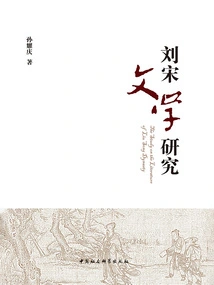
Research on Liu and Song Literature
Literature刘宋文学研究
Sun Yaoqing
Liu Song literature occupies an important position in the literature of the Six Dynasties. This article, on the basis of mastering the literature and materials related to Liu Song literature as much as possible, combined with the political system, cultural thought, scholar mentality, etc. Of this period, explains the style and artistic characteristics of Liu Song's works, explores the evolution process of literature in this period and its significance, and examines the doubtful issues of Liu Song writers. (1) The poetry of Liu Song Dynasty downplayed the mystical flavor and boring feeling in the poetry of the Eastern Jin Dynasty, and realized the return to literature and the image and aesthetics of poetry. The exploration of poetic styles by Bao Zhao, Xie Zhuang and others promoted the emergence and development of miscellaneous words and seven-character styles. (2) On the one hand, the Ci and Fu of Liu and Song Dynasties maintained the characteristics of style arrangement, and on the other hand, they added functions such as environment creation and lyricism, evolving in the direction of poetic characteristics, and profoundly influenced the development of Qi and Liang Ci and Fu. (3) The writings of Liu and Song Dynasties experienced the process of prose, parallel prose, mixed prose, and parallel prose, realizing the transformation from "ancient" to "parallel". (4) The significance of "transition" in Liu and Song literature is embodied in the transformation from reason to emotion, from talent to learning, and from elegance to vulgarity. (5) There are many doubts about the writers of Liu and Song Dynasties, which this article conducts research on. After examination, Yuan Shu served as the priest of the Yikang Army of Pengcheng King, the wine guard, the prefect of Xuancheng, and the concubine of the prince in the eighth, nineteenth, and twenty-fourth years of Yuanjia respectively. Wang Wei did not die of regret and grief due to misdiagnosis by his younger brother Seng Qian as historical records say, but he died of poisoning due to taking Hanshi Powder for many years. Etc.
Liu Song literature occupies an important position in the literature of the Six Dynasties. This article, on the basis of mastering the literature and materials related to Liu Song literature as much as possible, combined with the political system, cultural thought, scholar mentality, etc. Of this period, explains the style and artistic characteristics of Liu Song's works, explores the evolution process of literature in this period and its significance, and examines the doubtful issues of Liu Song writers. (1) The poetry of Liu Song Dynasty downplayed the mystical flavor and boring feeling in the poetry of the Eastern Jin Dynasty, and realized the return to literature and the image and aesthetics of poetry. The exploration of poetic styles by Bao Zhao, Xie Zhuang and others promoted the emergence and development of miscellaneous words and seven-character styles. (2) On the one hand, the Ci and Fu of Liu and Song Dynasties maintained the characteristics of style arrangement, and on the other hand, they added functions such as environment creation and lyricism, evolving in the direction of poetic characteristics, and profoundly influenced the development of Qi and Liang Ci and Fu. (3) The writings of Liu and Song Dynasties experienced the process of prose, parallel prose, mixed prose, and parallel prose, realizing the transformation from "ancient" to "parallel". (4) The significance of "transition" in Liu and Song literature is embodied in the transformation from reason to emotion, from talent to learning, and from elegance to vulgarity. (5) There are many doubts about the writers of Liu and Song Dynasties, which this article conducts research on. After examination, Yuan Shu served as the priest of the Yikang Army of Pengcheng King, the wine guard, the prefect of Xuancheng, and the concubine of the prince in the eighth, nineteenth, and twenty-fourth years of Yuanjia respectively. Wang Wei did not die of regret and grief due to misdiagnosis by his younger brother Seng Qian as historical records say, but he died of poisoning due to taking Hanshi Powder for many years. Etc.