Library
Browse and search books
2 novels found
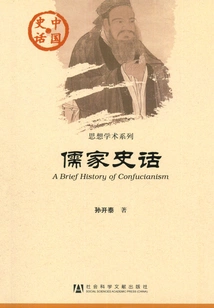
Confucian History
History儒家史话
Sun Kaitai
China has been a multi-ethnic country since ancient times, and its culture has been diverse since ancient times. Confucius inherited the traditional culture of Xia, Shang and Zhou, compiled the Six Classics, and founded Confucianism. Later, Confucianism was first promoted by Mencius, a Confucian master in the mid-Warring States Period, and then highly praised by Emperor Wu of the Western Han Dynasty. It then experienced a relative decline during the Wei, Jin, Southern and Northern Dynasties, Sui and Tang Dynasties, and then experienced a great rise in the Song, Yuan, Ming and Qing dynasties. It gradually formed the characteristics of being compatible with various thoughts such as Confucianism, Buddhism, and Taoism, but with Confucianism as the mainstay, thus showing considerable vitality. Judging from the development of Confucianism in ancient China and its impact on ancient and modern China, we should see the development of Confucianism itself and view Confucianism in a more objective manner. We should give full play to its strengths and remove its dross to promote its better development in the new era.
China has been a multi-ethnic country since ancient times, and its culture has been diverse since ancient times. Confucius inherited the traditional culture of Xia, Shang and Zhou, compiled the Six Classics, and founded Confucianism. Later, Confucianism was first promoted by Mencius, a Confucian master in the mid-Warring States Period, and then highly praised by Emperor Wu of the Western Han Dynasty. It then experienced a relative decline during the Wei, Jin, Southern and Northern Dynasties, Sui and Tang Dynasties, and then experienced a great rise in the Song, Yuan, Ming and Qing dynasties. It gradually formed the characteristics of being compatible with various thoughts such as Confucianism, Buddhism, and Taoism, but with Confucianism as the mainstay, thus showing considerable vitality. Judging from the development of Confucianism in ancient China and its impact on ancient and modern China, we should see the development of Confucianism itself and view Confucianism in a more objective manner. We should give full play to its strengths and remove its dross to promote its better development in the new era.
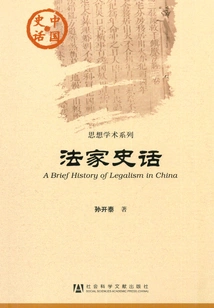
Legalist History
History法家史话
Sun Kaitai
Legalism is one of the hundreds of schools of thought in the pre-Qin period. It is a school guided by the legal system. Its academic thoughts mainly include three aspects: law, technique and momentum. The founder of Legalism was Li Kui, and his book "The Book of Laws" has been the theoretical basis of later Legalism. After that, Wu Qi's practice of Legalist thought in Wei and Chu, Shen Buhe's development of Legalist "shu" thought, Shen Dao's development of Legalist "shi" thought, Shang Yang's two reforms in Qin, and Han Fei's comprehensive summary of Legalist theory, all of which continuously improved Legalist thought step by step. This book focuses on this to introduce readers to the development process of Legalist thought in the pre-Qin period, and at the same time provides an in-depth analysis of its far-reaching impact on society after Qin.
Legalism is one of the hundreds of schools of thought in the pre-Qin period. It is a school guided by the legal system. Its academic thoughts mainly include three aspects: law, technique and momentum. The founder of Legalism was Li Kui, and his book "The Book of Laws" has been the theoretical basis of later Legalism. After that, Wu Qi's practice of Legalist thought in Wei and Chu, Shen Buhe's development of Legalist "shu" thought, Shen Dao's development of Legalist "shi" thought, Shang Yang's two reforms in Qin, and Han Fei's comprehensive summary of Legalist theory, all of which continuously improved Legalist thought step by step. This book focuses on this to introduce readers to the development process of Legalist thought in the pre-Qin period, and at the same time provides an in-depth analysis of its far-reaching impact on society after Qin.