Library
Browse and search books
3 novels found
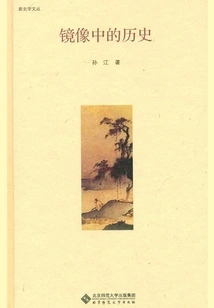
History in the Mirror
History镜像中的历史
Sun Jiang
Historical writing is to present things that are not present to readers. It is an act of representation. Therefore, writers need to always question their own limitations. This book collects 22 short and long articles written by the author in the past 15 years, showing the possibility of approaching history from three perspectives: social history, history of mind (memory research), and conceptual history. It is not only a record of the author's practice of "glocalization" narrative, but also a mirror for understanding contemporary new historiography.
Historical writing is to present things that are not present to readers. It is an act of representation. Therefore, writers need to always question their own limitations. This book collects 22 short and long articles written by the author in the past 15 years, showing the possibility of approaching history from three perspectives: social history, history of mind (memory research), and conceptual history. It is not only a record of the author's practice of "glocalization" narrative, but also a mirror for understanding contemporary new historiography.
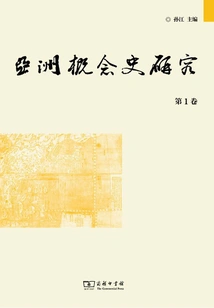
亚洲概念史研究(第1卷)
Sun Jiang
This book is the first volume of the academic magazine "Research on Asian Conceptual History". This book collects a total of eleven papers and one conference minutes. It promotes the study of the history of Asian concepts in four parts: "Translation Concept", "History Writing", "Knowledge Archeology" and "Methodological Turn". It attempts to examine how Western concepts are translated into Chinese character concepts from the perspective of East-West comparison, as well as the interactive relationship between concepts in different countries and regions within the Chinese character circle, thereby revealing the similarities and differences of modernity in the East Asian circle.
This book is the first volume of the academic magazine "Research on Asian Conceptual History". This book collects a total of eleven papers and one conference minutes. It promotes the study of the history of Asian concepts in four parts: "Translation Concept", "History Writing", "Knowledge Archeology" and "Methodological Turn". It attempts to examine how Western concepts are translated into Chinese character concepts from the perspective of East-West comparison, as well as the interactive relationship between concepts in different countries and regions within the Chinese character circle, thereby revealing the similarities and differences of modernity in the East Asian circle.
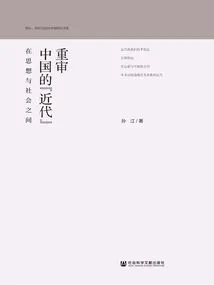
重审中国的“近代”:在思想与社会之间
Sun Jiang
Looking back at Chinese history in the past forty years, social history emerged in the first ten years, and conceptual history became prominent in the second decade. Social history explores the context behind a text, while conceptual history focuses on the language and structure of the text. This book is divided into four parts with twelve chapters. The first part examines the relationship between Manchu and Han under the rule of the Qing Dynasty. The second part combs through the introduction and reproduction of modern Western knowledge. The third part discusses the relationship between self and other inherent in "modern China" from the perspective of religion. The fourth part involves the method of historical understanding. As an empirical research monograph that interprets the outline of "modern China", this book believes that the interactive use of social history methods and conceptual history methods can be regarded as a feasible way to get rid of metaphysical entanglements.
Looking back at Chinese history in the past forty years, social history emerged in the first ten years, and conceptual history became prominent in the second decade. Social history explores the context behind a text, while conceptual history focuses on the language and structure of the text. This book is divided into four parts with twelve chapters. The first part examines the relationship between Manchu and Han under the rule of the Qing Dynasty. The second part combs through the introduction and reproduction of modern Western knowledge. The third part discusses the relationship between self and other inherent in "modern China" from the perspective of religion. The fourth part involves the method of historical understanding. As an empirical research monograph that interprets the outline of "modern China", this book believes that the interactive use of social history methods and conceptual history methods can be regarded as a feasible way to get rid of metaphysical entanglements.