Library
Browse and search books
3 novels found
![From Naha to Shanghai: Living in a State of Liminality [one Page]](https://bucket.daosearch.io/books/1307575043.jpg)
从那霸到上海:在临界状态中生活【一页】
Sun Ge
This book uses Japan's nuclear leakage in 2011 as an introduction to observe and analyze the various real mechanisms of Japanese society in the sudden disaster, and proposes the significance of maintaining critical thinking in a modern society full of crises. Okinawa, which coexists with the US military base, has lived in a critical state for a long time. Because of this, the small Okinawa, in an unfree historical situation, broke through the logic of country and sovereignty and burst out free political imagination. The author pays attention to the ideological power of Okinawa and uses this as a starting point to rediscover Sino-Japanese relations, East Asian political order and even the pattern of world civilization.
This book uses Japan's nuclear leakage in 2011 as an introduction to observe and analyze the various real mechanisms of Japanese society in the sudden disaster, and proposes the significance of maintaining critical thinking in a modern society full of crises. Okinawa, which coexists with the US military base, has lived in a critical state for a long time. Because of this, the small Okinawa, in an unfree historical situation, broke through the logic of country and sovereignty and burst out free political imagination. The author pays attention to the ideological power of Okinawa and uses this as a starting point to rediscover Sino-Japanese relations, East Asian political order and even the pattern of world civilization.
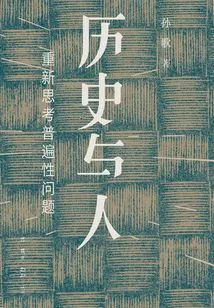
历史与人:重新思考普遍性问题
Sun Ge
It was compiled and revised based on a series of lectures by the famous scholar Sun Ge. It collects the author's new work progress and breakthroughs in the study of intellectual history in recent years. The book contains three interrelated chapters. The first chapter re-discusses the "universality issue" from an epistemological perspective. It believes that the knowledge practice method corresponding to the new universality is not to abstract the discussion, but to further open up differences and establish connections at the concrete level by deepening the discussion of concreteness and particularity. Chapter 2 deals with the debate in Japan's postwar intellectual circles surrounding the book "History of the Showa" written by Marxist historians, and touches on the issue of how historical writing deals with people. The third chapter discusses Mizoguchi Yuzo's research philosophy on the history of Chinese thought, grasps Mizoguchi's discussion of "nature", "heart", and "public and private", and points out Mizoguchi's unique ability to grasp the dynamics of Chinese history.
It was compiled and revised based on a series of lectures by the famous scholar Sun Ge. It collects the author's new work progress and breakthroughs in the study of intellectual history in recent years. The book contains three interrelated chapters. The first chapter re-discusses the "universality issue" from an epistemological perspective. It believes that the knowledge practice method corresponding to the new universality is not to abstract the discussion, but to further open up differences and establish connections at the concrete level by deepening the discussion of concreteness and particularity. Chapter 2 deals with the debate in Japan's postwar intellectual circles surrounding the book "History of the Showa" written by Marxist historians, and touches on the issue of how historical writing deals with people. The third chapter discusses Mizoguchi Yuzo's research philosophy on the history of Chinese thought, grasps Mizoguchi's discussion of "nature", "heart", and "public and private", and points out Mizoguchi's unique ability to grasp the dynamics of Chinese history.
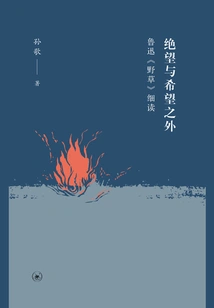
绝望与希望之外:鲁迅《野草》细读
Sun Ge
It is generally believed that "Wild Grass" is the work that best reveals the author's "truth and depth of soul" and the true life state of Lu Xun. Sun Ge takes Lu Xun and "Wild Grass" as the research objects of intellectual history, and uses the unique ideological paths of Takeuchi Yoshi and Mizoguchi Yuzo to reinterpret the relationship between Lu Xun and tradition, Lu Xun's loneliness, fighting and perseverance after the ebb of the May Fourth Movement, and Lu Xun's profound experience and life thinking of pursuing the origin of life "beyond despair and hope". By carefully reading 23 articles one by one, the author reinterpreted the core concepts in "Weeds" such as "intermediate objects", "between light and darkness", and "the array of nothingness". In particular, he gained a unique understanding of Lu Xun's "truth-seeking" consciousness and his "anti-traditional" thoughts. The author believes that Lu Xun is not a general "anti-tradition", but "has always inherited some of the most critical elements in tradition in a fractured and decisive way." Therefore, it is necessary to clarify the multi-faceted and ambiguous nature of "tradition" and to analyze the decomposition and transformation of tradition in modern times. In this sense, Lu Xun's "truth-seeking" is in the same vein as Li Zhuowu in the late Ming Dynasty. In fact, he "entered the context of tradition and selectively inherited it."
It is generally believed that "Wild Grass" is the work that best reveals the author's "truth and depth of soul" and the true life state of Lu Xun. Sun Ge takes Lu Xun and "Wild Grass" as the research objects of intellectual history, and uses the unique ideological paths of Takeuchi Yoshi and Mizoguchi Yuzo to reinterpret the relationship between Lu Xun and tradition, Lu Xun's loneliness, fighting and perseverance after the ebb of the May Fourth Movement, and Lu Xun's profound experience and life thinking of pursuing the origin of life "beyond despair and hope". By carefully reading 23 articles one by one, the author reinterpreted the core concepts in "Weeds" such as "intermediate objects", "between light and darkness", and "the array of nothingness". In particular, he gained a unique understanding of Lu Xun's "truth-seeking" consciousness and his "anti-traditional" thoughts. The author believes that Lu Xun is not a general "anti-tradition", but "has always inherited some of the most critical elements in tradition in a fractured and decisive way." Therefore, it is necessary to clarify the multi-faceted and ambiguous nature of "tradition" and to analyze the decomposition and transformation of tradition in modern times. In this sense, Lu Xun's "truth-seeking" is in the same vein as Li Zhuowu in the late Ming Dynasty. In fact, he "entered the context of tradition and selectively inherited it."