Library
Browse and search books
2 novels found
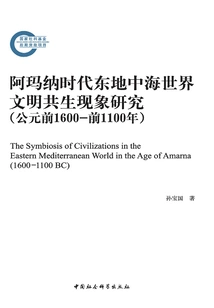
阿玛纳时代东地中海世界文明共生现象研究(公元前1600-前1100年)
Sun Baoguo
As a universal historical phenomenon that has existed since ancient times, although human cross-cultural exchanges are sometimes apparent and sometimes subtle, sometimes intense and sometimes dim, this grand narrative and magnificent picture has never been interrupted and continues to this day. A history of human cross-cultural communication is a history of human beings constantly inventing and superimposing communication media based on the communication abilities endowed by nature and driven by productive labor and social practice, so that human civilization continues to extend and improve. The symbiosis of civilizations in the Eastern Mediterranean world during the Amarna era can be regarded as one of the earliest examples in human history of which large-scale cross-cultural exchanges promoted peaceful coexistence among various civilization units and thus formed a regional symbiosis of civilizations for which there are conclusive documents. This book vertically examines the international political ecology that produced the symbiosis of civilizations in the Eastern Mediterranean world in the Amarna era; horizontally, it explores the value and function of cross-cultural communication media, subjects, channels, content and other elements in the formation of the symbiosis of civilizations in the Eastern Mediterranean world in the Amarna era, as well as the experiences and lessons contained therein. The essential attribute of human civilization is diversity and unity. Egypt, Mitanni, Hittite, Babylon, Assyria and other countries and regions in the Eastern Mediterranean during the Amarna era achieved exchanges, integration and mutual learning allowed by the historical conditions at that time, achieving five hundred years of relative peace and prosperity. This is consistent with the concept of a community with a shared future for mankind proposed and advocated by China that "respects the diversity of world civilizations, transcends estrangement through exchanges of civilizations, overcomes conflicts of civilizations through mutual learning of civilizations, and transcends superiority of civilizations through coexistence of civilizations" has many similarities across historical time and space.
As a universal historical phenomenon that has existed since ancient times, although human cross-cultural exchanges are sometimes apparent and sometimes subtle, sometimes intense and sometimes dim, this grand narrative and magnificent picture has never been interrupted and continues to this day. A history of human cross-cultural communication is a history of human beings constantly inventing and superimposing communication media based on the communication abilities endowed by nature and driven by productive labor and social practice, so that human civilization continues to extend and improve. The symbiosis of civilizations in the Eastern Mediterranean world during the Amarna era can be regarded as one of the earliest examples in human history of which large-scale cross-cultural exchanges promoted peaceful coexistence among various civilization units and thus formed a regional symbiosis of civilizations for which there are conclusive documents. This book vertically examines the international political ecology that produced the symbiosis of civilizations in the Eastern Mediterranean world in the Amarna era; horizontally, it explores the value and function of cross-cultural communication media, subjects, channels, content and other elements in the formation of the symbiosis of civilizations in the Eastern Mediterranean world in the Amarna era, as well as the experiences and lessons contained therein. The essential attribute of human civilization is diversity and unity. Egypt, Mitanni, Hittite, Babylon, Assyria and other countries and regions in the Eastern Mediterranean during the Amarna era achieved exchanges, integration and mutual learning allowed by the historical conditions at that time, achieving five hundred years of relative peace and prosperity. This is consistent with the concept of a community with a shared future for mankind proposed and advocated by China that "respects the diversity of world civilizations, transcends estrangement through exchanges of civilizations, overcomes conflicts of civilizations through mutual learning of civilizations, and transcends superiority of civilizations through coexistence of civilizations" has many similarities across historical time and space.
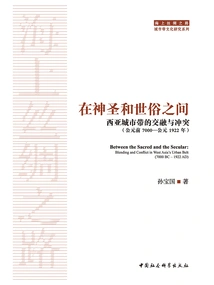
在神圣和世俗之间:西亚城市带的交融与冲突(公元前7000—公元1922年)
Sun Baoguo
From the perspective of civilization evolution and urban development, West Asia is not only one of the birthplaces of human civilization, but also one of the birthplaces of world cities. From the perspective of material and spiritual exchanges between China and foreign countries, West Asian cities are not only a series of fulcrums on the land Silk Road, but also important nodes on the Maritime Silk Road. Vertically, this book divides the development of cities in West Asia into seven stages: the city-state-dominated period, the primitive empire period, the Hellenistic period, the Roman Empire period, the Arab Empire period, the Ilkhanate period and the Ottoman Empire period, starting with the rise of the earliest cities in West Asia and even the world represented by Jericho in about 7000 BC. , Starting with the end of the Ottoman Empire in 1922 AD; horizontally, this book discusses from three levels: "political ecology", "development overview" and "typical cities", in order to present a three-dimensional overview of the political ecology, economy and trade, social life, religious culture, planning and management of West Asian cities at different stages.
From the perspective of civilization evolution and urban development, West Asia is not only one of the birthplaces of human civilization, but also one of the birthplaces of world cities. From the perspective of material and spiritual exchanges between China and foreign countries, West Asian cities are not only a series of fulcrums on the land Silk Road, but also important nodes on the Maritime Silk Road. Vertically, this book divides the development of cities in West Asia into seven stages: the city-state-dominated period, the primitive empire period, the Hellenistic period, the Roman Empire period, the Arab Empire period, the Ilkhanate period and the Ottoman Empire period, starting with the rise of the earliest cities in West Asia and even the world represented by Jericho in about 7000 BC. , Starting with the end of the Ottoman Empire in 1922 AD; horizontally, this book discusses from three levels: "political ecology", "development overview" and "typical cities", in order to present a three-dimensional overview of the political ecology, economy and trade, social life, religious culture, planning and management of West Asian cities at different stages.