Library
Browse and search books
2 novels found
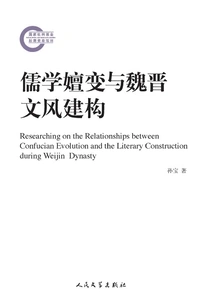
The Evolution of Confucianism and the Construction of Literary Style in Wei and Jin Dynasties
Literature儒学嬗变与魏晋文风建构
Sun Bao
This book mainly analyzes the development of Confucianism in the Wei and Jin Dynasties and its impact on literary creation and literary criticism. The book is divided into three parts: upper, middle and lower. The upper part explains the official Confucian construction in the Wei and Jin Dynasties. The middle part focuses on Xu Qian, Wang Su, He Yan, Xue Zong and others for detailed case studies, discussing the influence of Confucianism on specific writers. The lower part analyzes the influence of Confucianism on critical theory during this period.
This book mainly analyzes the development of Confucianism in the Wei and Jin Dynasties and its impact on literary creation and literary criticism. The book is divided into three parts: upper, middle and lower. The upper part explains the official Confucian construction in the Wei and Jin Dynasties. The middle part focuses on Xu Qian, Wang Su, He Yan, Xue Zong and others for detailed case studies, discussing the influence of Confucianism on specific writers. The lower part analyzes the influence of Confucianism on critical theory during this period.
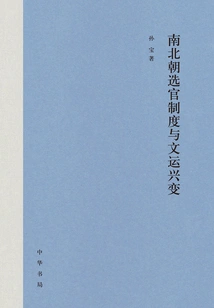
南北朝选官制度与文运兴变(全二册)
Sun Bao
The selection of civil servants in the Southern and Northern Dynasties was closely related to the literati, and the connection between the two was objective and universal. With the exception of a few foreign literati who remained in office throughout their lives, most of the literati in the Southern and Northern Dynasties combined multiple identities such as writers, officials, thinkers, scholarly celebrities, and rural leaders. Driven by the revival of the Confucian progressive value system and the concept of secular officials, scholars generally accumulated knowledge and skills through pre-official education, and then accepted official qualification review, recommendation, selection, planning, and reexamination, and then qualified as candidate officials until they were finally released and started their careers. After becoming an official, you also have to undergo official experience such as assessment during the employment period and transfer and promotion. The place and term of office of a literati determine the region, route, and length of stay of that person, as well as their sense of country and country and the regional characteristics of their literature. In addition, the public-private relationship between a literati's superiors and subordinates constitutes the content of his interpersonal interactions and social activities, which in turn determines the content of his literary expression. The nature of their official appointment and the scope of their duties determine the nature and stylistic characteristics of their official documents, and can even solidify their creative types; the group interactions during their official tenure also determine the collective nature of scribes' literary creation, and can even develop into a trend indicator in the literary world. It can be said that the official selection system is the key to analyzing the literati and cultural movement of the Northern and Southern Dynasties. This book summarizes the internal and external reasons and manifestations of the connection between the official selection system and literature in the Southern and Northern Dynasties, fully reveals the types and cultural and educational motivations of the official selection system in the Southern and Northern Dynasties, and the internal connection between the official selection process and the officialdom ecology and the mentality of scholars. It also conducts special research on the influence of the official selection system, official office operations, and official selection culture in the Southern and Northern Dynasties on literature. The official selection system in the Southern and Northern Dynasties continued the old system of the Han and Jin Dynasties, but also expanded new institutional functions. Through the penetration and coupling of family politics, scholarly official habits, and literary styles, a unique mixture of "official selection and literature" was formed during this period. It had a profound impact on the evolution of the literary world structure, the criticism and transformation of literary trends, and the expansion of the scope of literary theory in later generations.
The selection of civil servants in the Southern and Northern Dynasties was closely related to the literati, and the connection between the two was objective and universal. With the exception of a few foreign literati who remained in office throughout their lives, most of the literati in the Southern and Northern Dynasties combined multiple identities such as writers, officials, thinkers, scholarly celebrities, and rural leaders. Driven by the revival of the Confucian progressive value system and the concept of secular officials, scholars generally accumulated knowledge and skills through pre-official education, and then accepted official qualification review, recommendation, selection, planning, and reexamination, and then qualified as candidate officials until they were finally released and started their careers. After becoming an official, you also have to undergo official experience such as assessment during the employment period and transfer and promotion. The place and term of office of a literati determine the region, route, and length of stay of that person, as well as their sense of country and country and the regional characteristics of their literature. In addition, the public-private relationship between a literati's superiors and subordinates constitutes the content of his interpersonal interactions and social activities, which in turn determines the content of his literary expression. The nature of their official appointment and the scope of their duties determine the nature and stylistic characteristics of their official documents, and can even solidify their creative types; the group interactions during their official tenure also determine the collective nature of scribes' literary creation, and can even develop into a trend indicator in the literary world. It can be said that the official selection system is the key to analyzing the literati and cultural movement of the Northern and Southern Dynasties. This book summarizes the internal and external reasons and manifestations of the connection between the official selection system and literature in the Southern and Northern Dynasties, fully reveals the types and cultural and educational motivations of the official selection system in the Southern and Northern Dynasties, and the internal connection between the official selection process and the officialdom ecology and the mentality of scholars. It also conducts special research on the influence of the official selection system, official office operations, and official selection culture in the Southern and Northern Dynasties on literature. The official selection system in the Southern and Northern Dynasties continued the old system of the Han and Jin Dynasties, but also expanded new institutional functions. Through the penetration and coupling of family politics, scholarly official habits, and literary styles, a unique mixture of "official selection and literature" was formed during this period. It had a profound impact on the evolution of the literary world structure, the criticism and transformation of literary trends, and the expansion of the scope of literary theory in later generations.