Library
Browse and search books
7 novels found
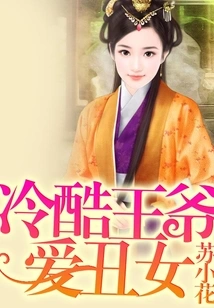
The Cold Prince Loves the Ugly Girl
Ancient Romance冷酷王爷爱丑女
Su Xiaohua
He, Ning Ziyi, wants wind and rain, and no woman in the world dares to compete with him! However, this woman resisted in every possible way and challenged his patience. So, he vowed: If he wants this woman to surrender, she must surrender willingly at his feet! He deliberately made things difficult and tried every means to torture her, just to make her learn to obey!
He, Ning Ziyi, wants wind and rain, and no woman in the world dares to compete with him! However, this woman resisted in every possible way and challenged his patience. So, he vowed: If he wants this woman to surrender, she must surrender willingly at his feet! He deliberately made things difficult and tried every means to torture her, just to make her learn to obey!
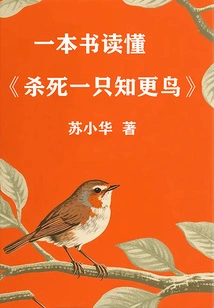
Read "to Kill a Mockingbird" in One Book
Literature一本书读懂《杀死一只知更鸟》
Su Xiaohua
This book provides an in-depth analysis of Harper Lee's classic "To Kill a Mockingbird" and explores its literary value and social significance from multiple dimensions. Tracing the birth of the work, relating the author Harper Lee's childhood experience and historical background, it shows how the story of a southern town has become a cultural symbol of anti-racial discrimination. Decode the deep metaphor of "Mockingbird", analyze the tragedies of "Mockingbird" characters such as Tom and Radley, and reveal the social pathological changes in which innocence is destroyed. Focusing on the father figure of Atticus, we explore his eternal charm of reason, kindness and educational wisdom. It also provides an in-depth analysis of the shocking racial trial case, presenting the fierce collision between prejudice and justice. It uses a child's perspective to reflect the absurdity and complexity of the adult world, allowing readers to understand the eternal values of kindness, courage and justice in the reflection of words and reality.
This book provides an in-depth analysis of Harper Lee's classic "To Kill a Mockingbird" and explores its literary value and social significance from multiple dimensions. Tracing the birth of the work, relating the author Harper Lee's childhood experience and historical background, it shows how the story of a southern town has become a cultural symbol of anti-racial discrimination. Decode the deep metaphor of "Mockingbird", analyze the tragedies of "Mockingbird" characters such as Tom and Radley, and reveal the social pathological changes in which innocence is destroyed. Focusing on the father figure of Atticus, we explore his eternal charm of reason, kindness and educational wisdom. It also provides an in-depth analysis of the shocking racial trial case, presenting the fierce collision between prejudice and justice. It uses a child's perspective to reflect the absurdity and complexity of the adult world, allowing readers to understand the eternal values of kindness, courage and justice in the reflection of words and reality.
一本书读懂《人类群星闪耀时》
Su Xiaohua
This book will give you an in-depth analysis of Zweig's classic "When the Stars of Mankind Shine", focusing on the key moments that changed history, and revealing the profound connection between ordinary individuals and great moments. This book starts from the highlight moments such as the fall of Byzantium and Handel's rebirth, and analyzes the contingency and inevitability of fate in historical turning points. Decode complex figures such as Grouchy and Rouge, explore the blurred boundaries between heroes and gamblers, and show the struggles and choices of mortals in the torrent of the times. At the same time, we explore Zweig's unique creative technique - activating historical moments with literary touches, going deep into the characters' hearts, and letting the cold historical facts burst out with human warmth. It also extends to contemporary revelations, from the importance of details, rebirth in difficulties, to the weight of choices, refining the wisdom of survival across time and space. It also pays attention to the unwritten "star trails", presenting the diverse possibilities of the historical panorama, allowing readers to find the spiritual power that illuminates the present in the shining moments a hundred years ago.
This book will give you an in-depth analysis of Zweig's classic "When the Stars of Mankind Shine", focusing on the key moments that changed history, and revealing the profound connection between ordinary individuals and great moments. This book starts from the highlight moments such as the fall of Byzantium and Handel's rebirth, and analyzes the contingency and inevitability of fate in historical turning points. Decode complex figures such as Grouchy and Rouge, explore the blurred boundaries between heroes and gamblers, and show the struggles and choices of mortals in the torrent of the times. At the same time, we explore Zweig's unique creative technique - activating historical moments with literary touches, going deep into the characters' hearts, and letting the cold historical facts burst out with human warmth. It also extends to contemporary revelations, from the importance of details, rebirth in difficulties, to the weight of choices, refining the wisdom of survival across time and space. It also pays attention to the unwritten "star trails", presenting the diverse possibilities of the historical panorama, allowing readers to find the spiritual power that illuminates the present in the shining moments a hundred years ago.
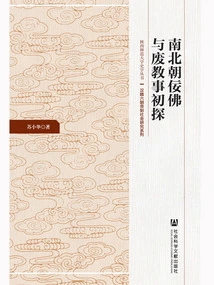
南北朝佞佛与废教事初探
Su Xiaohua
This book aims to reveal the evolution and reasons of the religious and cultural policies of the imperial state in the entanglement of monasticism and abolition of religion during the Southern and Northern Dynasties, as well as the transformation of Buddhism itself in the process of adapting to the imperial society. The whole book closely follows the two seemingly opposite but actually mutually reinforcing historical phenomena of deceiving Buddha and exterminating Buddha, and respectively studies the two modes of Buddhism's intervention in imperial countries and their impact on Buddhism itself. This book uses the theories and methods of political and cultural history to study the history of Buddhism in the Southern and Northern Dynasties, providing a new perspective for the study of Buddhist history, which takes the evolution of Buddhism as the mainstream.
This book aims to reveal the evolution and reasons of the religious and cultural policies of the imperial state in the entanglement of monasticism and abolition of religion during the Southern and Northern Dynasties, as well as the transformation of Buddhism itself in the process of adapting to the imperial society. The whole book closely follows the two seemingly opposite but actually mutually reinforcing historical phenomena of deceiving Buddha and exterminating Buddha, and respectively studies the two modes of Buddhism's intervention in imperial countries and their impact on Buddhism itself. This book uses the theories and methods of political and cultural history to study the history of Buddhism in the Southern and Northern Dynasties, providing a new perspective for the study of Buddhist history, which takes the evolution of Buddhism as the mainstream.
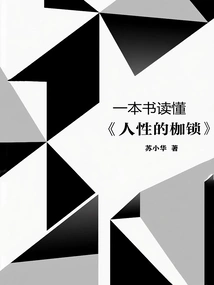
一本书读懂《人性的枷锁》
Su Xiaohua
"The Shackles of Humanity" is a soul confession that Maugham has tempered for half his life, and this book will lead readers through a hundred years of time and resonate with Philip Carey in the contemporary survival dilemma. Through a deconstructive perspective, from religious discipline, morbid attachment to middle-class disillusionment, the secular preset life script is peeled off layer by layer - when idealists burn paintings, securities upstarts fall into the slums, and doctors resurrect art under the scalpel, every "failure" reshapes the boundaries of freedom. The book creates an original "Apocalypse Now" section, which grafts literary classics onto real-life pain points such as PUA in the workplace, anxiety about paying for knowledge, and the 35-year-old crisis. It uses Philip's lameness to crush the success learning filter and allows the "flaw philosophy" of the Persian carpet to cure the obsessive-compulsive disorder of perfection in the era of involution. This is not an introduction, but an invitation: in the ashes of meaning, rewrite the algorithm of your life.
"The Shackles of Humanity" is a soul confession that Maugham has tempered for half his life, and this book will lead readers through a hundred years of time and resonate with Philip Carey in the contemporary survival dilemma. Through a deconstructive perspective, from religious discipline, morbid attachment to middle-class disillusionment, the secular preset life script is peeled off layer by layer - when idealists burn paintings, securities upstarts fall into the slums, and doctors resurrect art under the scalpel, every "failure" reshapes the boundaries of freedom. The book creates an original "Apocalypse Now" section, which grafts literary classics onto real-life pain points such as PUA in the workplace, anxiety about paying for knowledge, and the 35-year-old crisis. It uses Philip's lameness to crush the success learning filter and allows the "flaw philosophy" of the Persian carpet to cure the obsessive-compulsive disorder of perfection in the era of involution. This is not an introduction, but an invitation: in the ashes of meaning, rewrite the algorithm of your life.
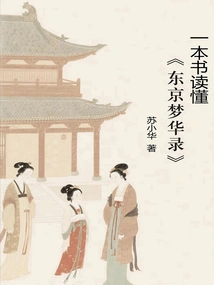
One Book to Understand "tokyo Dreams
Literature一本书读懂《东京梦华录》
Su Xiaohua
"A Book to Understand "Tokyo Menghua Lu"" deconstructs the life epic of the Song Dynasty in seven dimensions, leading readers to travel through thousands of years and touch the warmth of Bianjing's civilization. This book breaks the traditional interpretation mode of ancient books and activates the urban memory of the Northern Song Dynasty from a modern perspective: from the planning wisdom of Yujie CBD to the business genes of Zhouqiao Night Market, from the catering revolution on the tip of the tongue to the round-the-clock citizen theater, the author uses "Tokyo Menghualu" as the time and space coordinates and unearths amazing modernity in the gaps in the literature - 21st century urban propositions such as the prototype of take-out service, night-time economic system, global trade network, etc., Were previewed in the Chinese capital in the 12th century. The book not only immerses the sound of the city in Wasegoulan, but also reveals the time code in the festival rituals. Through a cross-media dialogue with "Along the River During the Qingming Festival", it shows the civilization map jointly constructed by words and images. Each chapter has a special "Ancient and Modern Reflection" column, allowing Hu spicy soup to communicate with Meituan takeout from a distance, connecting the Daxiangguo temple with the modern commercial complex, and making sleeping ancient books glow with current vitality. This is a key to decoding the genes of Chinese cities and an immersive book to understand the continuity of Chinese civilization.
"A Book to Understand "Tokyo Menghua Lu"" deconstructs the life epic of the Song Dynasty in seven dimensions, leading readers to travel through thousands of years and touch the warmth of Bianjing's civilization. This book breaks the traditional interpretation mode of ancient books and activates the urban memory of the Northern Song Dynasty from a modern perspective: from the planning wisdom of Yujie CBD to the business genes of Zhouqiao Night Market, from the catering revolution on the tip of the tongue to the round-the-clock citizen theater, the author uses "Tokyo Menghualu" as the time and space coordinates and unearths amazing modernity in the gaps in the literature - 21st century urban propositions such as the prototype of take-out service, night-time economic system, global trade network, etc., Were previewed in the Chinese capital in the 12th century. The book not only immerses the sound of the city in Wasegoulan, but also reveals the time code in the festival rituals. Through a cross-media dialogue with "Along the River During the Qingming Festival", it shows the civilization map jointly constructed by words and images. Each chapter has a special "Ancient and Modern Reflection" column, allowing Hu spicy soup to communicate with Meituan takeout from a distance, connecting the Daxiangguo temple with the modern commercial complex, and making sleeping ancient books glow with current vitality. This is a key to decoding the genes of Chinese cities and an immersive book to understand the continuity of Chinese civilization.
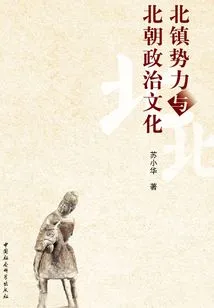
北镇势力与北朝政治文化
Su Xiaohua
The Six Towns society in the Northern Dynasties was a society where Xianbei and Sinicization coexisted, and had its own characteristics in terms of military and immigration. Based on previous research, the author used new perspectives and methods, and used the characters of the Six Towns as clues to analyze the period from the Six Towns Uprising to the unification of the north in the Northern Zhou Dynasty. This period of the Northern Dynasties went from a unified regime through division and then to unification, which has certain academic value.
The Six Towns society in the Northern Dynasties was a society where Xianbei and Sinicization coexisted, and had its own characteristics in terms of military and immigration. Based on previous research, the author used new perspectives and methods, and used the characters of the Six Towns as clues to analyze the period from the Six Towns Uprising to the unification of the north in the Northern Zhou Dynasty. This period of the Northern Dynasties went from a unified regime through division and then to unification, which has certain academic value.