Library
Browse and search books
12 novels found
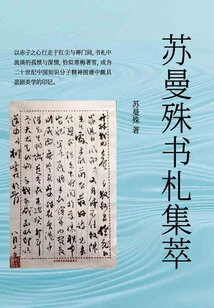
Collection of Su Manshu's Letters
Literature苏曼殊书札集萃
Su Manshu
"Collection of Su Manshu's Letters" contains 64 letters written by Su Manshu to Liu San, Liu Yazi, Gao Tianmei and other friends between 1900 and 1913, truly recording the life trajectory and spiritual world of this modern wonder man in a turbulent era. These yellowed letterheads have traveled through hundreds of years of wind and rain, showing a contradictory and true soul: both the Buddhist practice of "helping people with the Dharma" and the impassioned devotion to the revolution; both the pride of "a strong man looking at the grass with his sword across the sword" and the hardship of "sick and torn bones"; both the devoted translation and introduction of Byron and Shelley, and the deep reflection on traditional culture. As well as Su Manshu's unique insights into Buddhism, literature, and translation theory. These letters and writings are not only witnesses of a person's fate, but also reflect the spiritual fission of intellectuals in the late Qing Dynasty and early Republic of China in the collision between traditional culture and modern trends of thought. As a unique "poetic monk revolutionary" in the history of modern literature, Su Manshu walked between the world of mortals and the Buddhist sect with a pure heart. The loneliness, anger and affection flowing in his letters were like winter plum blossoms clinging to the snow, and became a mark of tragic aesthetics in the spiritual map of Chinese intellectuals in the 20th century.
"Collection of Su Manshu's Letters" contains 64 letters written by Su Manshu to Liu San, Liu Yazi, Gao Tianmei and other friends between 1900 and 1913, truly recording the life trajectory and spiritual world of this modern wonder man in a turbulent era. These yellowed letterheads have traveled through hundreds of years of wind and rain, showing a contradictory and true soul: both the Buddhist practice of "helping people with the Dharma" and the impassioned devotion to the revolution; both the pride of "a strong man looking at the grass with his sword across the sword" and the hardship of "sick and torn bones"; both the devoted translation and introduction of Byron and Shelley, and the deep reflection on traditional culture. As well as Su Manshu's unique insights into Buddhism, literature, and translation theory. These letters and writings are not only witnesses of a person's fate, but also reflect the spiritual fission of intellectuals in the late Qing Dynasty and early Republic of China in the collision between traditional culture and modern trends of thought. As a unique "poetic monk revolutionary" in the history of modern literature, Su Manshu walked between the world of mortals and the Buddhist sect with a pure heart. The loneliness, anger and affection flowing in his letters were like winter plum blossoms clinging to the snow, and became a mark of tragic aesthetics in the spiritual map of Chinese intellectuals in the 20th century.
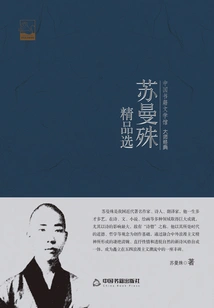
Su Manshu's Best Selections
Literature苏曼殊精品选
Su Manshu
Su Manshu wrote "Three Hundred Untitled Poems", of which 101 have survived, most of which are seven-character quatrains. Su Manshu's novels are also very famous. He wrote a total of 7 novels in his life. Among them, "The Story of Human Ghost" has been lost. The six kinds that have been handed down include "The Story of Broken Hong Lingyan Goose", "The Story of Red Tears at the End of the World", "The Story of Yisha", "The Story of the Burning Sword", "The Story of the Broken Hairpin" and "The Story of Not a Dream". There is another version of "Les Misérables", which is called a translation of "Les Misérables" by French Victor Hugo. In fact, two-thirds of the text was created by Su Manshu, so it should also be counted as Su Manshu's work. Su Manshu is one of the earliest translators in modern my country. He is proficient in Japanese, Sanskrit, English, and French. In addition to translating Hugo's "Les Misérables", he has also translated "Selected Poems of Byron" and the Indian novel "Escape to the Sea of Salomon." He is also a scholar with profound knowledge and has compiled various monographs such as "Sanskrit Dictionary", "Preliminary Sanskrit Dictionary", "Sanskrit Book of Mordor", "Egyptian Ancient Teaching", etc.
Su Manshu wrote "Three Hundred Untitled Poems", of which 101 have survived, most of which are seven-character quatrains. Su Manshu's novels are also very famous. He wrote a total of 7 novels in his life. Among them, "The Story of Human Ghost" has been lost. The six kinds that have been handed down include "The Story of Broken Hong Lingyan Goose", "The Story of Red Tears at the End of the World", "The Story of Yisha", "The Story of the Burning Sword", "The Story of the Broken Hairpin" and "The Story of Not a Dream". There is another version of "Les Misérables", which is called a translation of "Les Misérables" by French Victor Hugo. In fact, two-thirds of the text was created by Su Manshu, so it should also be counted as Su Manshu's work. Su Manshu is one of the earliest translators in modern my country. He is proficient in Japanese, Sanskrit, English, and French. In addition to translating Hugo's "Les Misérables", he has also translated "Selected Poems of Byron" and the Indian novel "Escape to the Sea of Salomon." He is also a scholar with profound knowledge and has compiled various monographs such as "Sanskrit Dictionary", "Preliminary Sanskrit Dictionary", "Sanskrit Book of Mordor", "Egyptian Ancient Teaching", etc.
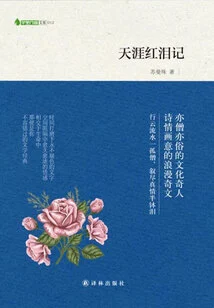
Red Tears at the End of the World
General Fiction天涯红泪记
Su Manshu
This book includes Su Manshu's novels "The Story of Broken Wild Goose", "The Story of Jiangsha", "The Story of Burning Sword", "The Story of Broken Hairpin", "The Story of Not a Dream", "The Story of Red Tears at the End of the World", as well as the adapted work "The Miserable World". Most of Su Manshu's novels take love as the theme, with fresh and smooth writing, graceful diction, and moving plots. They describe the contradiction between the hero and heroine's pursuit of love and the barrier of reality. Most of the male protagonists in the novel have the chivalrous spirit of a knight to save people from danger and help the poor, as well as their dissatisfaction with the social status quo and their struggle to change reality.
This book includes Su Manshu's novels "The Story of Broken Wild Goose", "The Story of Jiangsha", "The Story of Burning Sword", "The Story of Broken Hairpin", "The Story of Not a Dream", "The Story of Red Tears at the End of the World", as well as the adapted work "The Miserable World". Most of Su Manshu's novels take love as the theme, with fresh and smooth writing, graceful diction, and moving plots. They describe the contradiction between the hero and heroine's pursuit of love and the barrier of reality. Most of the male protagonists in the novel have the chivalrous spirit of a knight to save people from danger and help the poor, as well as their dissatisfaction with the social status quo and their struggle to change reality.
Broken Hairpin Story
Literature碎簪记
Su Manshu
This book selects Su Manshu's essays. Literary masters are the pioneers of an era and masters of various literary forms. Their works originate from the era in which they lived, record the microcosm of social life in that era, contain the writer's own experience and thinking about society and life, influence the development process of society, and have eternal charm. They are the engineers of our soul, able to guide our life development and give us spiritual nourishment like chicken soup.
This book selects Su Manshu's essays. Literary masters are the pioneers of an era and masters of various literary forms. Their works originate from the era in which they lived, record the microcosm of social life in that era, contain the writer's own experience and thinking about society and life, influence the development process of society, and have eternal charm. They are the engineers of our soul, able to guide our life development and give us spiritual nourishment like chicken soup.
Su Manshu's Novels
Literature苏曼殊小说集
Su Manshu
There is Jin'ou Mountain in Baiyue, which stands majestically to the south of the coast. Every day, the sky is clear and cloudless, and among the green hills at the foot of the mountain, the red tiles and scales can be faintly distinguished, and the ancient temple is covered with sea clouds. According to legend, at the time of the death of the Song Dynasty, Lu Xiufu carried the young emperor and died on Yashan Mountain, while some of his elders fled there. He wished to be a monk and shouted to the sky day and night, hoping to attract the spirit of the great emperor. Therefore, to this day, when I look at the mountains in the distance, the clouds are lush and lush; or when I hear the mournful hissing of the tide, it makes me mournful and unbearable to look back. Now I will tell you that the treasure nets and golden pillars in the temple are all ancient relics. The water in the pool is clear and the pines and cypresses are beautiful. There are dozens of monks living there, all solemn and dignified, and their alms bowls are silent. The precepts are taught in winter every year, but only a few people go to the mountain to seek precepts. This is because the goat's intestines are steep and dangerous, and the climb is extremely difficult.
There is Jin'ou Mountain in Baiyue, which stands majestically to the south of the coast. Every day, the sky is clear and cloudless, and among the green hills at the foot of the mountain, the red tiles and scales can be faintly distinguished, and the ancient temple is covered with sea clouds. According to legend, at the time of the death of the Song Dynasty, Lu Xiufu carried the young emperor and died on Yashan Mountain, while some of his elders fled there. He wished to be a monk and shouted to the sky day and night, hoping to attract the spirit of the great emperor. Therefore, to this day, when I look at the mountains in the distance, the clouds are lush and lush; or when I hear the mournful hissing of the tide, it makes me mournful and unbearable to look back. Now I will tell you that the treasure nets and golden pillars in the temple are all ancient relics. The water in the pool is clear and the pines and cypresses are beautiful. There are dozens of monks living there, all solemn and dignified, and their alms bowls are silent. The precepts are taught in winter every year, but only a few people go to the mountain to seek precepts. This is because the goat's intestines are steep and dangerous, and the climb is extremely difficult.
A Letter Written by Su Manshu to Liu San
Literature苏曼殊写给刘三的信
Su Manshu
The work is a collection of a series of letters written by Su Manshu to his close friend Liu San, spanning from the Bingwu Year (1906) to the Renzi Year (1912). The letter mainly shows Su Manshu's various situations in revolution, studies and life. He mentioned the common revolutionary experience with Liu San in Japan, his participation in the Nanshe Society after returning to China, as well as the embarrassment in life and Liu San's generous help. The letter also records that Su Manshu traveled to Wuhu, Shanghai, Nanjing, Japan and other places to study Sanskrit, as well as his sincere feelings about being ill and financially strapped but caring about his old friends and singing poems, showing a fragment of his wandering life while pursuing his ideals.
The work is a collection of a series of letters written by Su Manshu to his close friend Liu San, spanning from the Bingwu Year (1906) to the Renzi Year (1912). The letter mainly shows Su Manshu's various situations in revolution, studies and life. He mentioned the common revolutionary experience with Liu San in Japan, his participation in the Nanshe Society after returning to China, as well as the embarrassment in life and Liu San's generous help. The letter also records that Su Manshu traveled to Wuhu, Shanghai, Nanjing, Japan and other places to study Sanskrit, as well as his sincere feelings about being ill and financially strapped but caring about his old friends and singing poems, showing a fragment of his wandering life while pursuing his ideals.
一切有情,都无挂碍:情僧苏曼殊的爱
Su Manshu
Su Manshu was known as a monk in that era. With his talents and courage, few people at that time could surpass him. But he lived a life of wind and rain in his cassock. He became a monk at the age of sixteen, mostly as a silent act to resist his ill-fated fate. Su Manshu's biological mother was a Japanese woman who left him three months after giving birth to him. He has never felt the warmth of family since he was a child. Su Manshu is a love monk. When she was fifteen years old, Su Manshu went to Yokohama, Japan to study with her cousin, and fell in love at first sight with the Japanese girl Juzi. Their romance was strongly opposed by the Su family. When Su Manshu's uncle found out about this, he reprimanded Su Manshu for ruining the Su family's reputation and blamed Juzi's parents. Juzi's parents were furious and beat her up in public. As a result, Juzi threw herself into the sea and died that night. The pain of broken love and Juzi's fate made Su Manshu feel deeply disheartened and despaired of all hope. After returning to Guangzhou, he went to Pujian Temple to become a monk.
Su Manshu was known as a monk in that era. With his talents and courage, few people at that time could surpass him. But he lived a life of wind and rain in his cassock. He became a monk at the age of sixteen, mostly as a silent act to resist his ill-fated fate. Su Manshu's biological mother was a Japanese woman who left him three months after giving birth to him. He has never felt the warmth of family since he was a child. Su Manshu is a love monk. When she was fifteen years old, Su Manshu went to Yokohama, Japan to study with her cousin, and fell in love at first sight with the Japanese girl Juzi. Their romance was strongly opposed by the Su family. When Su Manshu's uncle found out about this, he reprimanded Su Manshu for ruining the Su family's reputation and blamed Juzi's parents. Juzi's parents were furious and beat her up in public. As a result, Juzi threw herself into the sea and died that night. The pain of broken love and Juzi's fate made Su Manshu feel deeply disheartened and despaired of all hope. After returning to Guangzhou, he went to Pujian Temple to become a monk.
苏曼殊写给柳亚子的信
Su Manshu
The work contains a series of letters written by Su Manshu to his close friend Liu Yazi. The time span in the letter is large, from the year of Gengxu (1910) when Su Manshu fell ill in Java, to the year of Jiayin (1914) when he later studied and recuperated in Japan, and then traveled around the country. The content of the letter covers his concern for the current situation, his longing for friends, his own health (Sumanshu is in poor health, suffering from hemoptysis, malaria, intestinal disease, brain pain, overeating, etc.), As well as his progress in learning Sanskrit and translation; from time to time, the letter reveals complex emotions about wandering, financial constraints, and eagerness to return to his country. It is precious first-hand information to understand Su Manshu.
The work contains a series of letters written by Su Manshu to his close friend Liu Yazi. The time span in the letter is large, from the year of Gengxu (1910) when Su Manshu fell ill in Java, to the year of Jiayin (1914) when he later studied and recuperated in Japan, and then traveled around the country. The content of the letter covers his concern for the current situation, his longing for friends, his own health (Sumanshu is in poor health, suffering from hemoptysis, malaria, intestinal disease, brain pain, overeating, etc.), As well as his progress in learning Sanskrit and translation; from time to time, the letter reveals complex emotions about wandering, financial constraints, and eagerness to return to his country. It is precious first-hand information to understand Su Manshu.
Jiangsha Ji
Literature绛纱记
Su Manshu
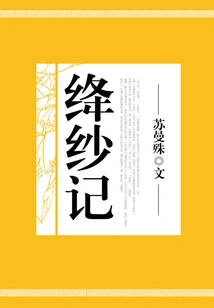
Su Manshu has established a high literary reputation in modern literary history for his poetry, translations and touching love novels. As a monk, he should be "empty of all four elements" and "have no desires and desires", but his "love is deeper than the sea". His mixed Chinese and Japanese blood background, his identity as a Buddhist disciple of "a solitary monk walking in the clouds and flowing water", his lifestyle of "neither a monk nor a vulgar monk, but also a monk and a vulgar" and his emotional way of "having feelings that cannot be thrown away, and the cassocks are stained with tears" have really left a lot of legends for future generations. Throughout Su Manshu's novels, most of them end in tragedy, with the protagonist struggling in love and finally escaping through death or escaping into Buddhism.
Su Manshu has established a high literary reputation in modern literary history for his poetry, translations and touching love novels. As a monk, he should be "empty of all four elements" and "have no desires and desires", but his "love is deeper than the sea". His mixed Chinese and Japanese blood background, his identity as a Buddhist disciple of "a solitary monk walking in the clouds and flowing water", his lifestyle of "neither a monk nor a vulgar monk, but also a monk and a vulgar" and his emotional way of "having feelings that cannot be thrown away, and the cassocks are stained with tears" have really left a lot of legends for future generations. Throughout Su Manshu's novels, most of them end in tragedy, with the protagonist struggling in love and finally escaping through death or escaping into Buddhism.
Su Manshu's Poems
Literature苏曼殊的诗
Su Manshu
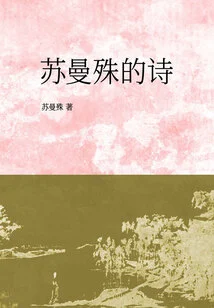
Su Manshu is a famous poet monk and writer in modern times. His poems combine classical artistic conception and modern feelings, and have unique artistic charm. This collection of poems includes many representative works such as "Poems of True Story", "Miscellaneous Poems of Dongju", "Yi Yi Sheng Yun of Wu Men", etc. The nostalgia of a foreign land like "the eight flutes playing on the roof of the house in the spring rain", the Buddhist understanding of "the wall becomes empty after nine years", and the sadness of home and country "when the water changes and the people leave" are all included in it. Su Manshu is very spiritual and talented. He deconstructs tradition with the fantasy image of "The cassock is dotted with cherry blossom petals", transcends life and death with the philosophical thought of "the flowers and plants in the world are too hasty", and sublimates the personal wandering experience into a common emotional symbol for mankind; Su Manshu's poems are very worth reading. In the transformation stage of modern poetry, this poem is unique.
Su Manshu is a famous poet monk and writer in modern times. His poems combine classical artistic conception and modern feelings, and have unique artistic charm. This collection of poems includes many representative works such as "Poems of True Story", "Miscellaneous Poems of Dongju", "Yi Yi Sheng Yun of Wu Men", etc. The nostalgia of a foreign land like "the eight flutes playing on the roof of the house in the spring rain", the Buddhist understanding of "the wall becomes empty after nine years", and the sadness of home and country "when the water changes and the people leave" are all included in it. Su Manshu is very spiritual and talented. He deconstructs tradition with the fantasy image of "The cassock is dotted with cherry blossom petals", transcends life and death with the philosophical thought of "the flowers and plants in the world are too hasty", and sublimates the personal wandering experience into a common emotional symbol for mankind; Su Manshu's poems are very worth reading. In the transformation stage of modern poetry, this poem is unique.
相逢一笑拈花处:苏曼殊作品精选
Su Manshu
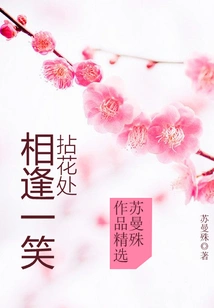
Su Manshu, a modern wonder who wore a cassock and shawl and lived a stormy life. He was a master of both poetry and painting. His novels were all the rage and he had numerous translations. He made waves in the literary and political circles. He was a poet monk, a painting monk, and a love monk who "cannot have one without the other, and cannot have two." This book selects his famous literary works, accompanied by the master's deep Zen paintings, showing his mortal dream of "half fat stain and half tear stain" when he realized Zen. Su Manshu, a modern wonder who wore a cassock and shawl and lived a stormy life. He was a master of both poetry and painting. His novels were all the rage, and he had numerous translations. He made waves in the literary and political circles. He was a poet monk, a painting monk, and a love monk who "cannot have one without the other, and cannot have two." This book selects his famous literary works, accompanied by the master's deep Zen paintings, showing his mortal dream of "half fat stain and half tear stain" when he realized Zen.
Su Manshu, a modern wonder who wore a cassock and shawl and lived a stormy life. He was a master of both poetry and painting. His novels were all the rage and he had numerous translations. He made waves in the literary and political circles. He was a poet monk, a painting monk, and a love monk who "cannot have one without the other, and cannot have two." This book selects his famous literary works, accompanied by the master's deep Zen paintings, showing his mortal dream of "half fat stain and half tear stain" when he realized Zen. Su Manshu, a modern wonder who wore a cassock and shawl and lived a stormy life. He was a master of both poetry and painting. His novels were all the rage, and he had numerous translations. He made waves in the literary and political circles. He was a poet monk, a painting monk, and a love monk who "cannot have one without the other, and cannot have two." This book selects his famous literary works, accompanied by the master's deep Zen paintings, showing his mortal dream of "half fat stain and half tear stain" when he realized Zen.
相逢一笑拈花处(苏曼殊作品精选)
Su Manshu
This book is a selection of works by the famous poet and translator Su Manshu. It is divided into four parts: poetry, novels, essays and letters. The language is sentimental, euphemistic and moving. It has many unique features in psychological description and scenery description, which reflects his charming romantic atmosphere and outstanding talent.
This book is a selection of works by the famous poet and translator Su Manshu. It is divided into four parts: poetry, novels, essays and letters. The language is sentimental, euphemistic and moving. It has many unique features in psychological description and scenery description, which reflects his charming romantic atmosphere and outstanding talent.