Library
Browse and search books
2 novels found
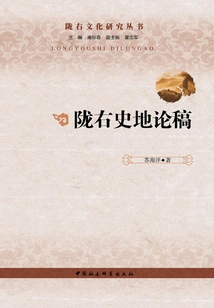
陇右史地论稿
Su Haiyang
This book is a compilation of the author's published and partially unpublished papers on the historical geography of Longyou. The collection of papers is divided into four parts: Part One contains 5 papers in the theory and methods section. This paper discusses major theoretical issues such as the mutual relationship and status of cultural forces and natural forces at different scales of time and space, as well as scale selection and conversion in the study of human-land relations in historical geography. It also systematically introduces the research methods, technologies and means of historical climate, as well as the application status and prospects of geographic information systems in historical geography. The second part contains 8 papers on the relationship between man and land and early civilization. From the perspectives of large-scale (Northern China), medium-scale (Northwest) and small-scale (upper reaches of Weihe River), taking the relationship between man and land as the main line, the spatio-temporal evolution process and mechanism of early agricultural civilization under the joint action of natural environment and technological progress were elaborated. Some papers use quantitative analysis methods and draw on relevant theories of regional structure and organization in economic geography. The third volume of historical transportation geography contains 11 papers on Silk Road transportation and Longshu transportation. In addition to using the traditional literature review and field investigation methods of historical geography, this part attempts to apply the man-land relationship theory and the spatial interaction theory of economic geography to the research, providing a new theoretical perspective for the study of historical transportation geography. The fourth volume of comprehensive research on historical disasters includes a series of five papers on the correlation between historical earthquakes and meteorological anomalies in Gansu. At present, there are not many comprehensive studies on the history of natural disasters in China, and there are even fewer comprehensive studies linking the two seemingly unrelated elements of historical earthquakes and meteorological anomalies.
This book is a compilation of the author's published and partially unpublished papers on the historical geography of Longyou. The collection of papers is divided into four parts: Part One contains 5 papers in the theory and methods section. This paper discusses major theoretical issues such as the mutual relationship and status of cultural forces and natural forces at different scales of time and space, as well as scale selection and conversion in the study of human-land relations in historical geography. It also systematically introduces the research methods, technologies and means of historical climate, as well as the application status and prospects of geographic information systems in historical geography. The second part contains 8 papers on the relationship between man and land and early civilization. From the perspectives of large-scale (Northern China), medium-scale (Northwest) and small-scale (upper reaches of Weihe River), taking the relationship between man and land as the main line, the spatio-temporal evolution process and mechanism of early agricultural civilization under the joint action of natural environment and technological progress were elaborated. Some papers use quantitative analysis methods and draw on relevant theories of regional structure and organization in economic geography. The third volume of historical transportation geography contains 11 papers on Silk Road transportation and Longshu transportation. In addition to using the traditional literature review and field investigation methods of historical geography, this part attempts to apply the man-land relationship theory and the spatial interaction theory of economic geography to the research, providing a new theoretical perspective for the study of historical transportation geography. The fourth volume of comprehensive research on historical disasters includes a series of five papers on the correlation between historical earthquakes and meteorological anomalies in Gansu. At present, there are not many comprehensive studies on the history of natural disasters in China, and there are even fewer comprehensive studies linking the two seemingly unrelated elements of historical earthquakes and meteorological anomalies.
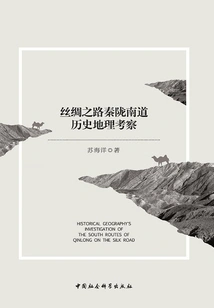
丝绸之路秦陇南道历史地理考察
Su Haiyang
The book "Historical and Geographic Survey of Qinlong South Road on the Silk Road" has a total of 7 chapters and 240,000 words. Qinlong refers to the Guanzhong area east of Longshan and Wushaoling, the Longyou area east of Qinghai Lake and west of Longshan. The Silk Road Qinlong South Road refers to the international passage that goes west from Xi'an, passes through the southern part of the Qinlong area to Wuwei or Xining, and leads to the outside world. This book examines the geographical basis of the southern route in the eastern section of the Silk Road from a historical geographical perspective, and examines the development process of the route from the Neolithic to the Bronze Age, the formation process of the Iron Age, and the evolution of the Warring States Period through Qin, Han, Wei and Jin, Sixteen Kingdoms and Northern Dynasties, Sui and Tang, Song and Yuan to the mid-Ming Dynasty, as well as the route and routes along the route. Finally, the humanistic driving factors for the emergence, development, prosperity and decline of the Tao are analyzed from a geopolitical perspective.
The book "Historical and Geographic Survey of Qinlong South Road on the Silk Road" has a total of 7 chapters and 240,000 words. Qinlong refers to the Guanzhong area east of Longshan and Wushaoling, the Longyou area east of Qinghai Lake and west of Longshan. The Silk Road Qinlong South Road refers to the international passage that goes west from Xi'an, passes through the southern part of the Qinlong area to Wuwei or Xining, and leads to the outside world. This book examines the geographical basis of the southern route in the eastern section of the Silk Road from a historical geographical perspective, and examines the development process of the route from the Neolithic to the Bronze Age, the formation process of the Iron Age, and the evolution of the Warring States Period through Qin, Han, Wei and Jin, Sixteen Kingdoms and Northern Dynasties, Sui and Tang, Song and Yuan to the mid-Ming Dynasty, as well as the route and routes along the route. Finally, the humanistic driving factors for the emergence, development, prosperity and decline of the Tao are analyzed from a geopolitical perspective.