Library
Browse and search books
2 novels found

I Am the King and I Am Proud
Fantasy我是王者我骄傲
Song Zhiming
"Ah! What a powerful invisibility skill! Who is your master?" The enemy asked unwillingly with only one breath left. Dong Hao stood in front of him coolly, "That's a mysterious man wearing a mask and a cloak. You can call him... King Lanling\
"Ah! What a powerful invisibility skill! Who is your master?" The enemy asked unwillingly with only one breath left. Dong Hao stood in front of him coolly, "That's a mysterious man wearing a mask and a cloak. You can call him... King Lanling\
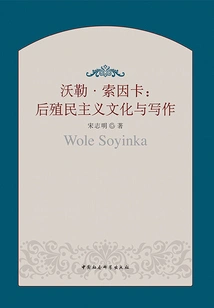
沃勒·索因卡:后殖民主义文化与写作
Song Zhiming
As Africa's first "Nobel Prize" winner, "Africa's Shakespeare" and "the father of English African drama", Nigerian writer Wole Soyinka's writing has typical post-colonial cultural characteristics. His "black skin, white mask" syndrome manifests itself in the fact that he is both rooted in African cultural resources and fused with European literary traditions since ancient Greece, resisting colonial authority as a "cultural hybrid". Soyinka constructed the "Yoruba mythical world" from the resources of his own national religious mythology, formed his own unique "mythological aesthetics", and creatively created a new form of "ritual drama". Soyinka is also a thinker and political activist who emphasizes the "political intervention" of literature. His works and cultural treatises are of distinct realistic and political nature, and he deeply reflects on the core issues of post-colonial Africa such as colonial history, political tyranny, language integration and independence.
As Africa's first "Nobel Prize" winner, "Africa's Shakespeare" and "the father of English African drama", Nigerian writer Wole Soyinka's writing has typical post-colonial cultural characteristics. His "black skin, white mask" syndrome manifests itself in the fact that he is both rooted in African cultural resources and fused with European literary traditions since ancient Greece, resisting colonial authority as a "cultural hybrid". Soyinka constructed the "Yoruba mythical world" from the resources of his own national religious mythology, formed his own unique "mythological aesthetics", and creatively created a new form of "ritual drama". Soyinka is also a thinker and political activist who emphasizes the "political intervention" of literature. His works and cultural treatises are of distinct realistic and political nature, and he deeply reflects on the core issues of post-colonial Africa such as colonial history, political tyranny, language integration and independence.